Yesterday we headed south, up the hill and out of the river valley to Douglas, a suburb of Cork about 4 km down the road. We of course got squalled on, so the walk took a couple of hours, what with ducking into a pub or two to dry off.
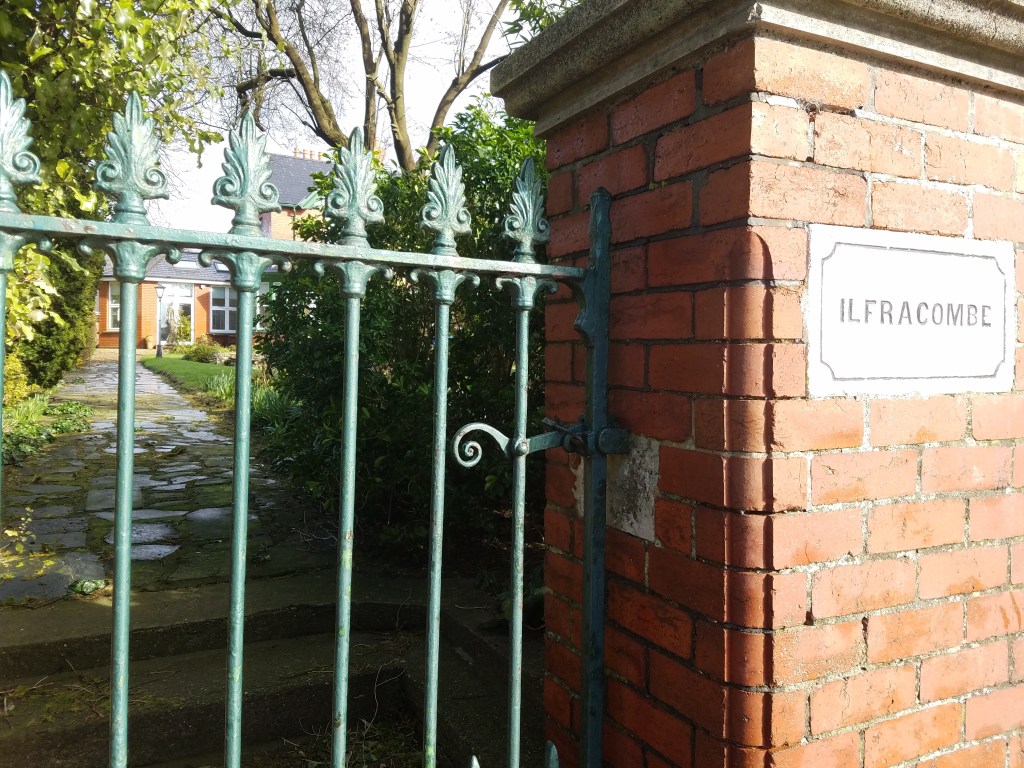
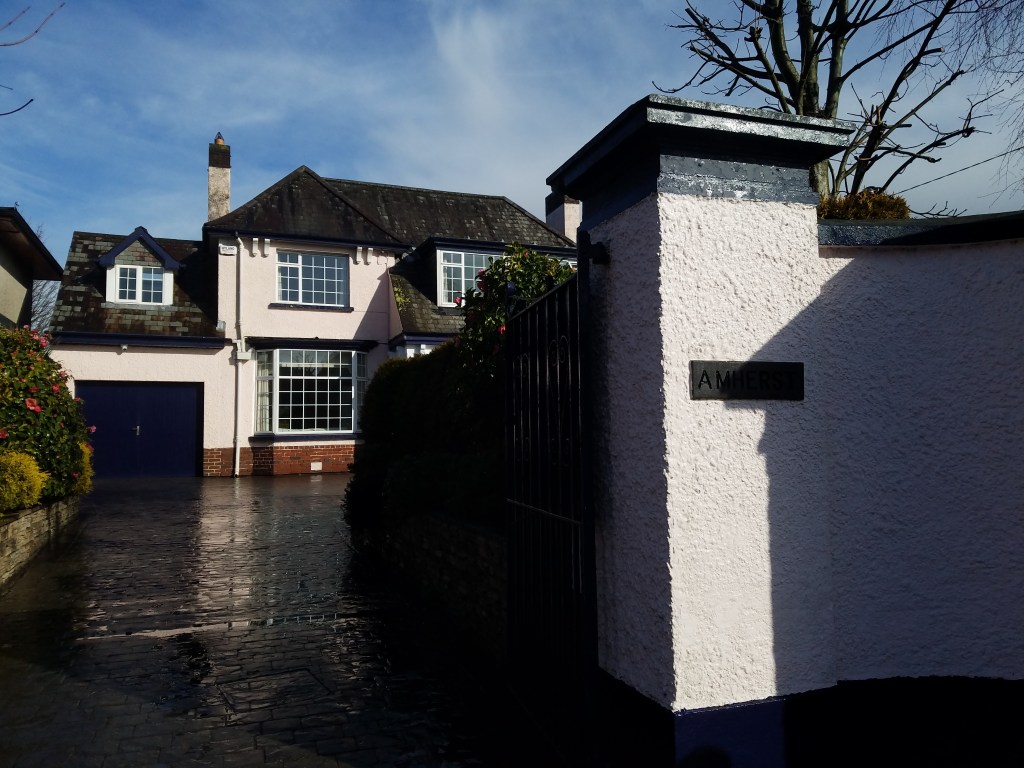
Saw, for basically the first time here, a preponderance of single family detached houses, many of estate size, and all bearing charming names.
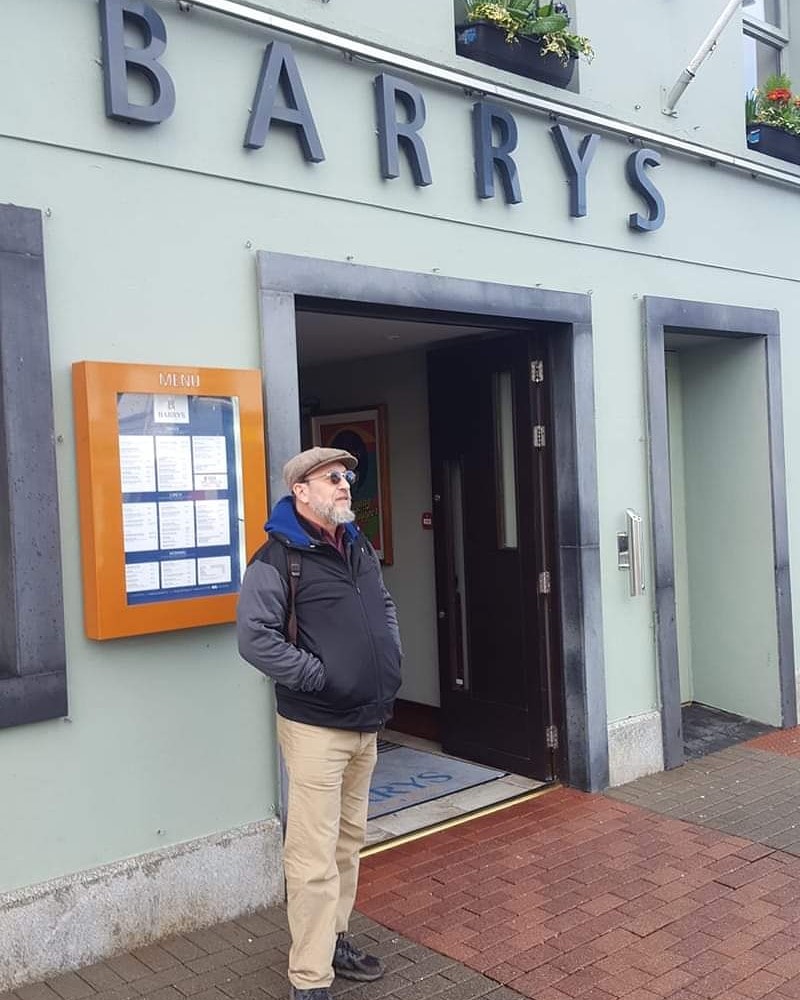
Douglas itself was small and clean, a 2 three block downtown areas separated by a park, with the Douglas River running between them. A handful of pubs and restaurants, including Barry’s, where we had a couple of bowls of soup and some stout. We’ve been favoring Murphy’s on this trip.
Took a slightly different route back to the city, passing through the Turner’s Cross neighborhood, where both the soccer and rugby stadia are located. The Six Nations tournament is taking place while we’re here. It’s probably getting some press in the States. But both the women and the U-20s are playing on similar tournaments at the same time, and the U-20s play here in Cork. We’ll be attending the match home to Italy on 6 March. It’s about a 2k walk from the apartment.
Here’s a few photos.
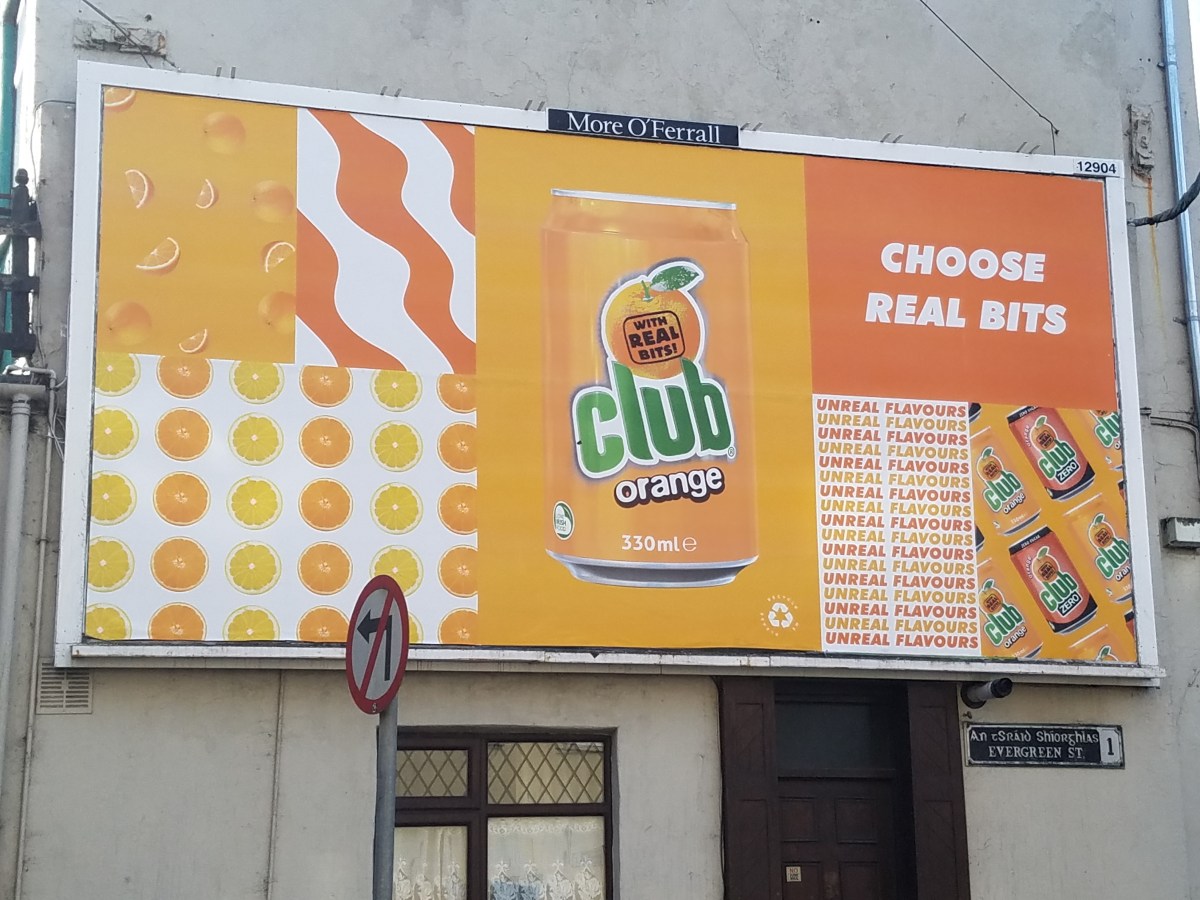
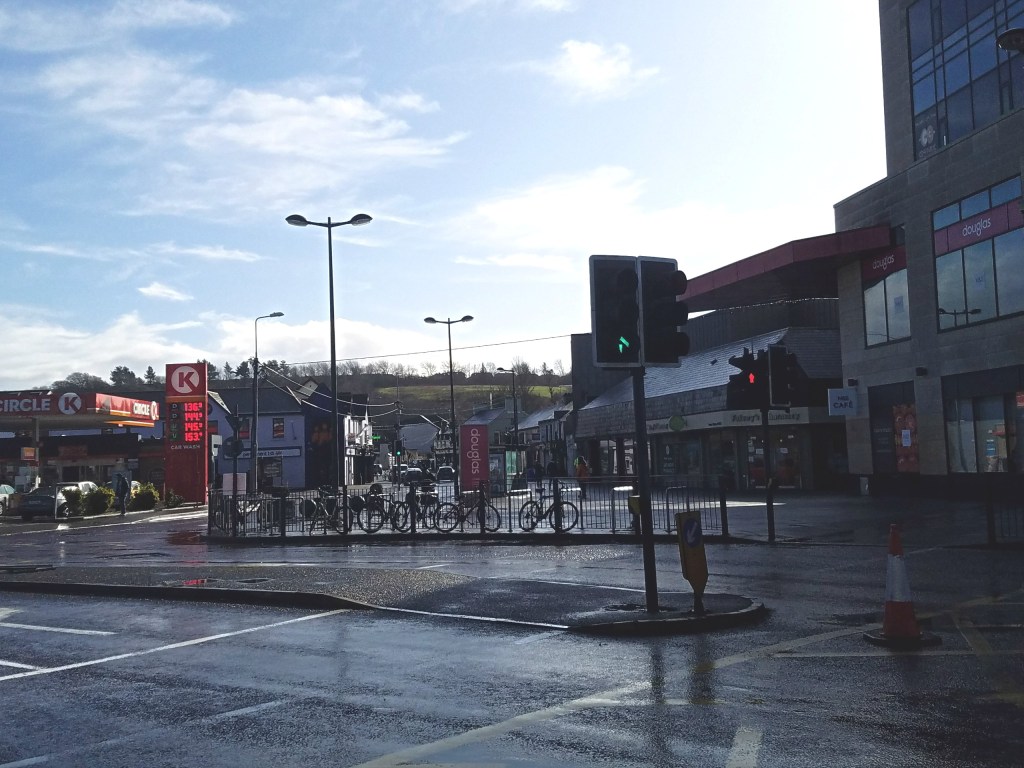
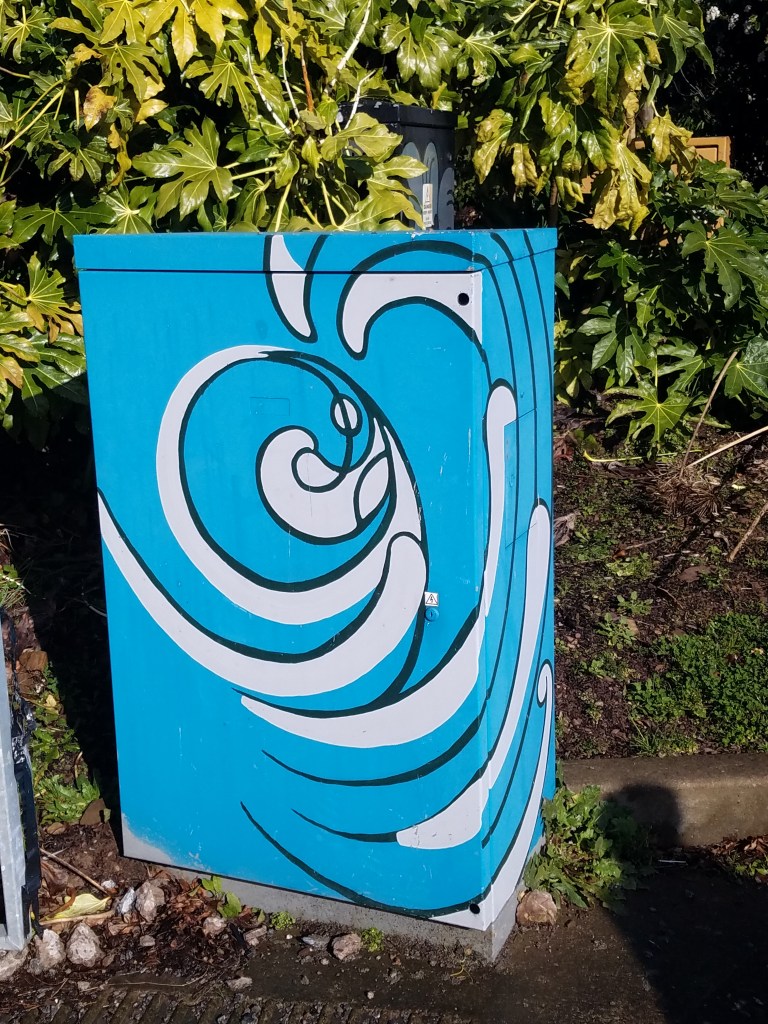
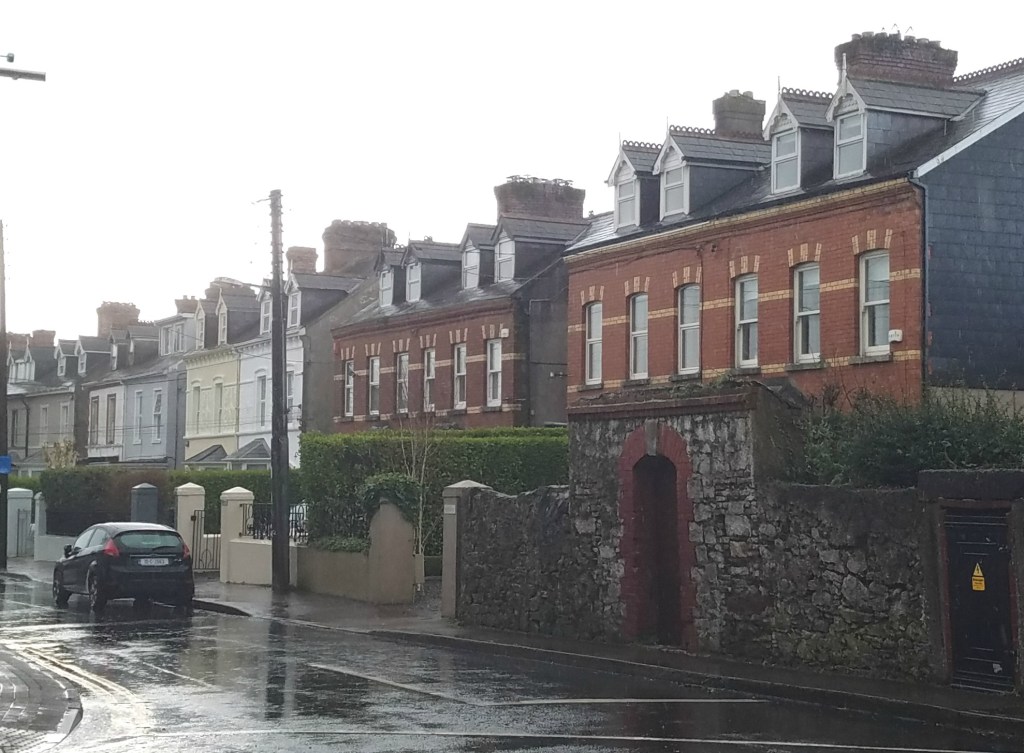
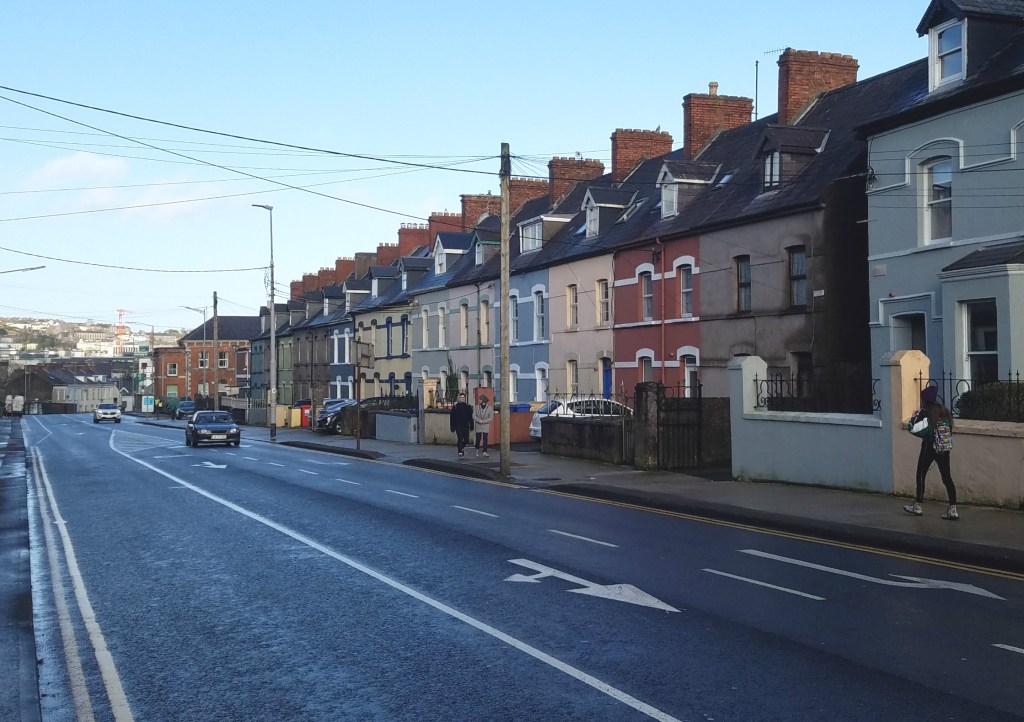
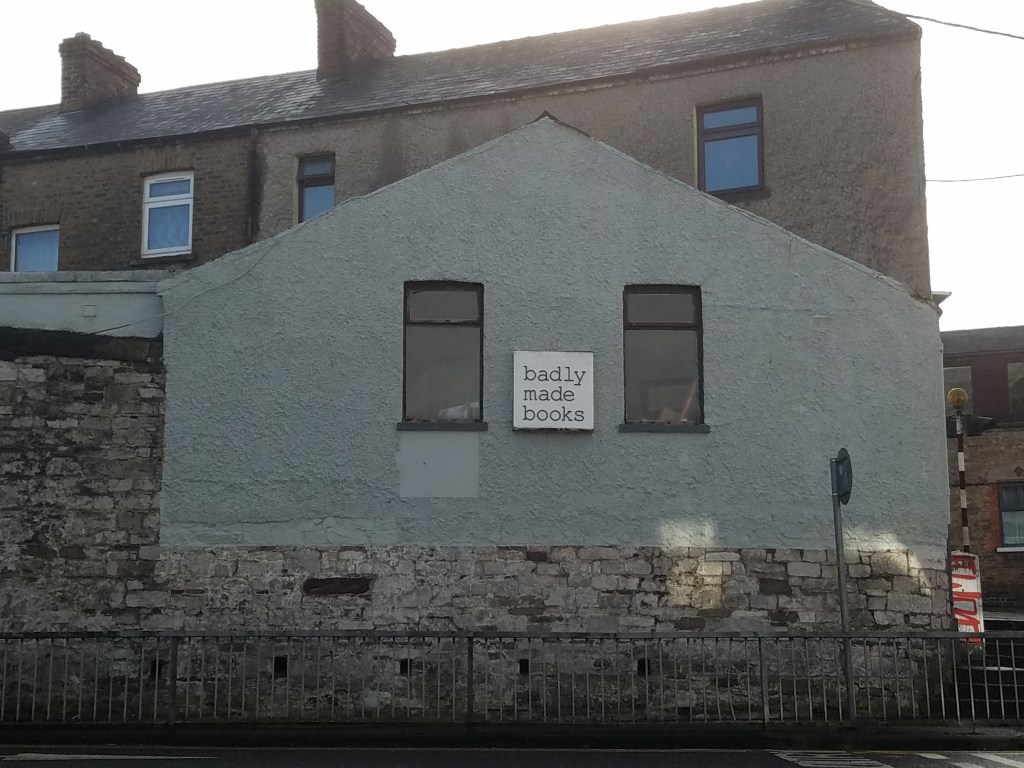
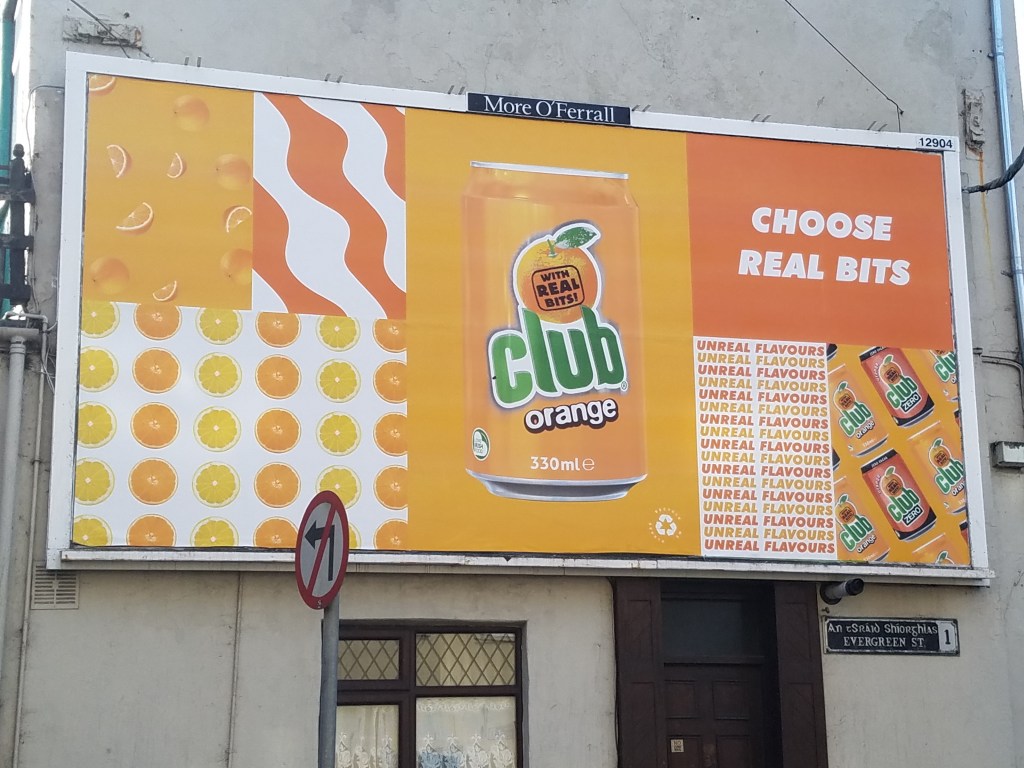
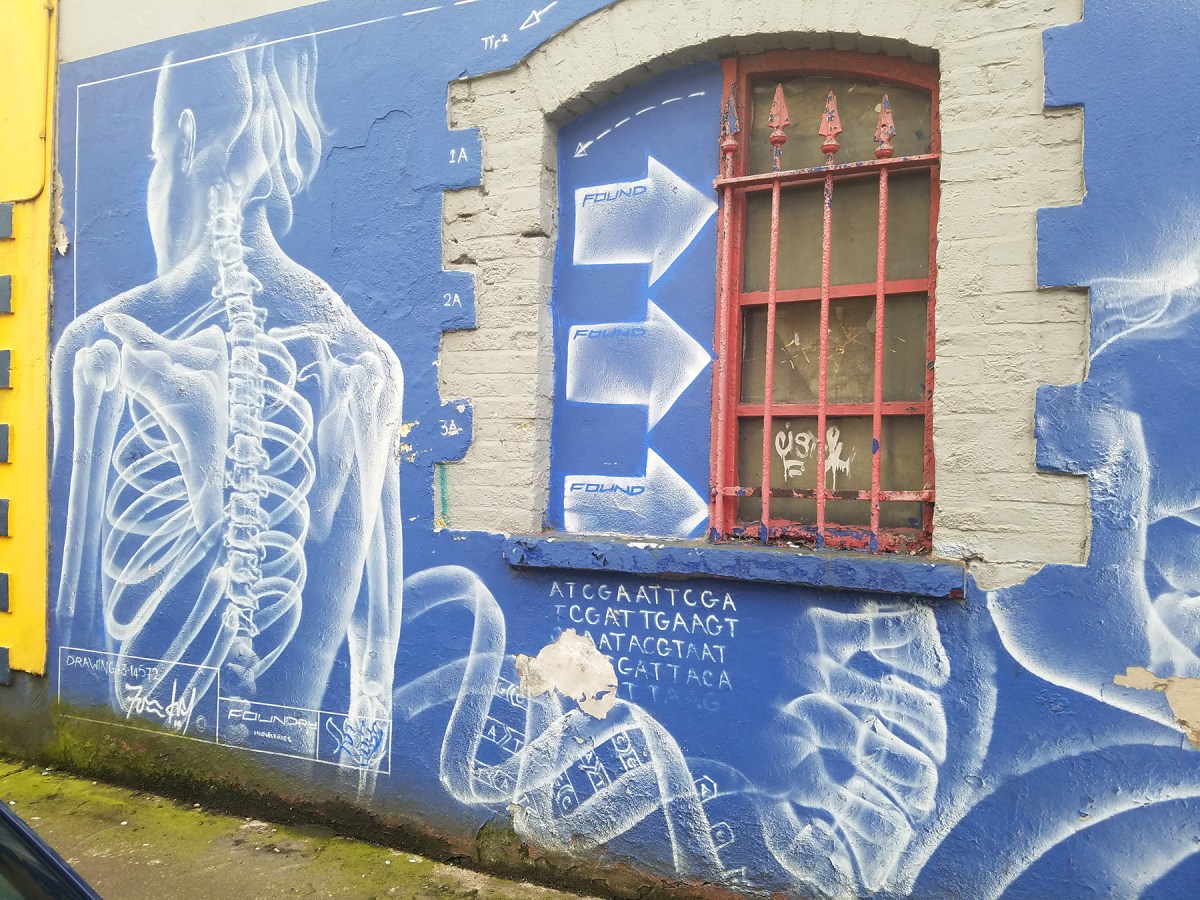
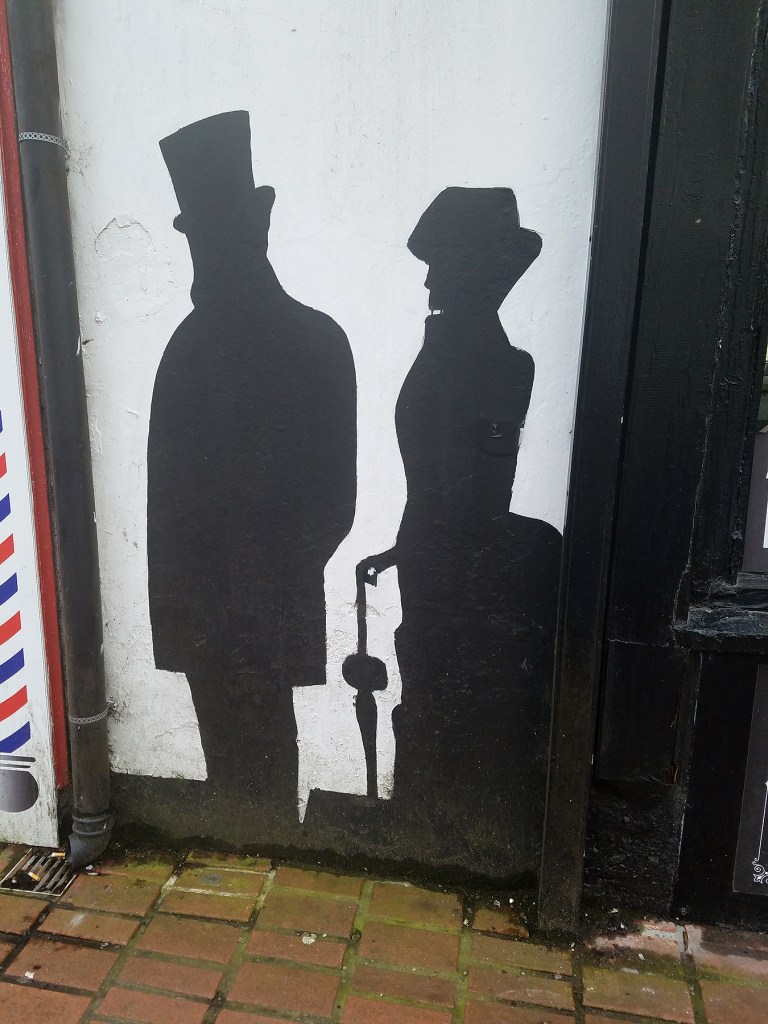
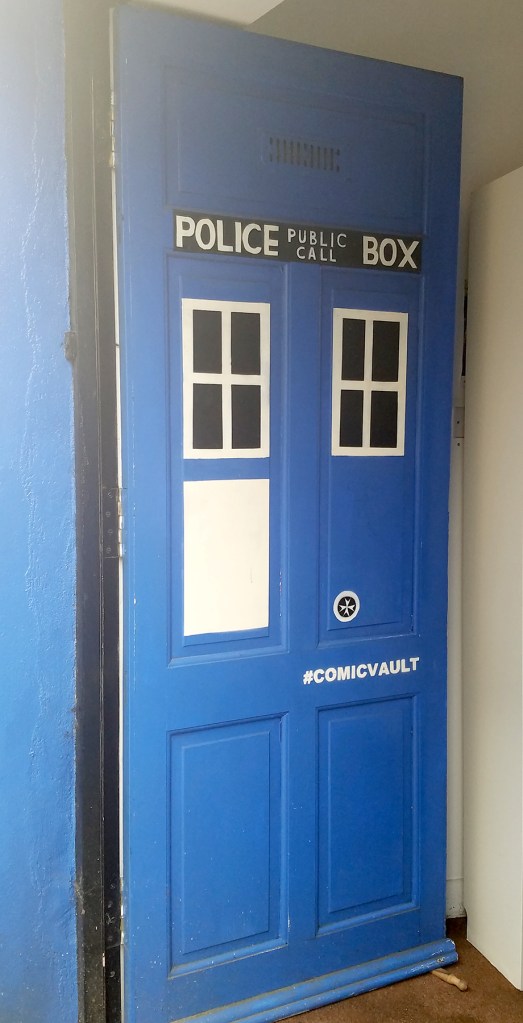
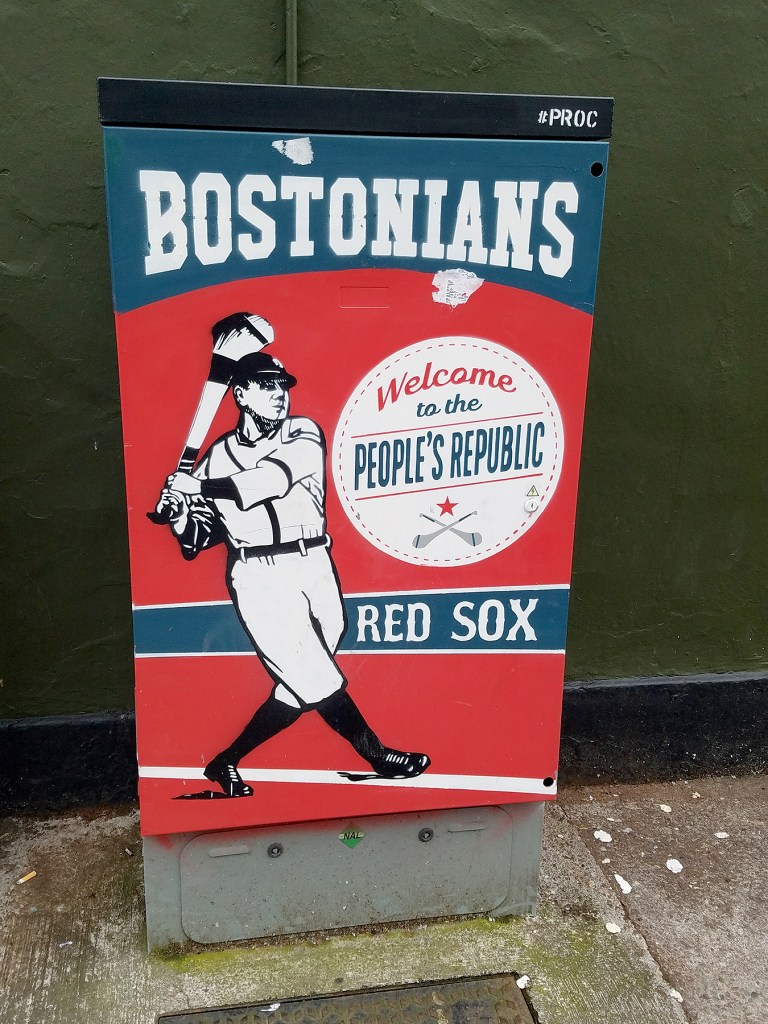
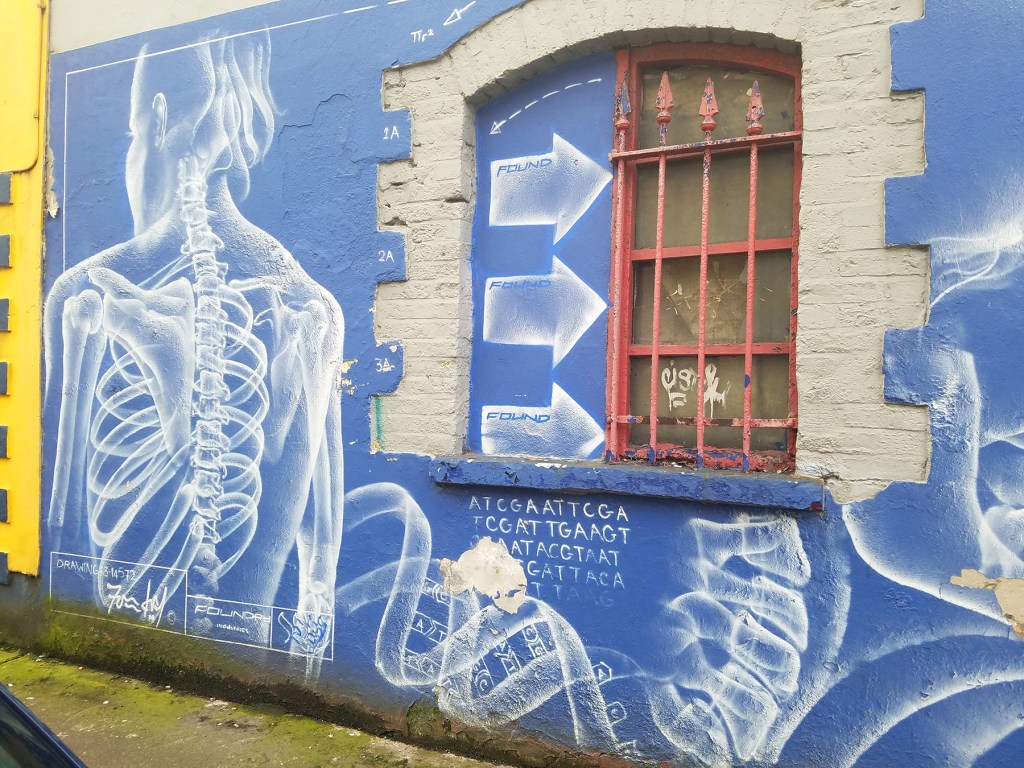
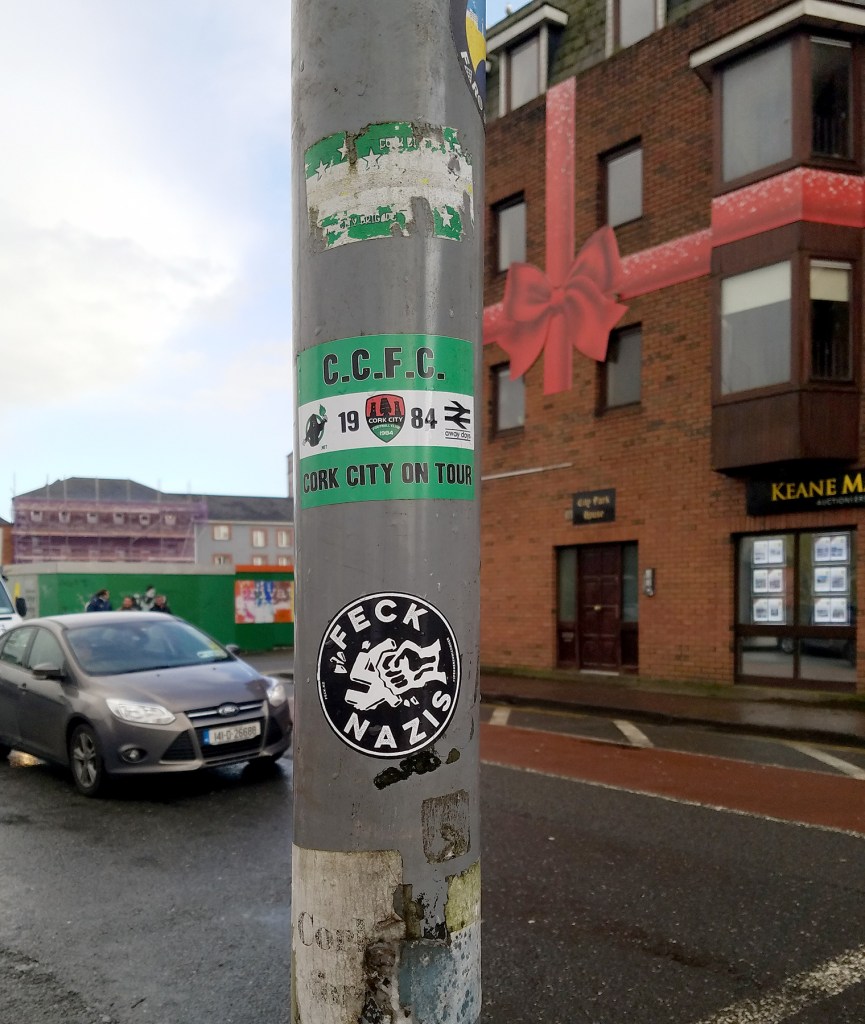
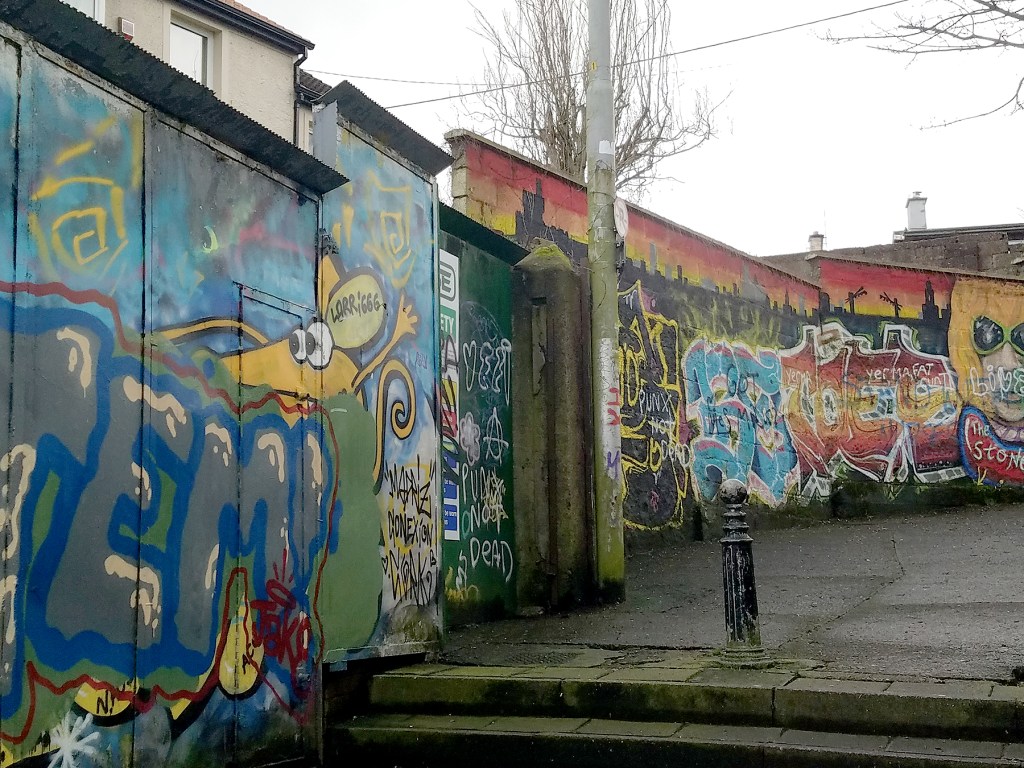
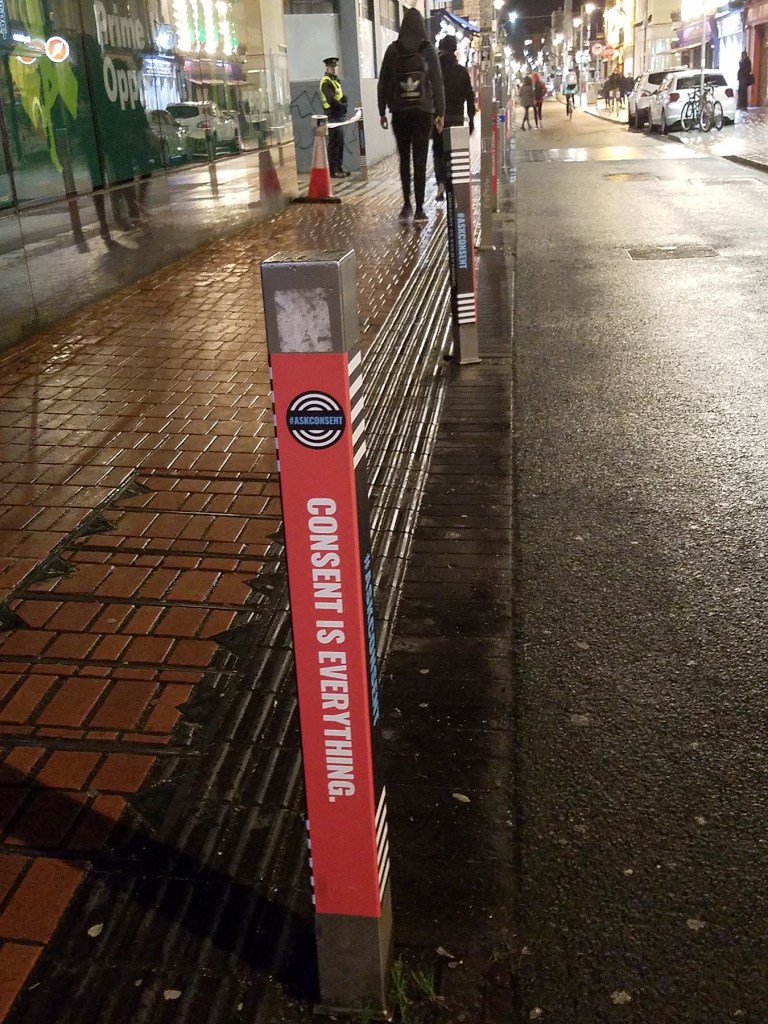
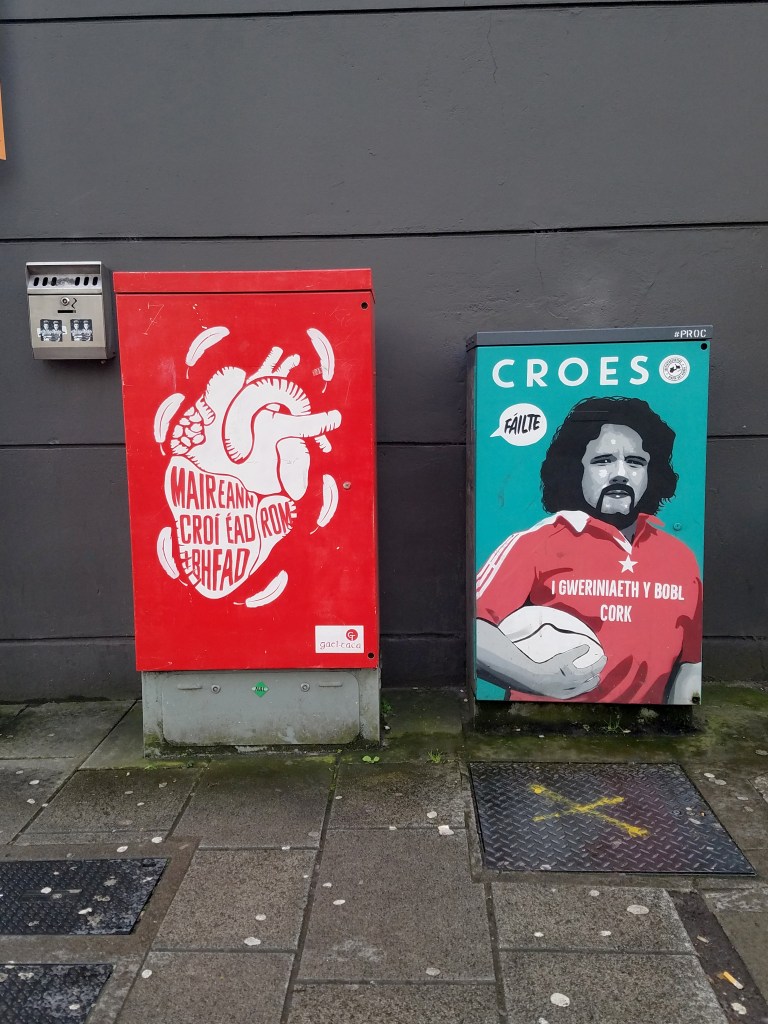
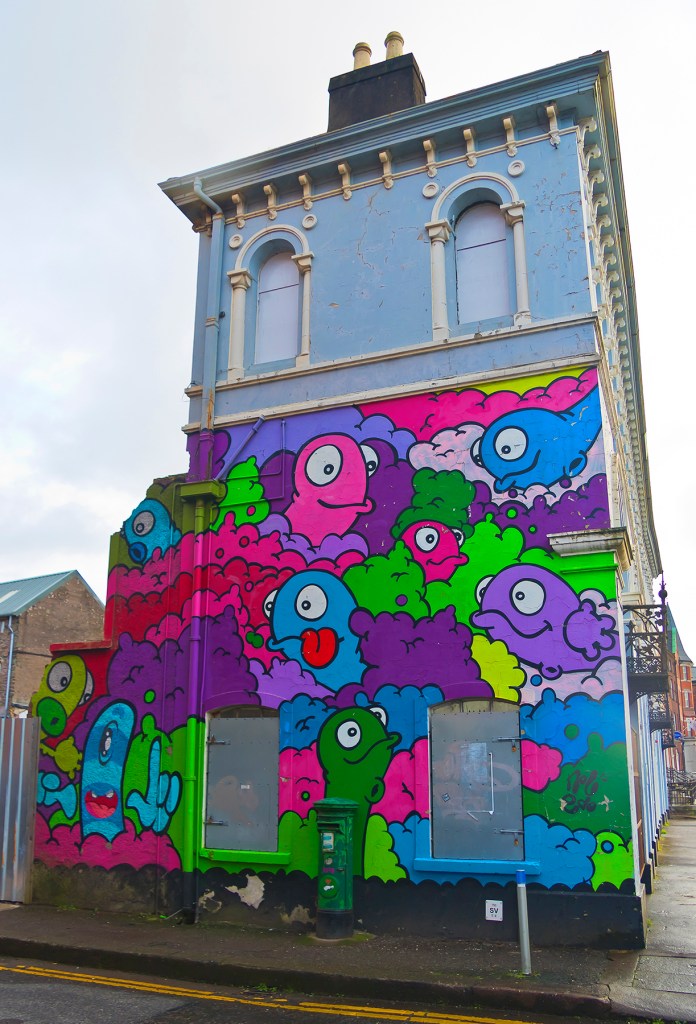
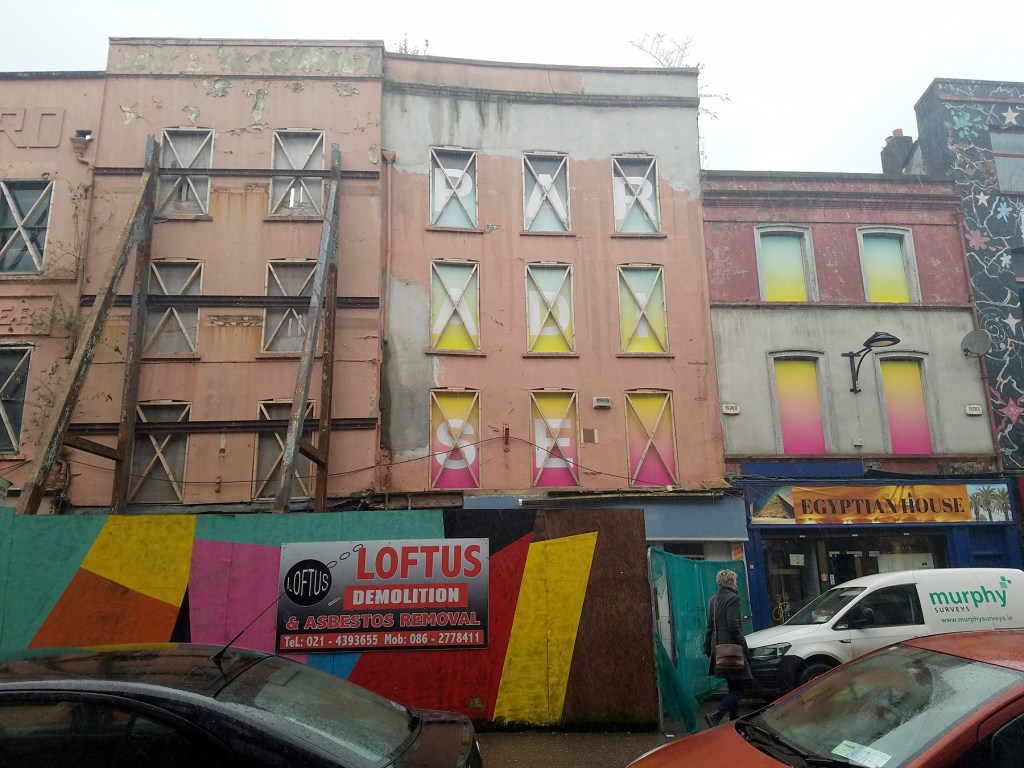
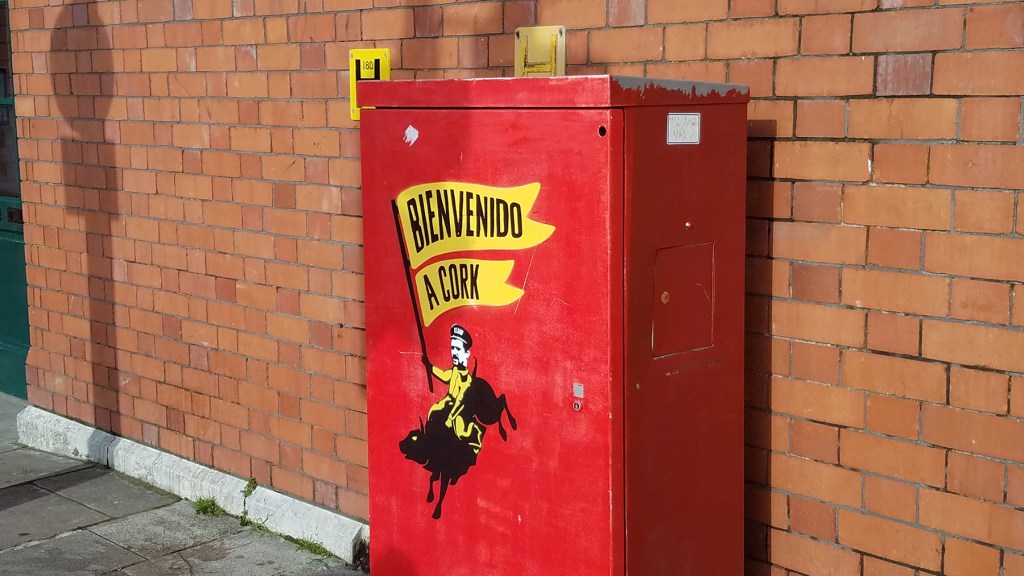
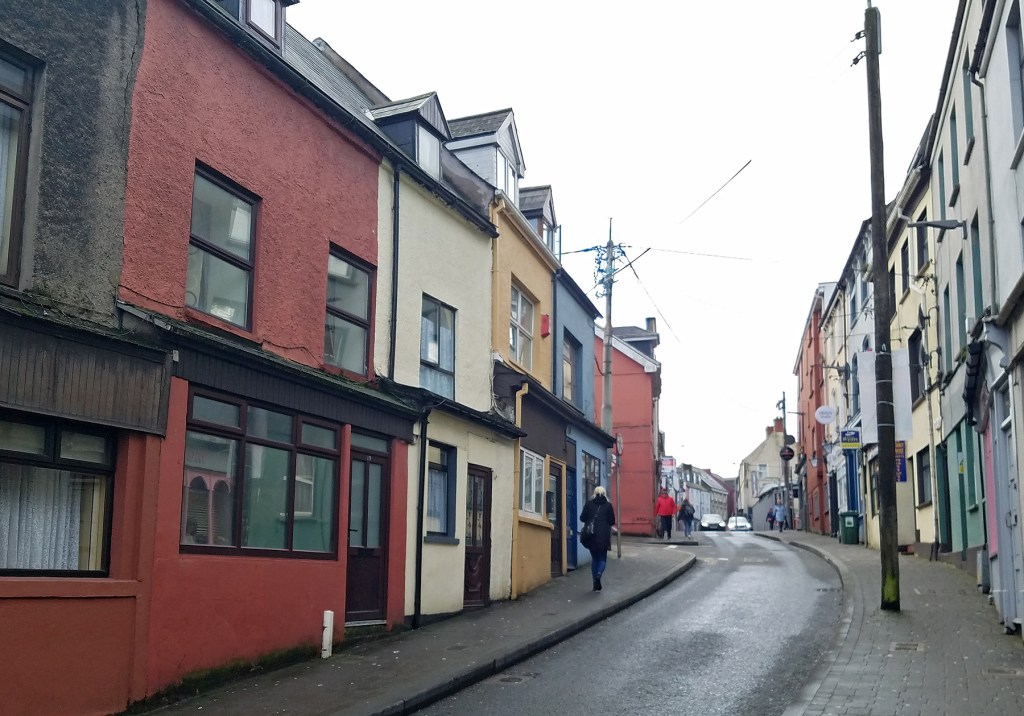
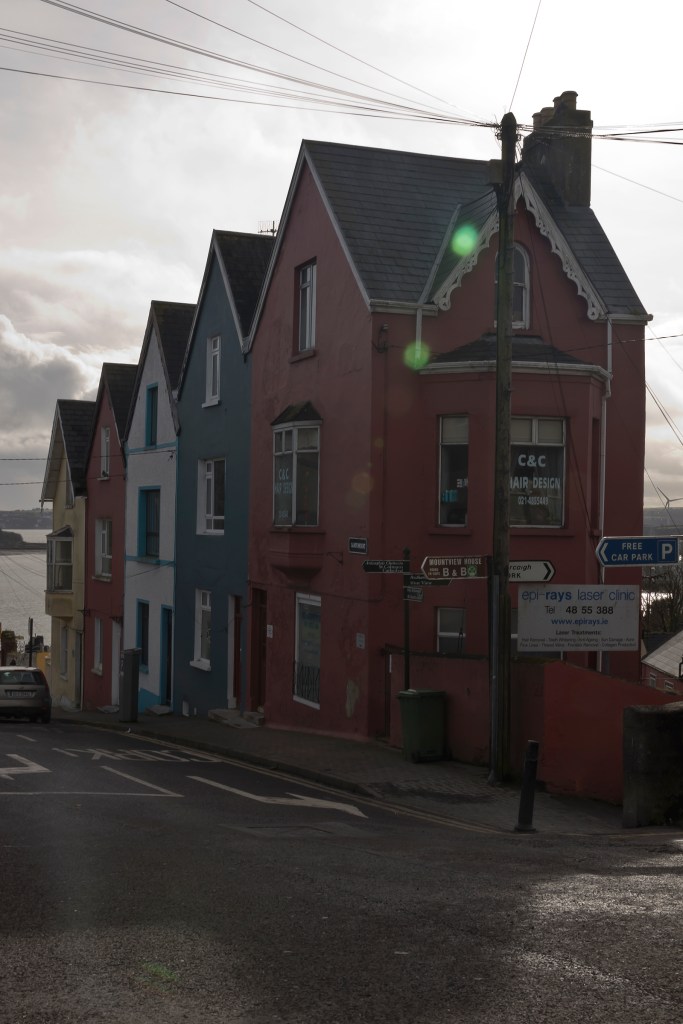
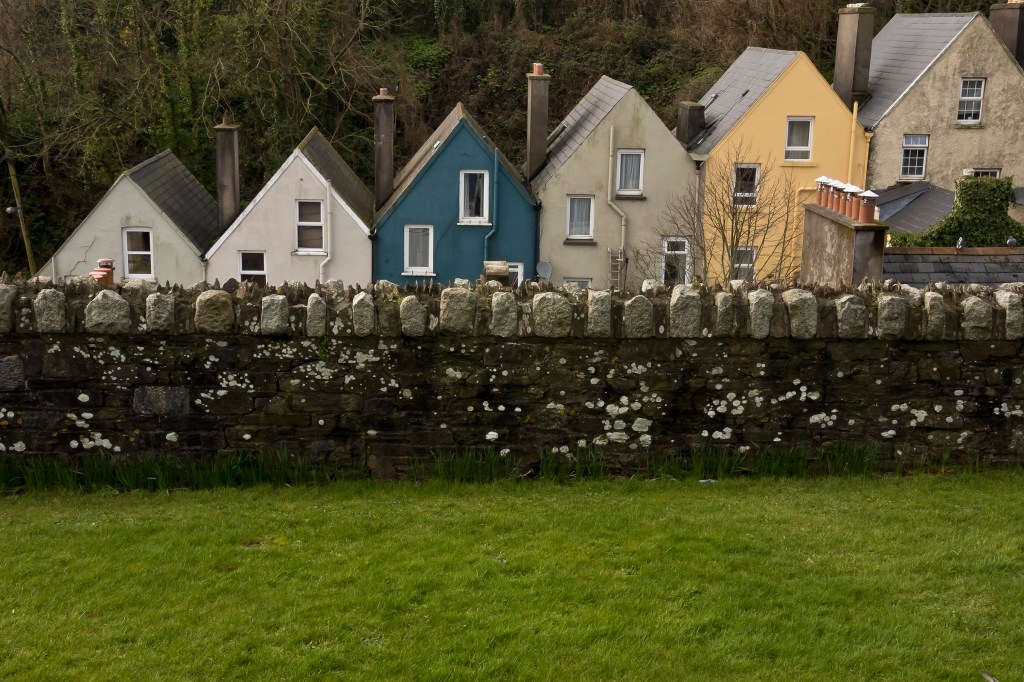
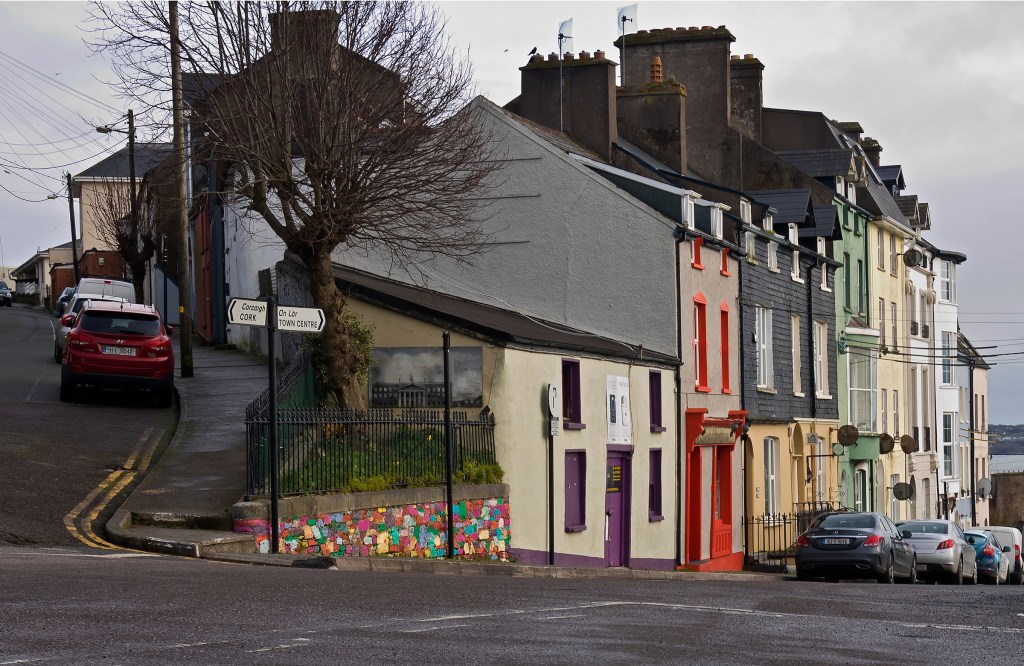
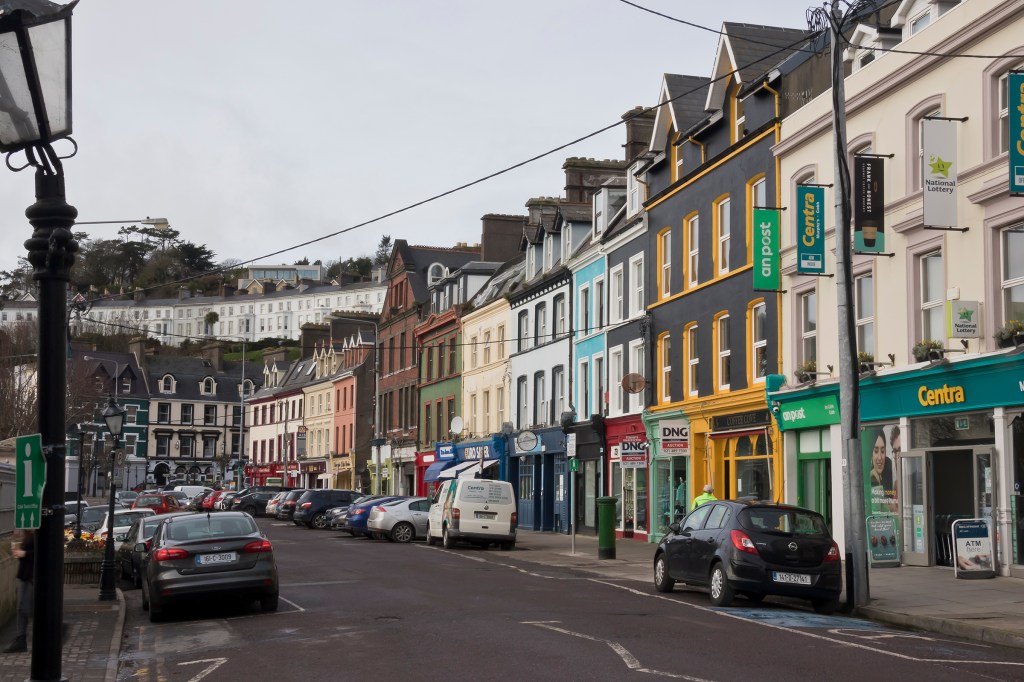
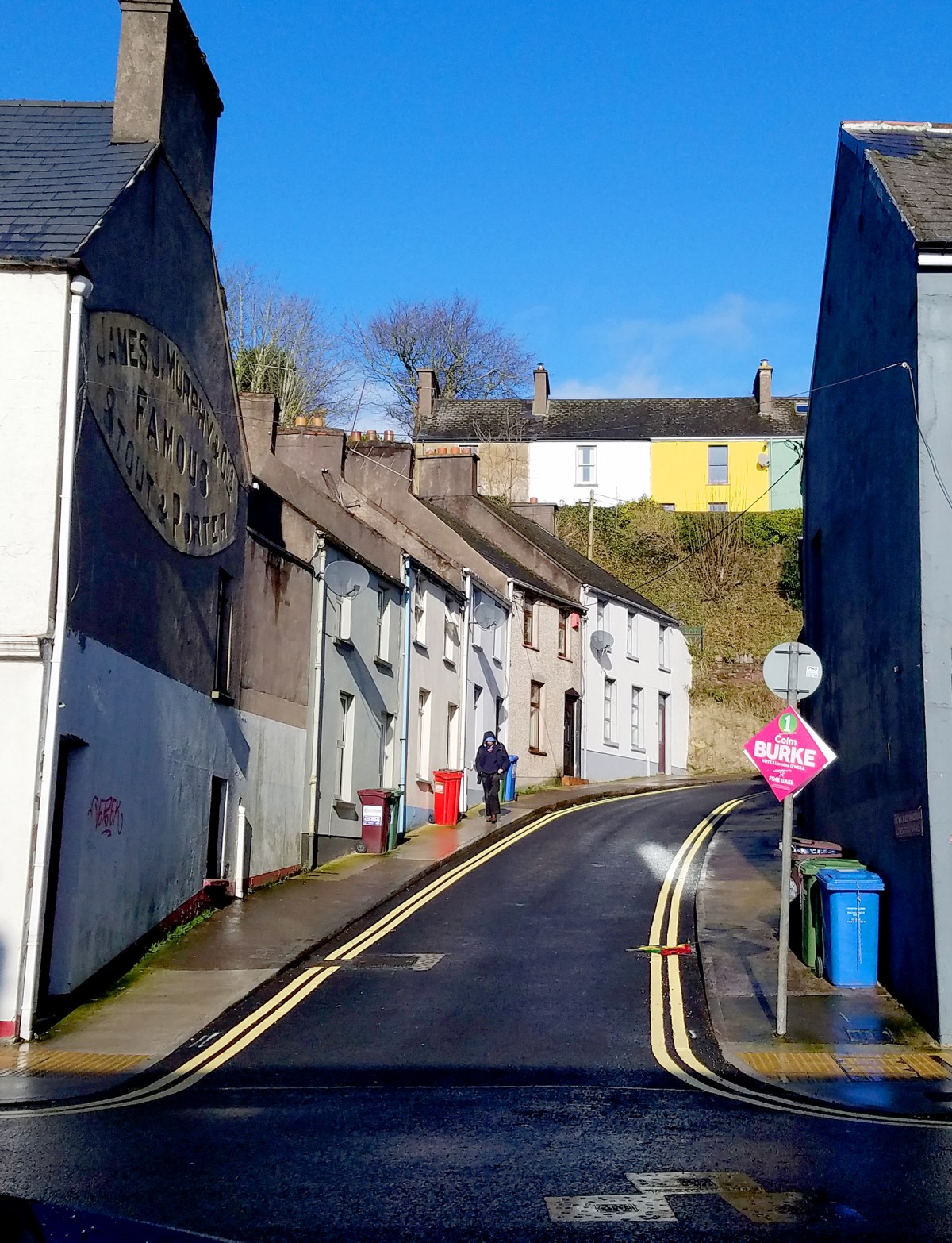
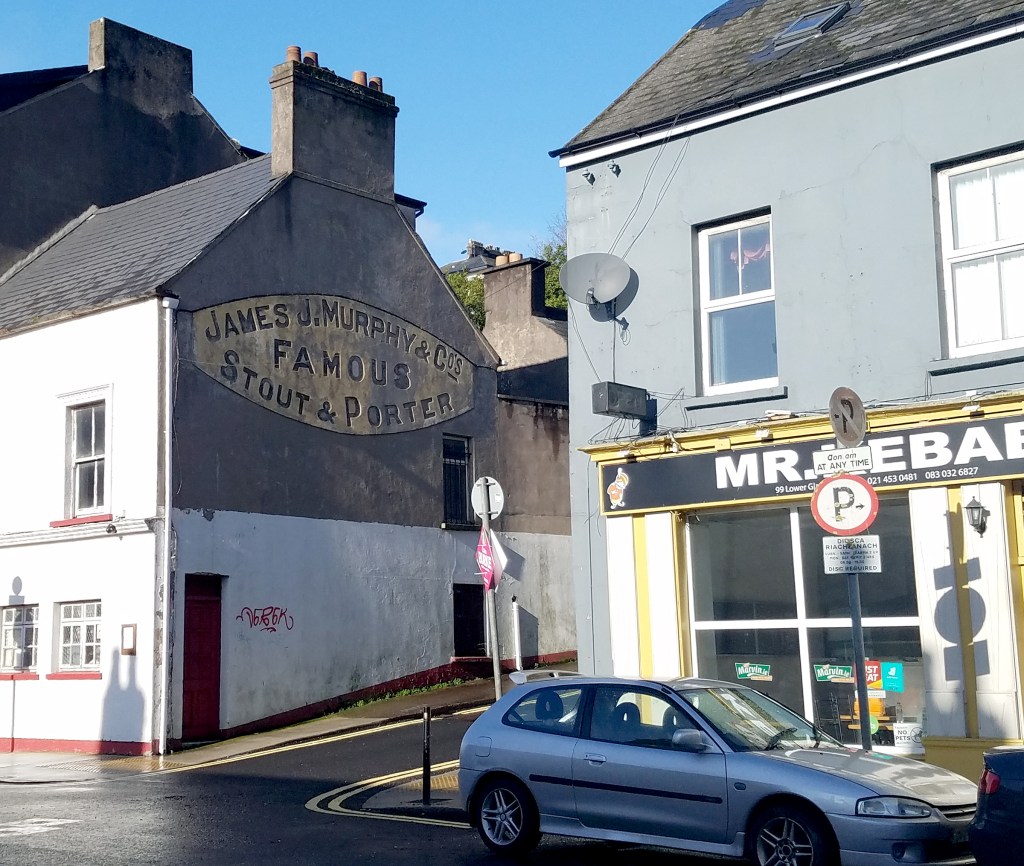
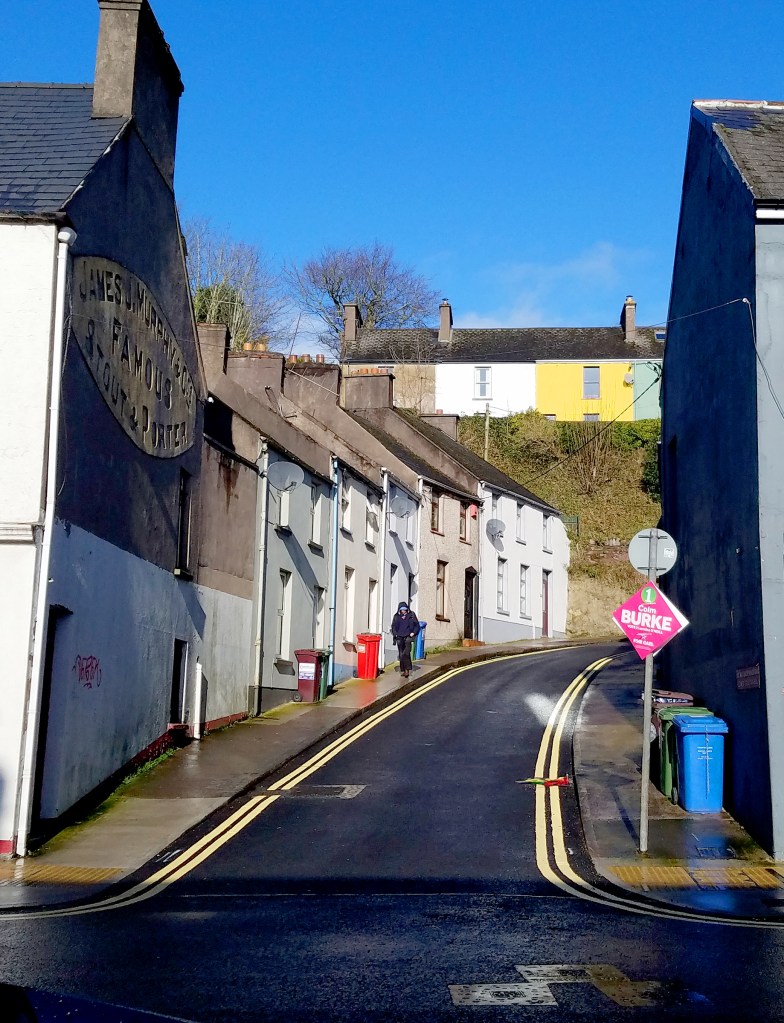
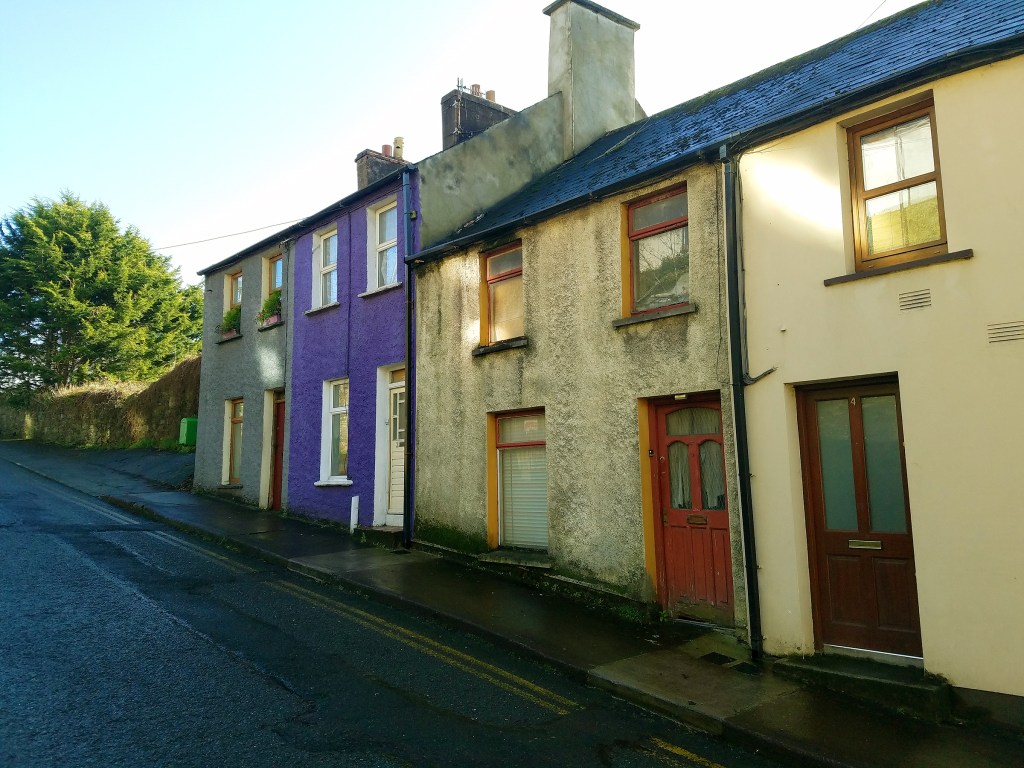
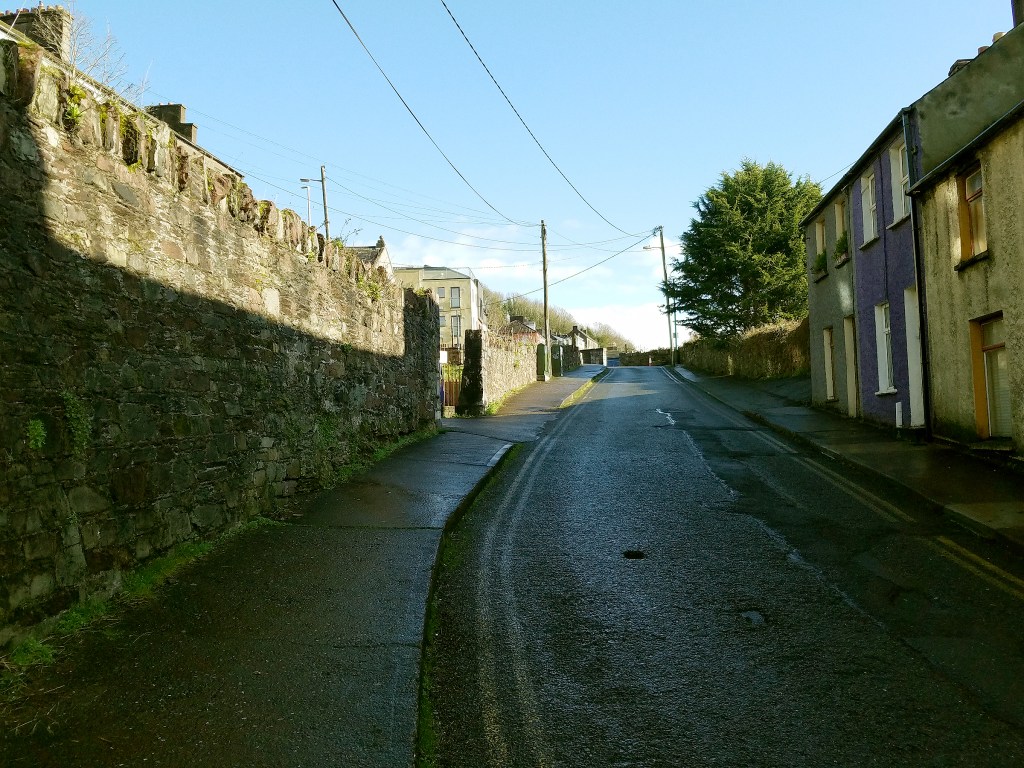
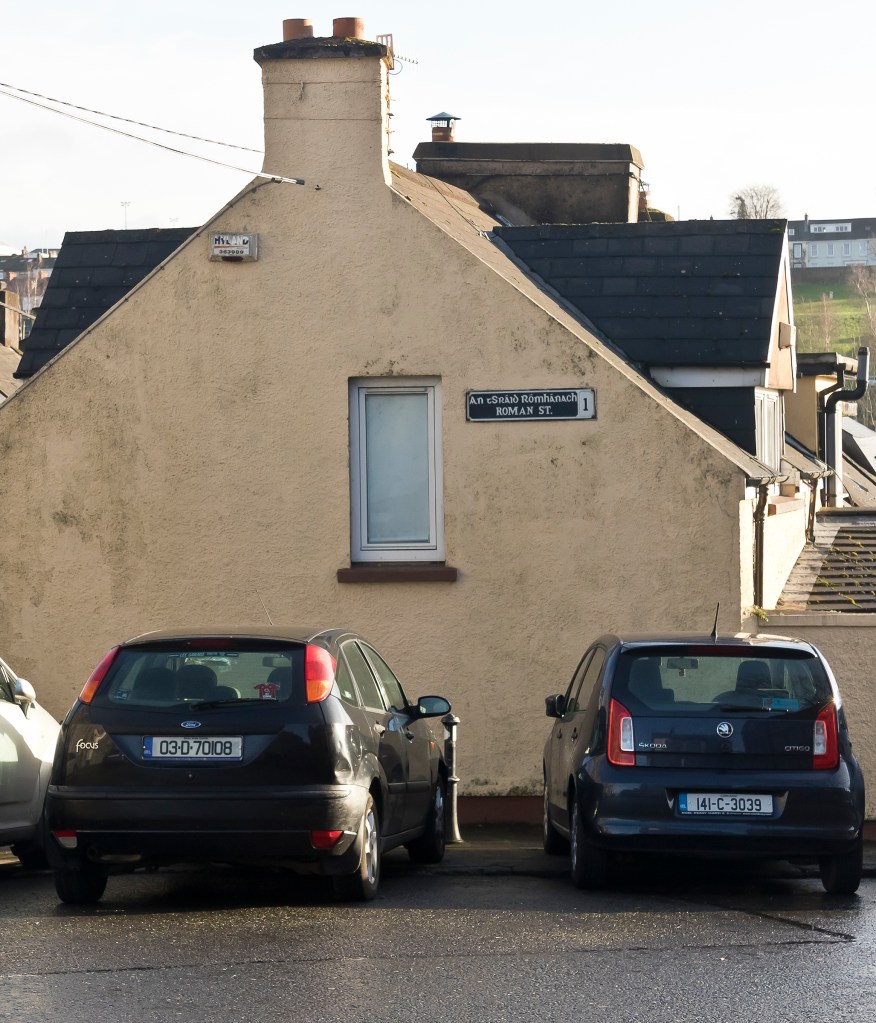
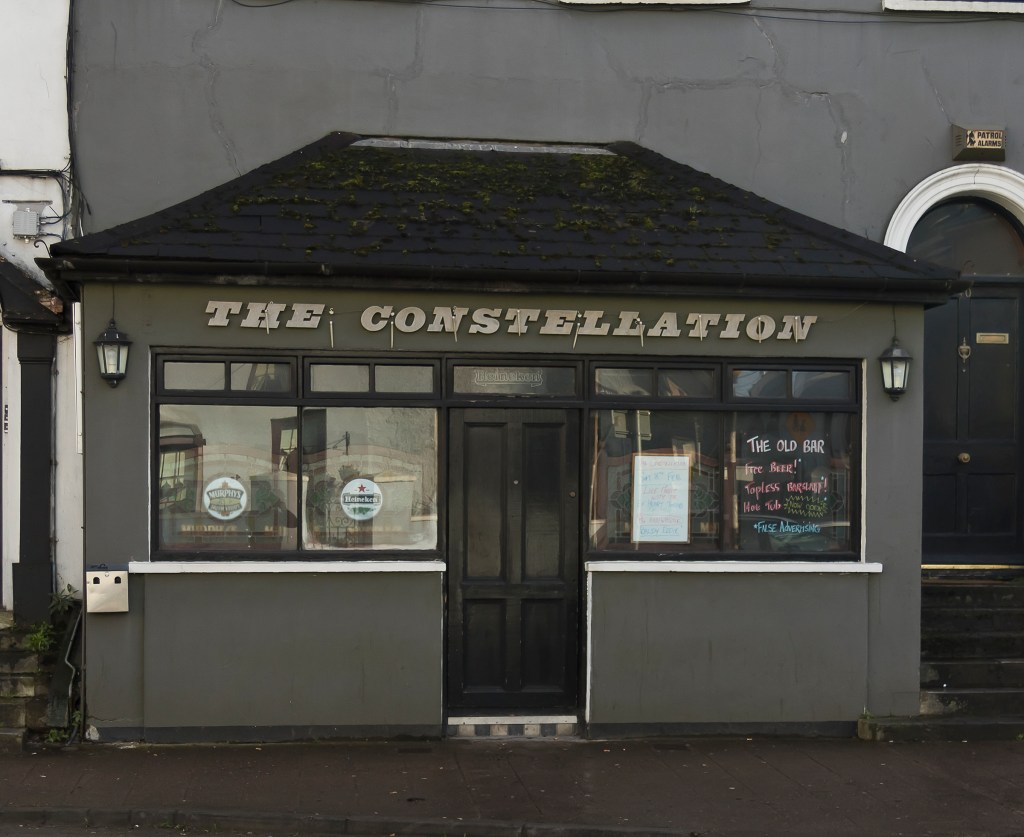
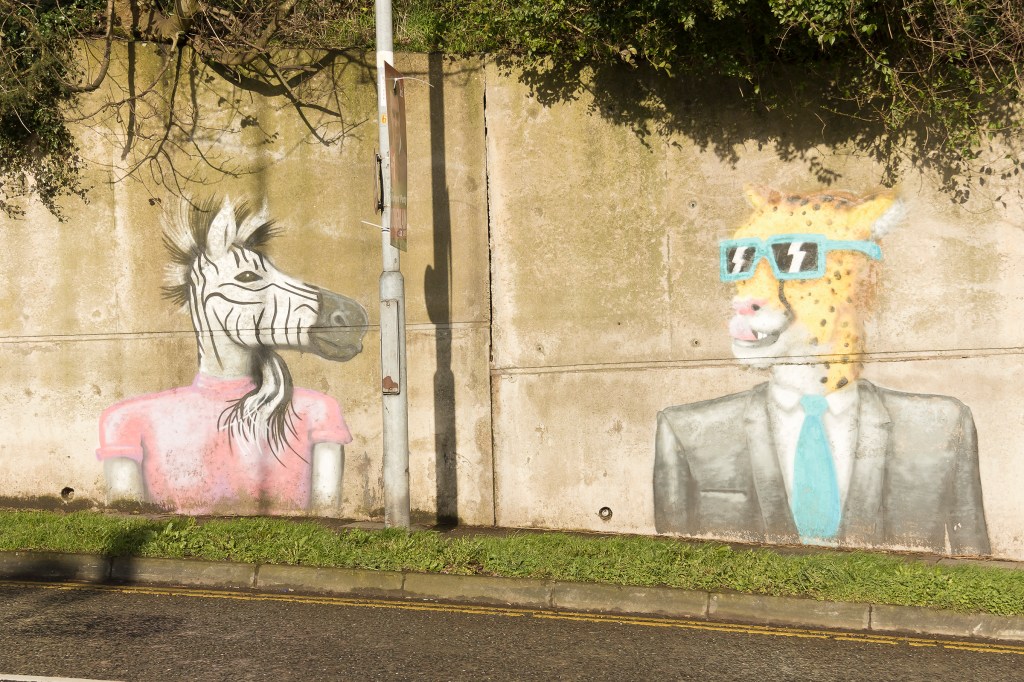
Couple of named estates on the Douglas Road.The gateway to Douglas!Street artCouple of interesting blocks off the Douglas RoadLunch at Barry’s, since 1771And a couple of interesting marketing choices on the road to Douglas
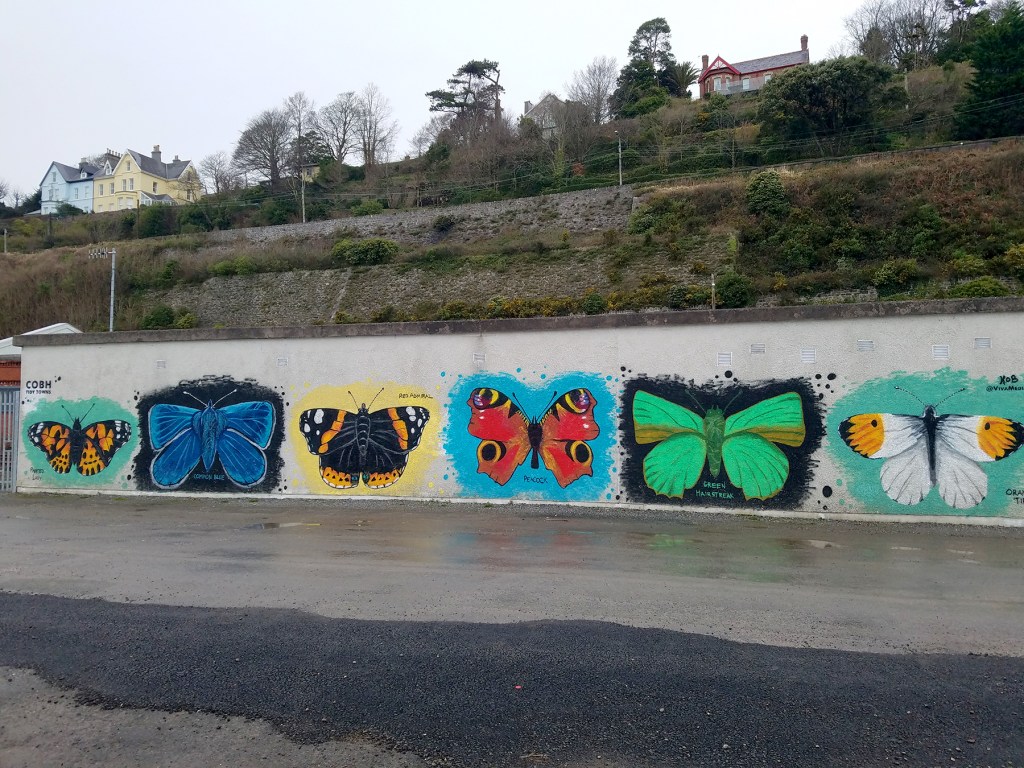
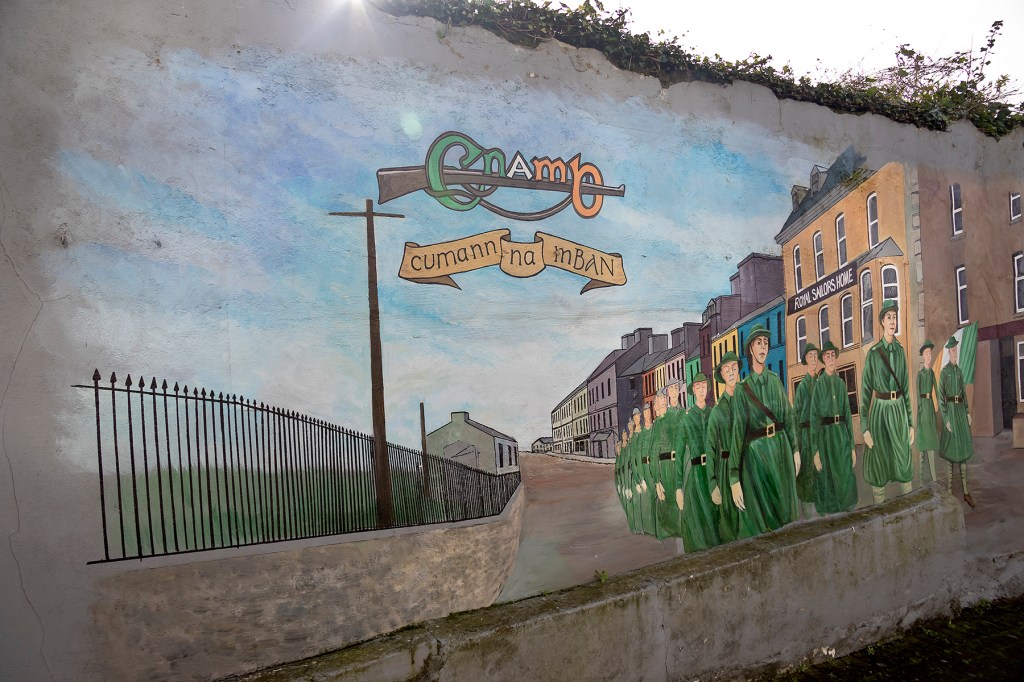
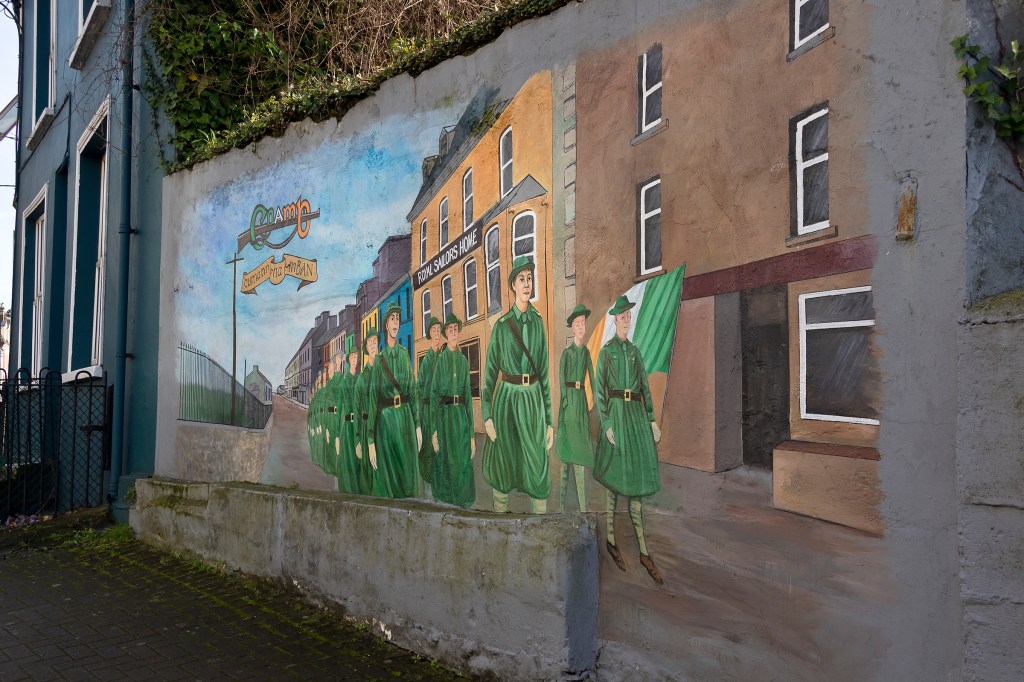
Photos from the past 10 days. All from various parts of Cork City, except the butterfly mural, which is near the Cobh train station, and the soldiers mural, which is near Cobh town center.
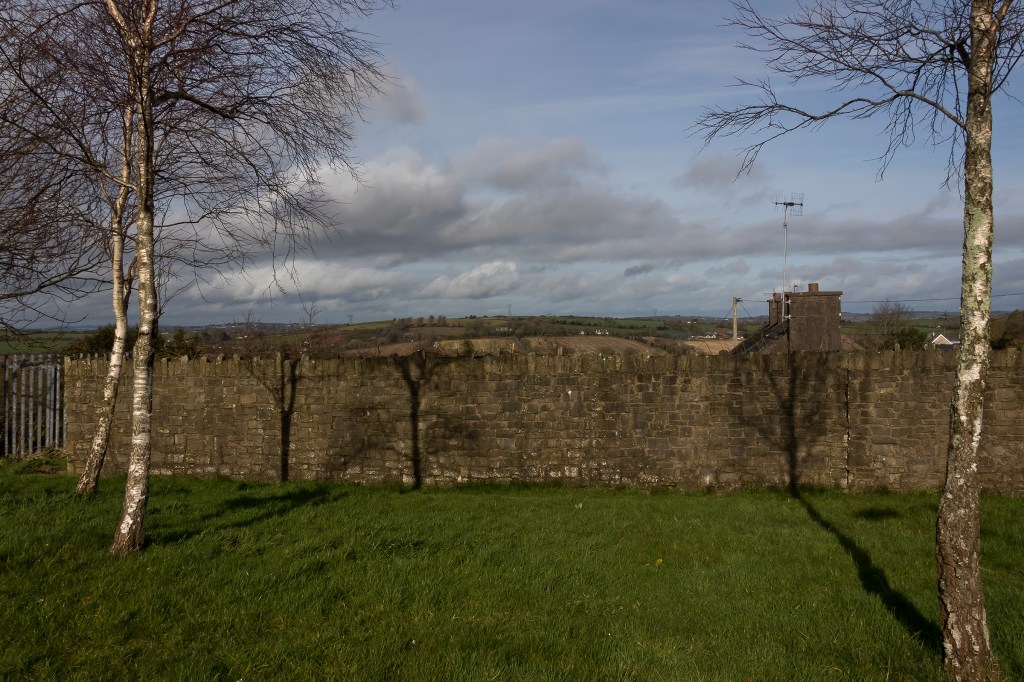
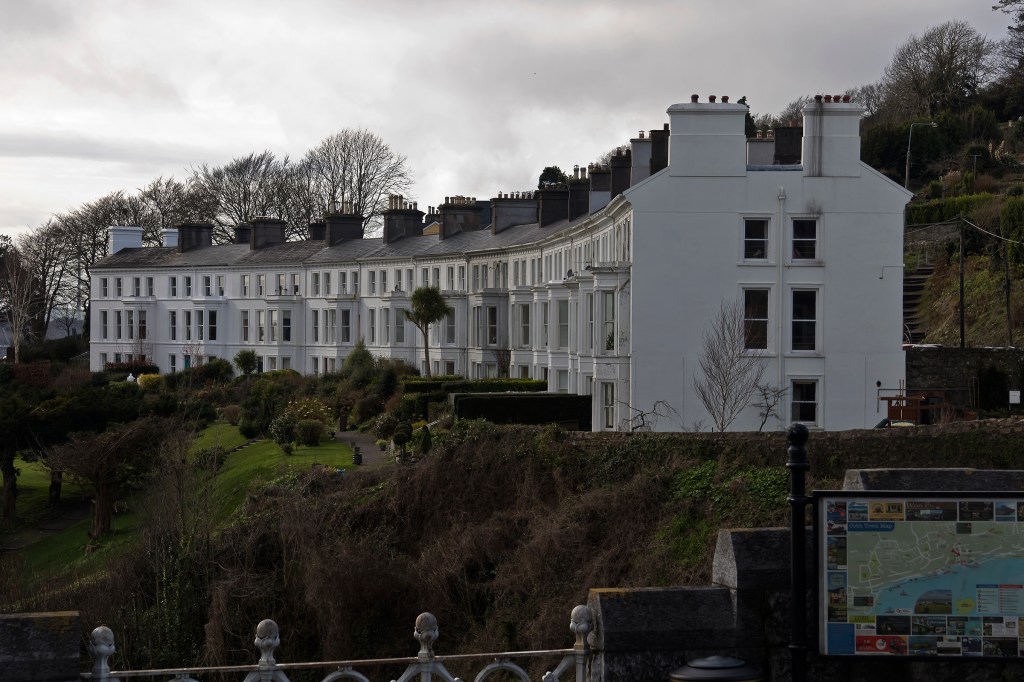
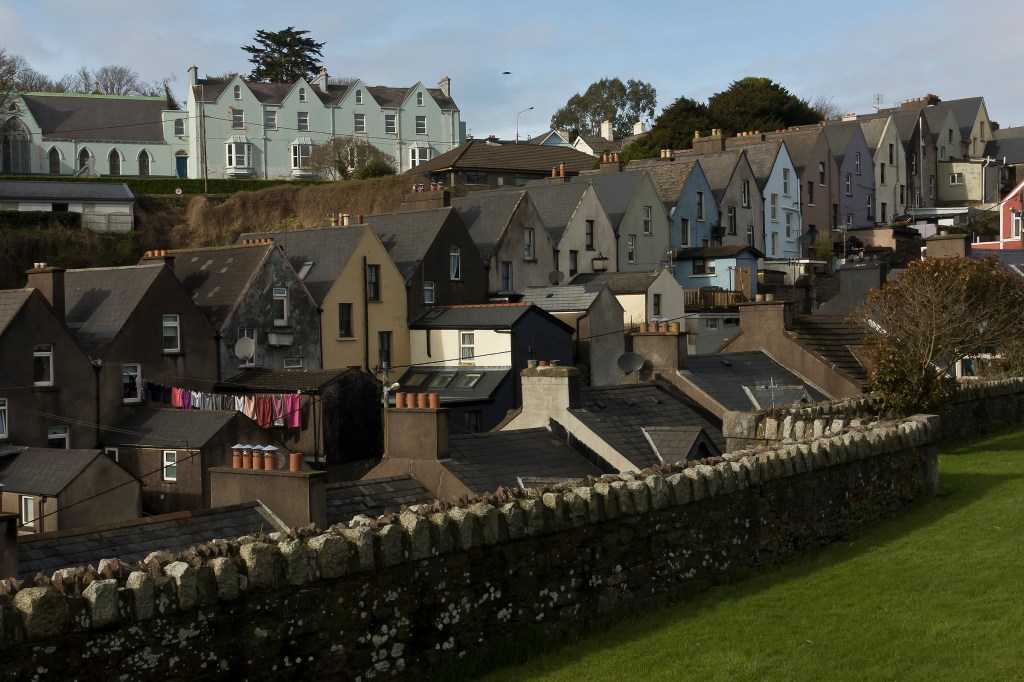
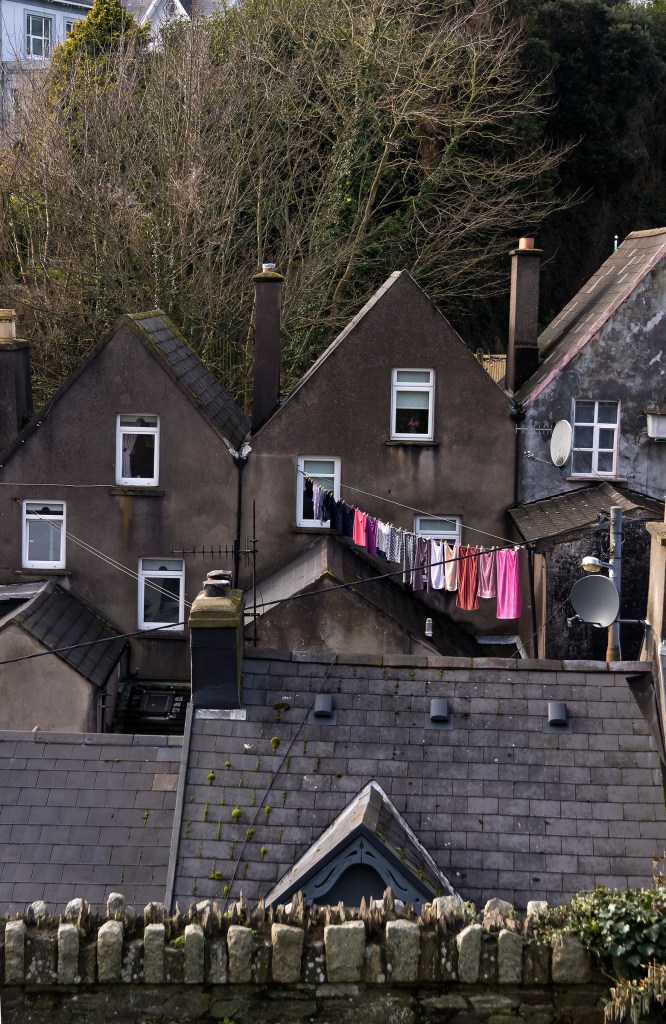
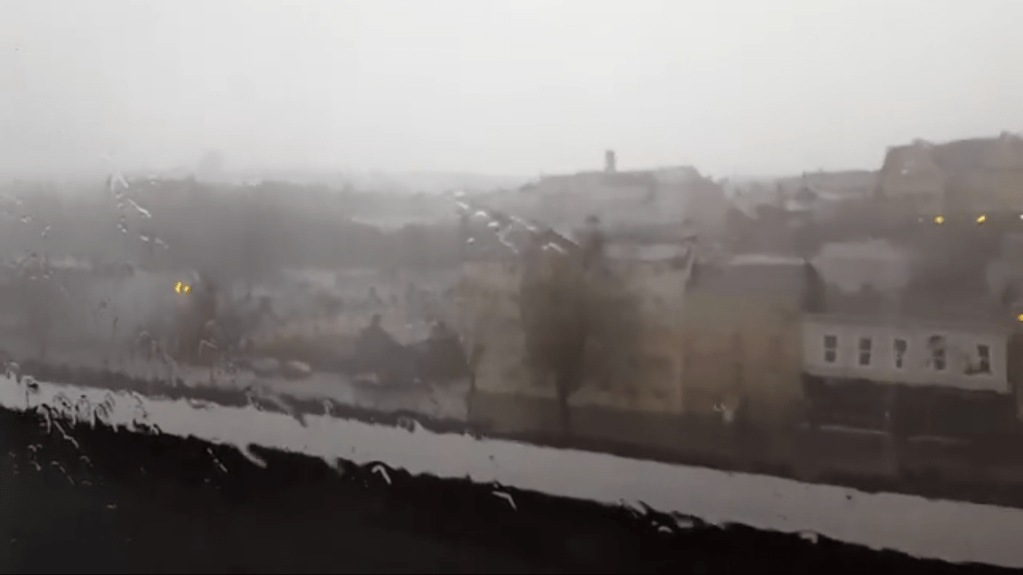
Another winter storm (Dennis) is sweeping through Cork today. Lots of wind and sideways rain blowing in from the west. Here’s some more photos of our walk up the hills on the south side of the city the other day.
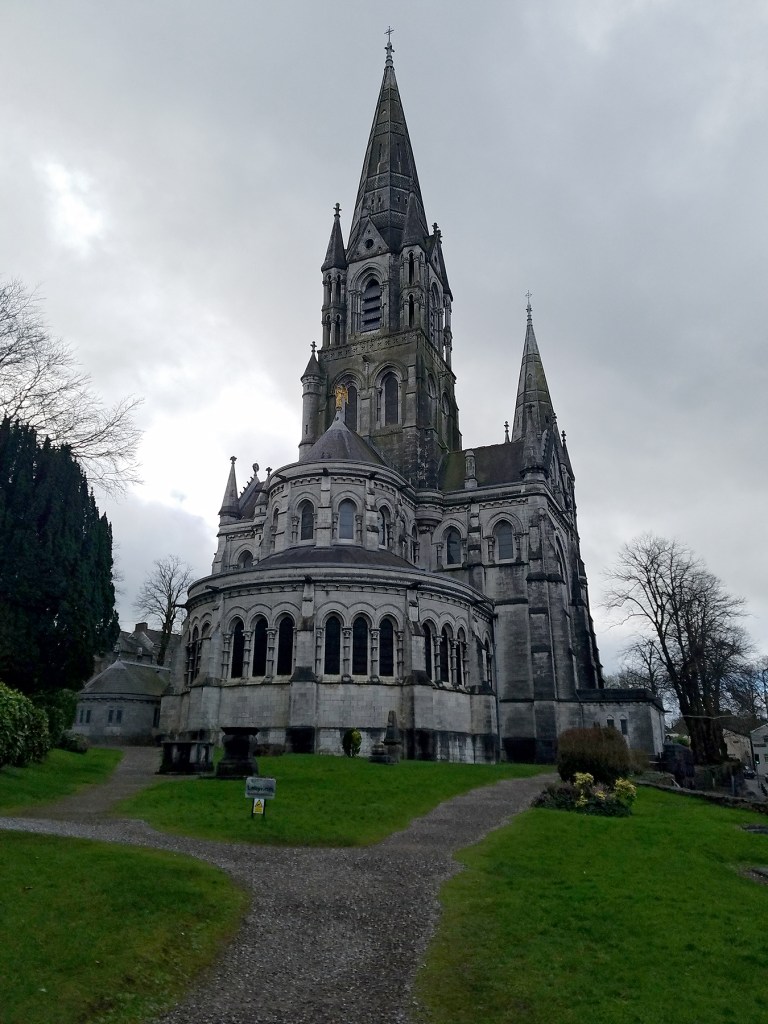
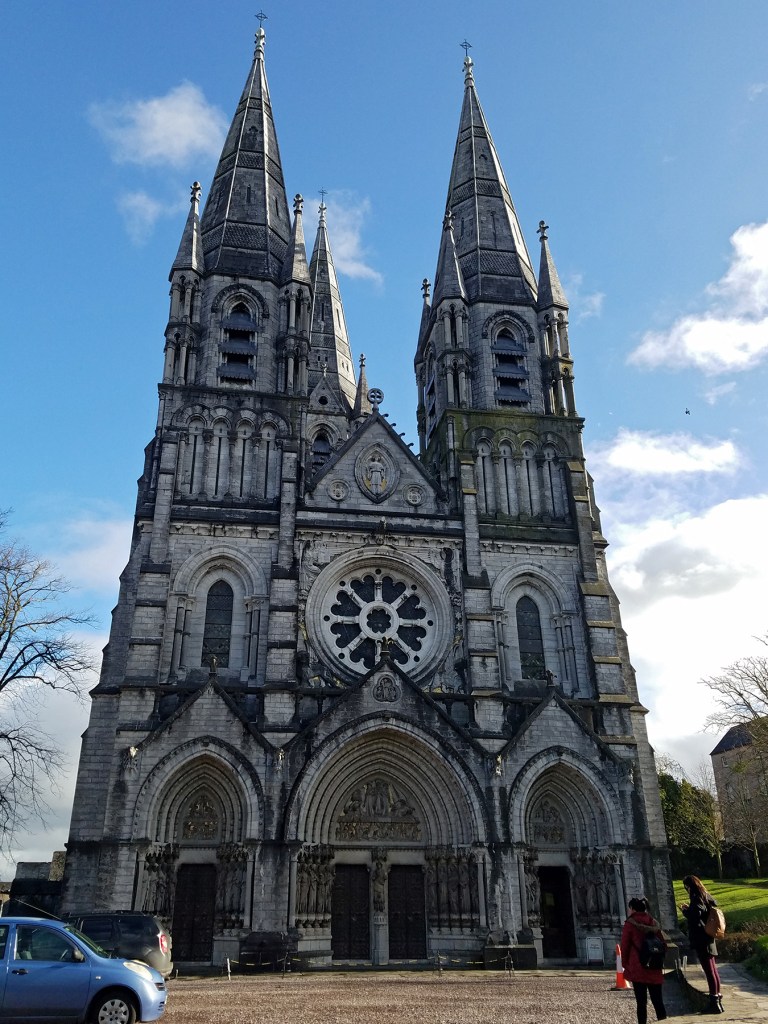
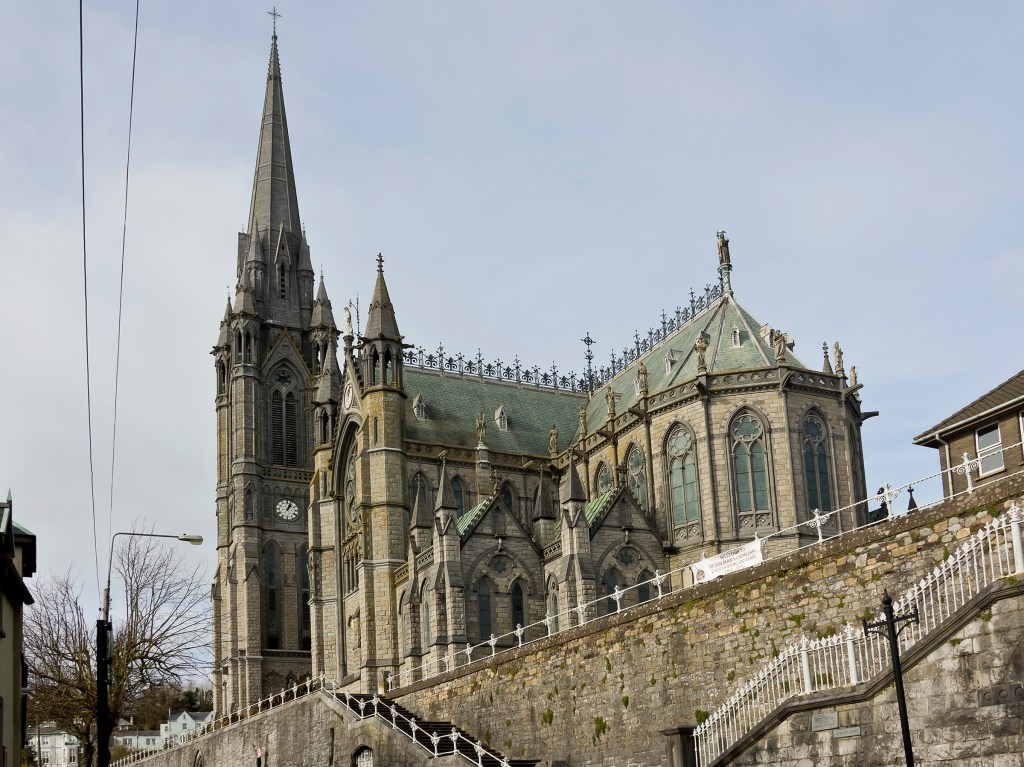
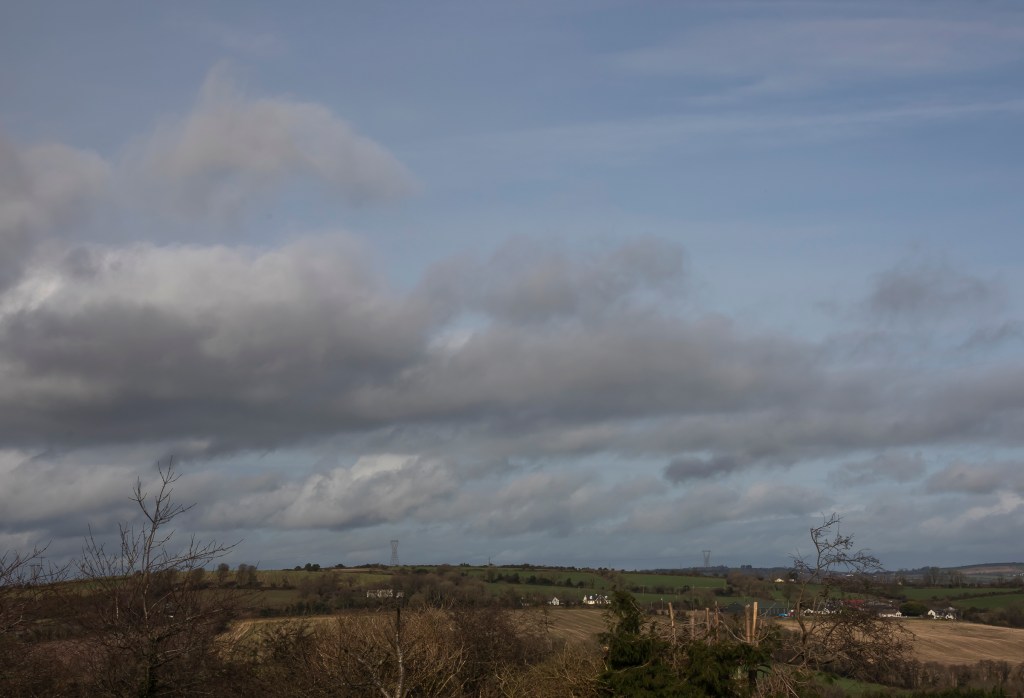
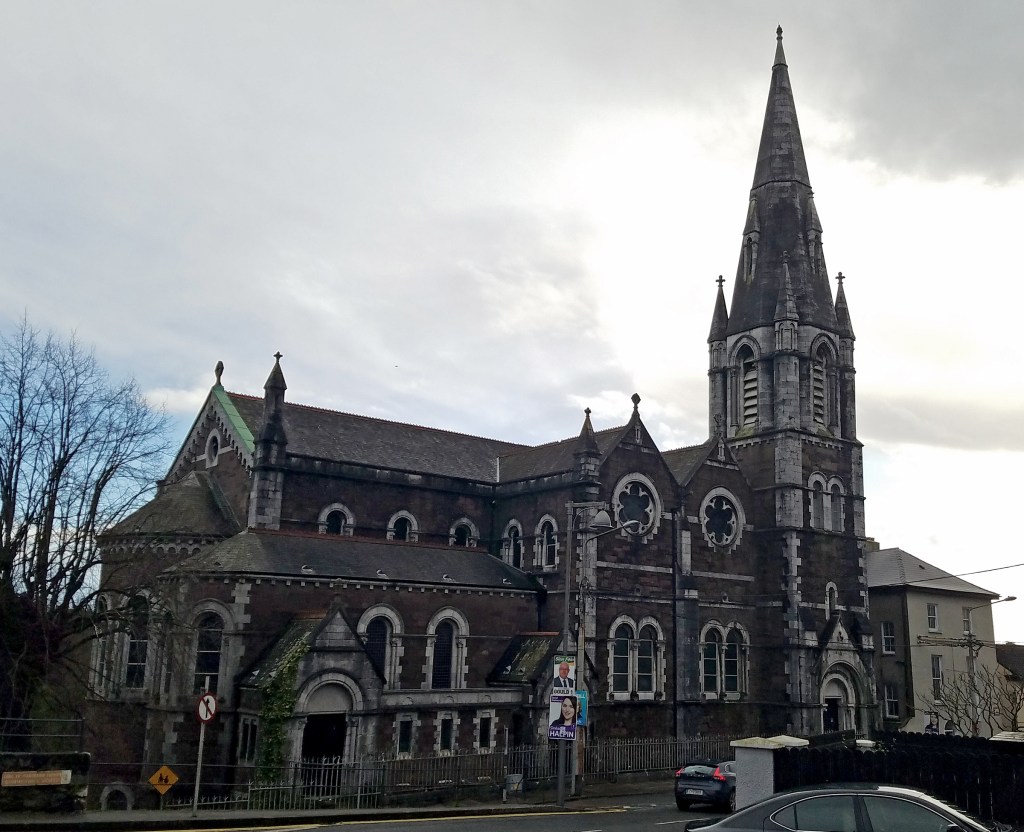
Front and rear views of the cathedral. The sky was changing rapidly that day.
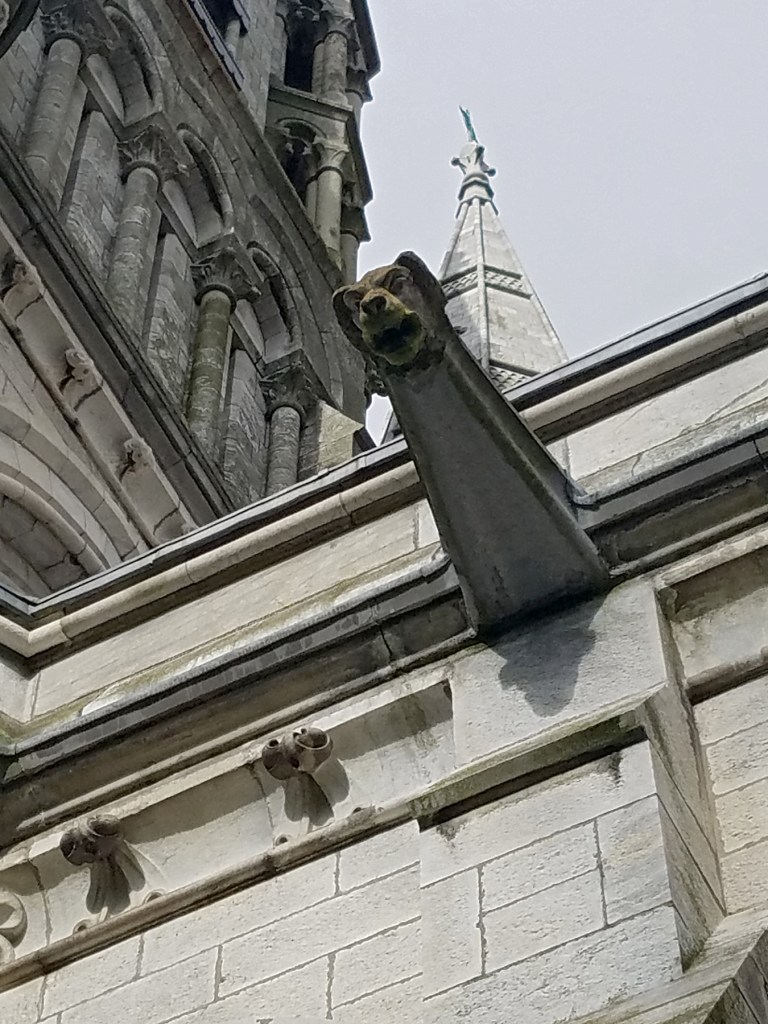
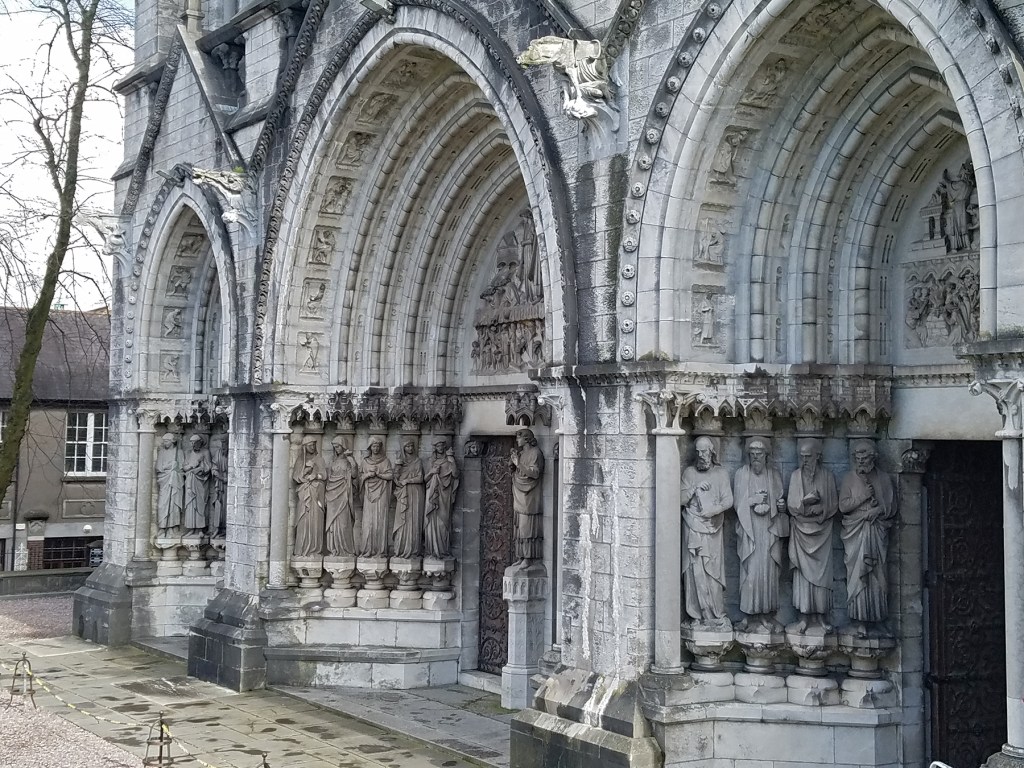
Some details of the cathedral
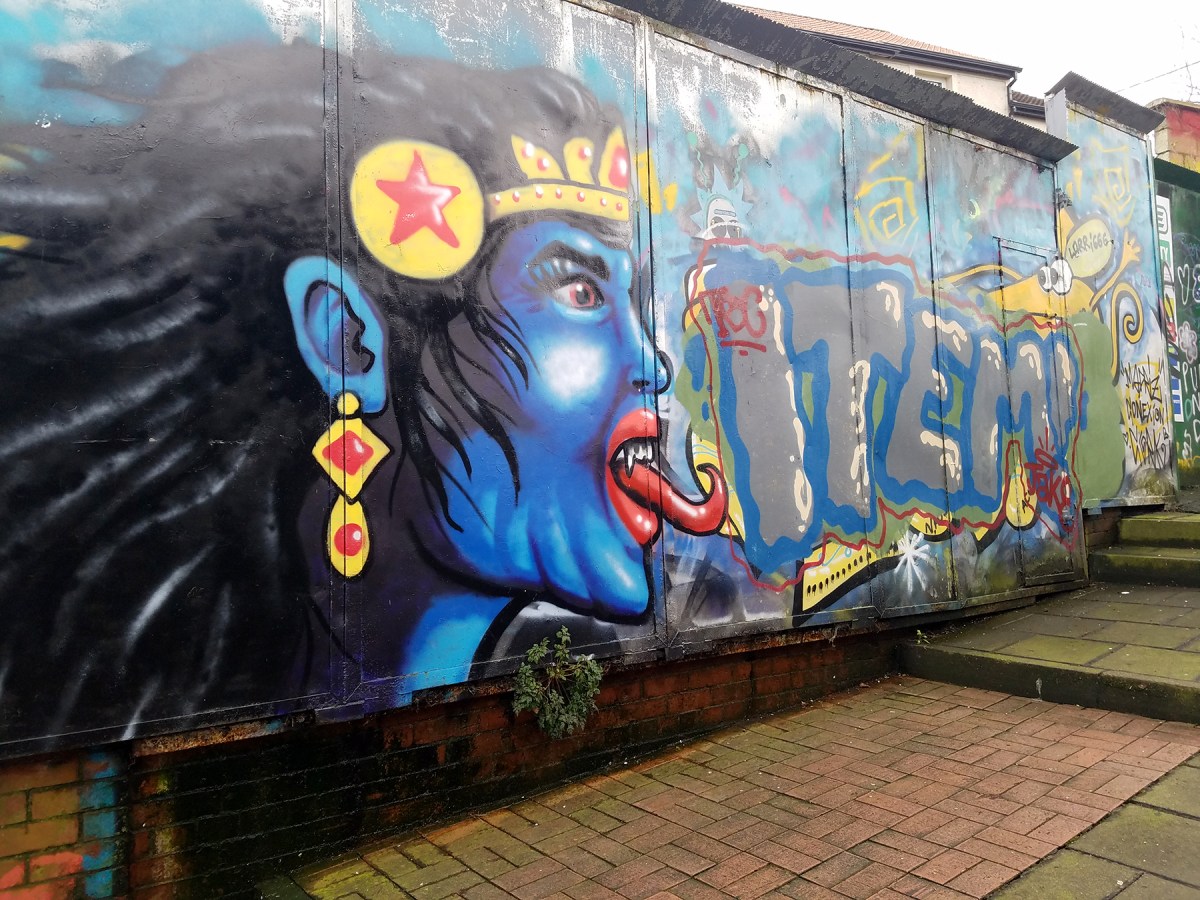
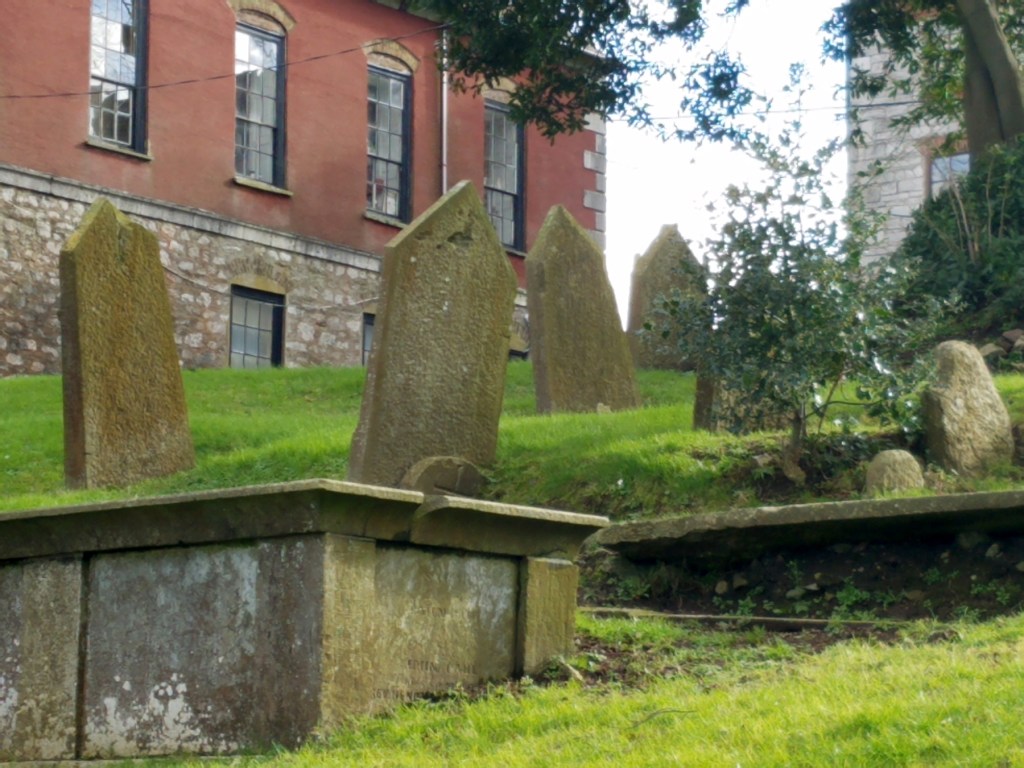
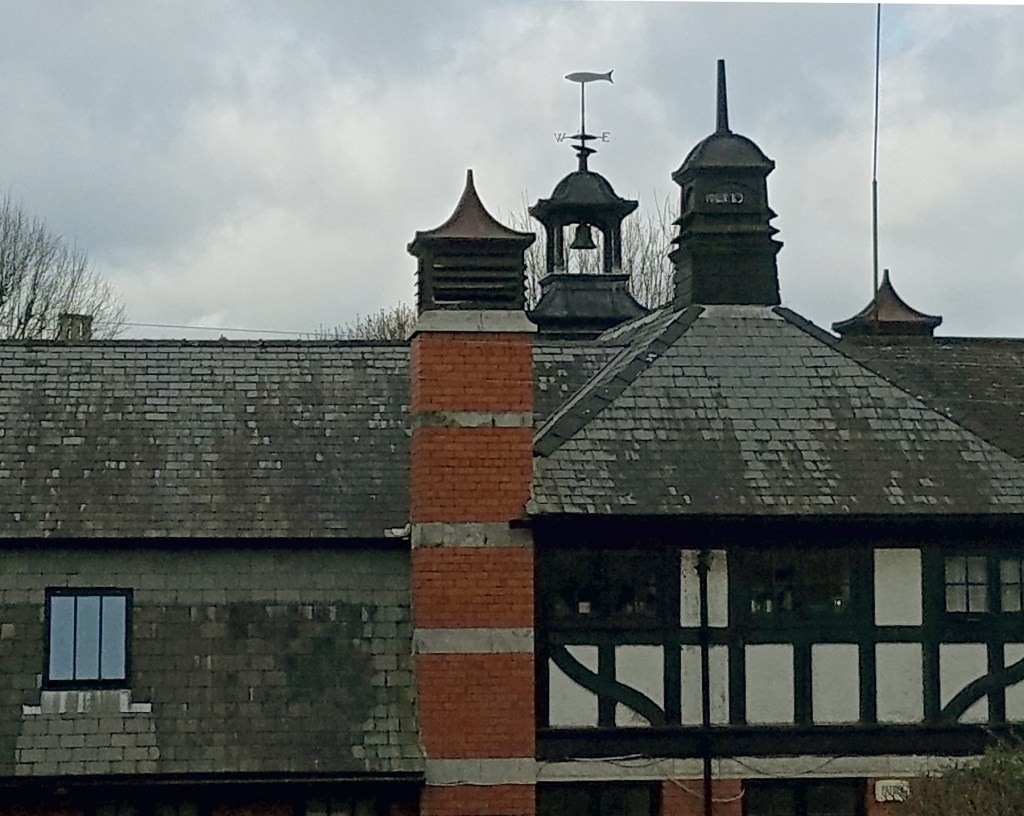
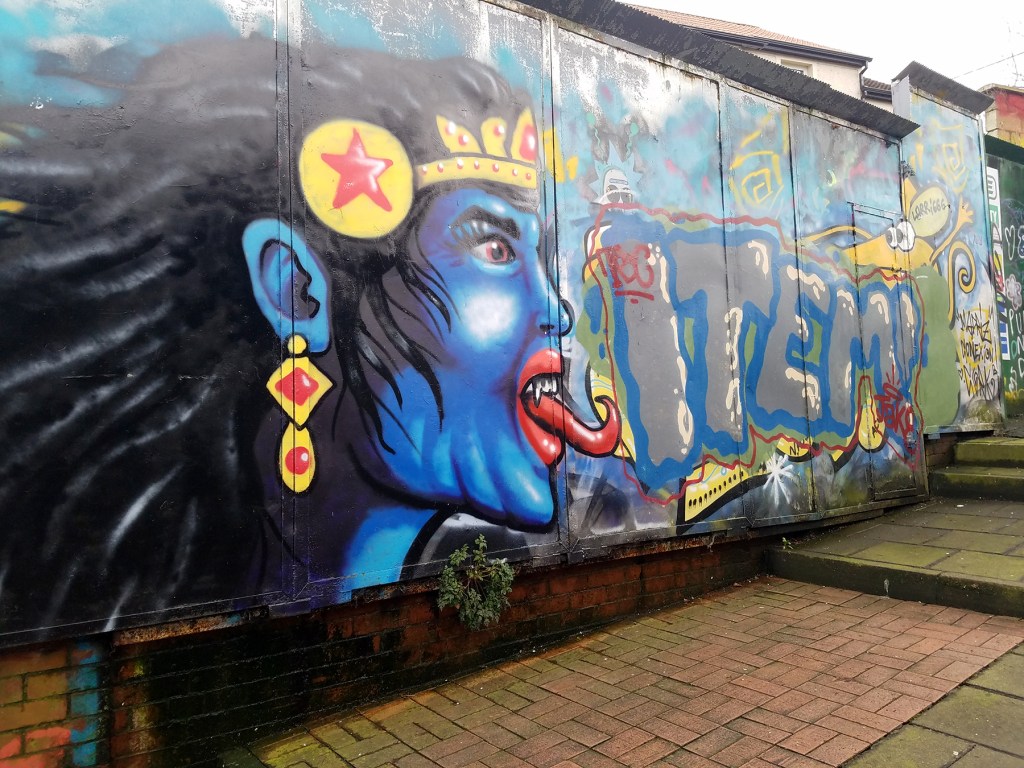
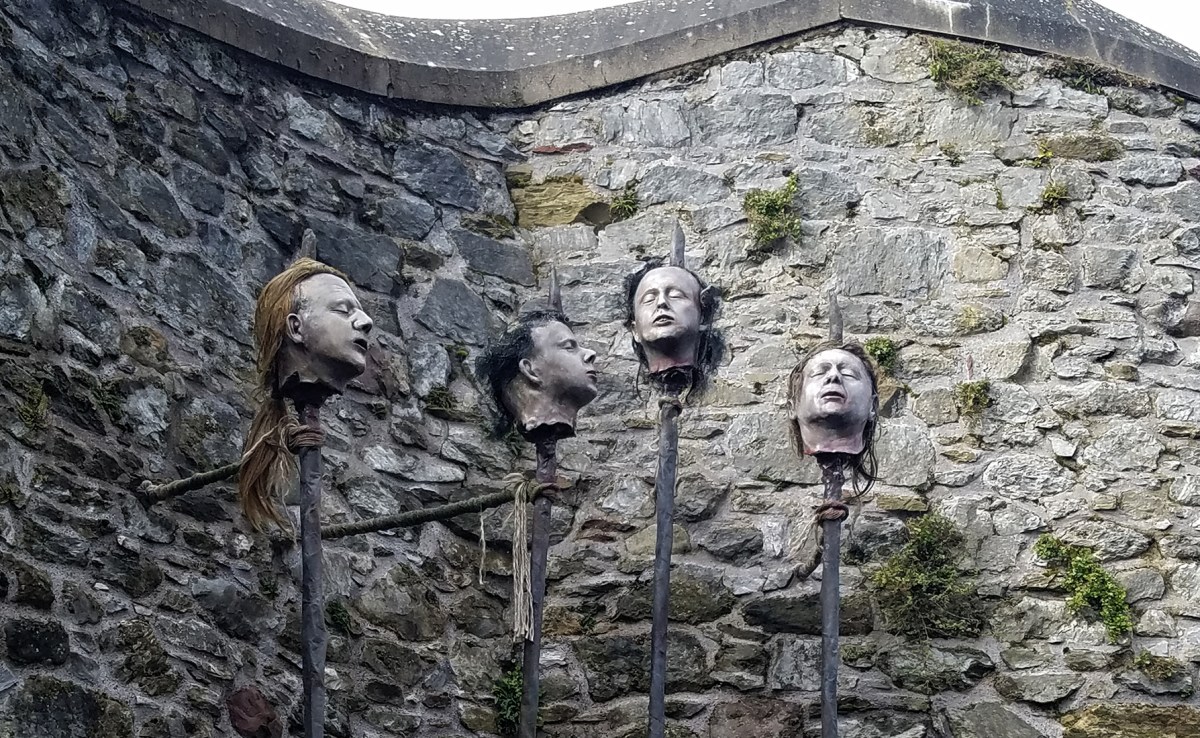
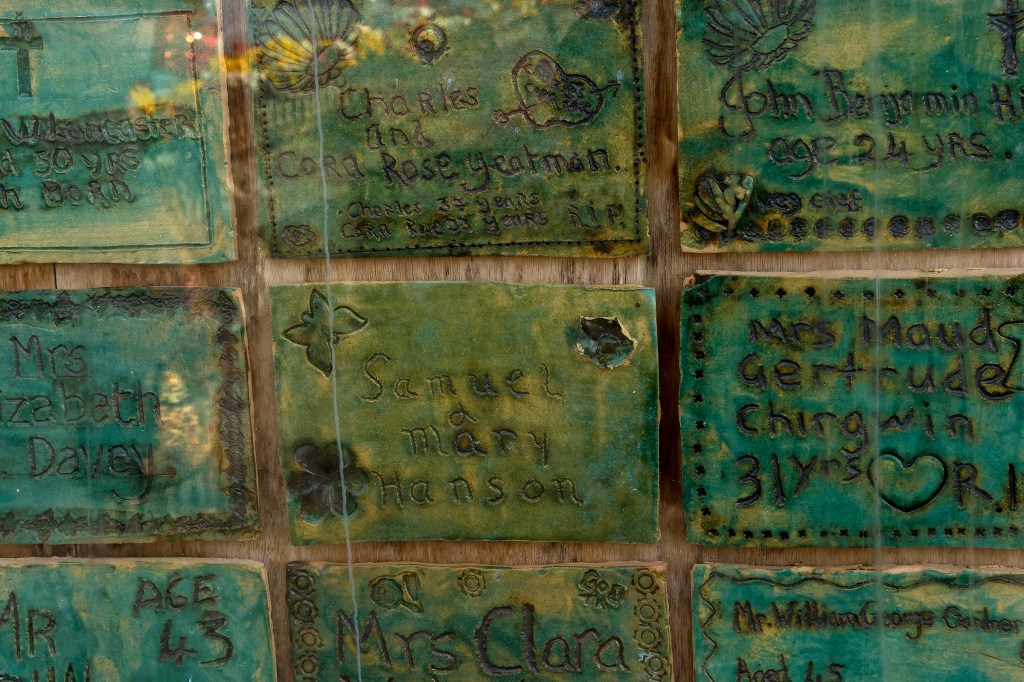
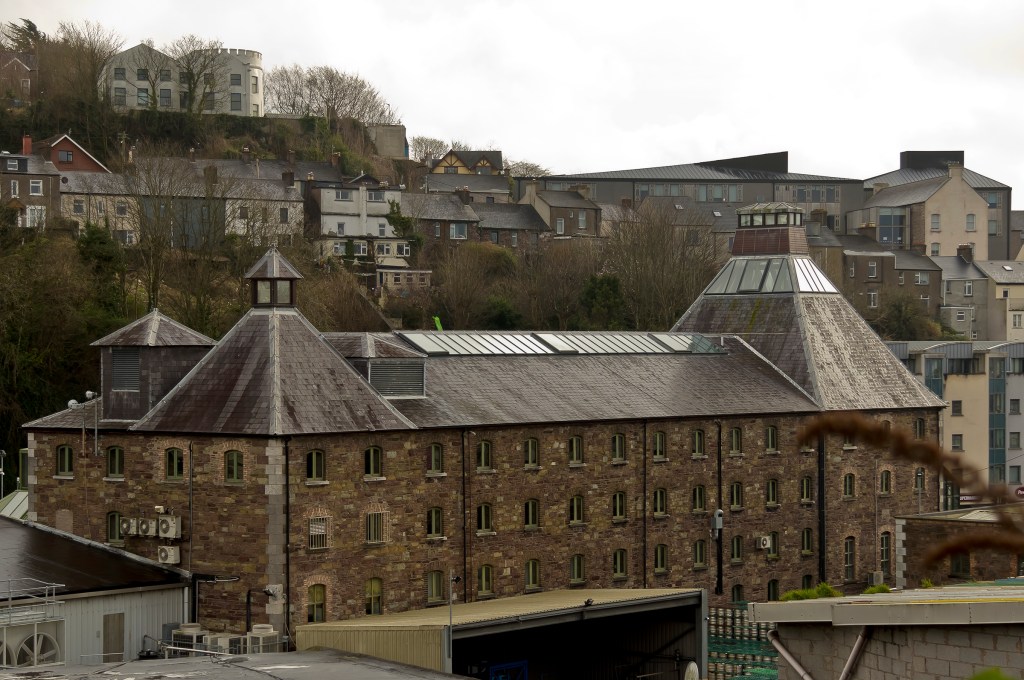
Dead peopleOld Beamish brewery. The goldfish weathervane echoes the one above the Shandon Bells on the north side of the cityI felt like i could live in this neighborhood, but the real estate market is so hot here, that almost everything is sold before it’s listed. As outsiders, we’re not privy to those kinds of sales, and it will be difficult to get to that point in any reasonable period of time. Wonder Woman as Kali, i guess
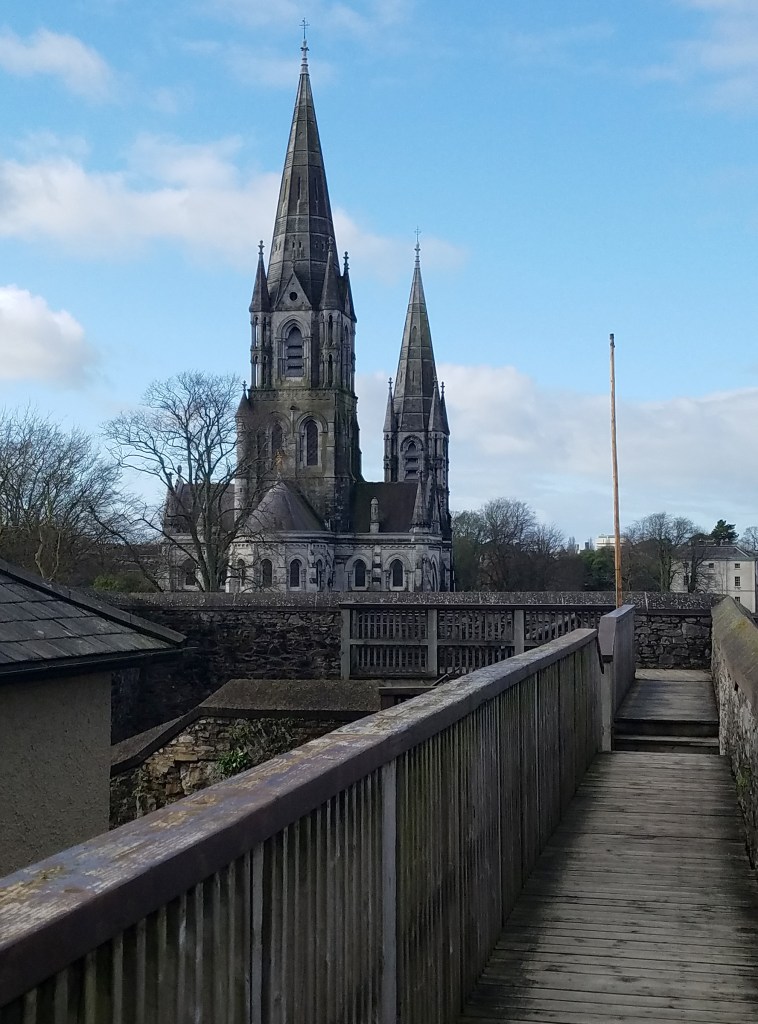
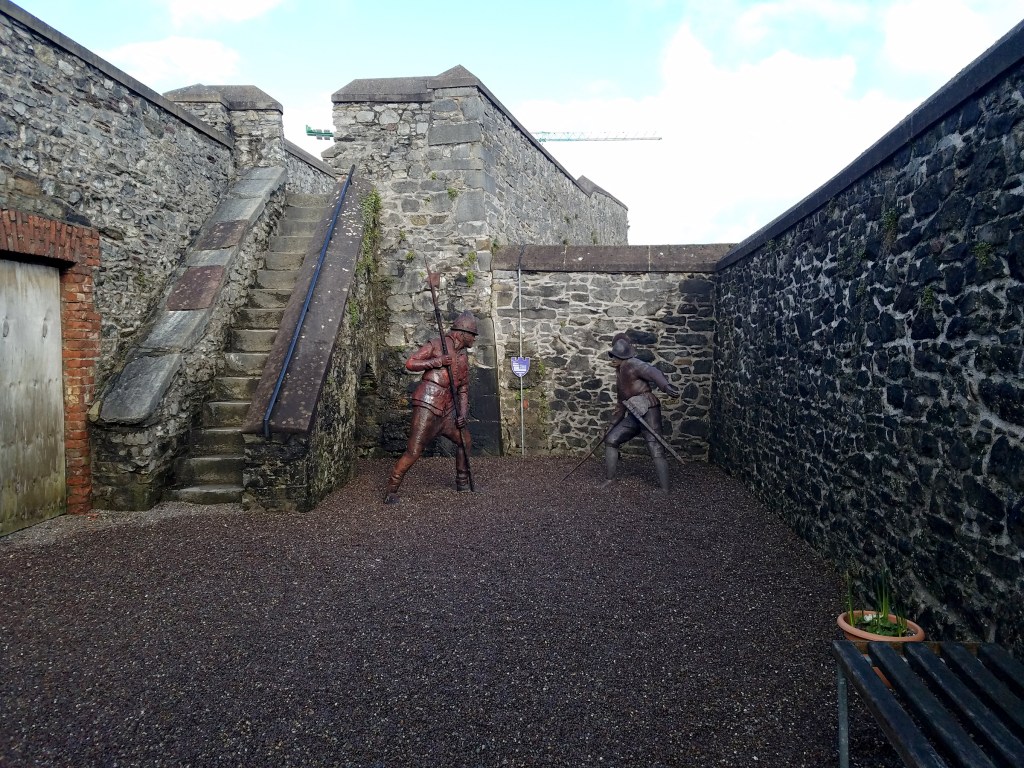
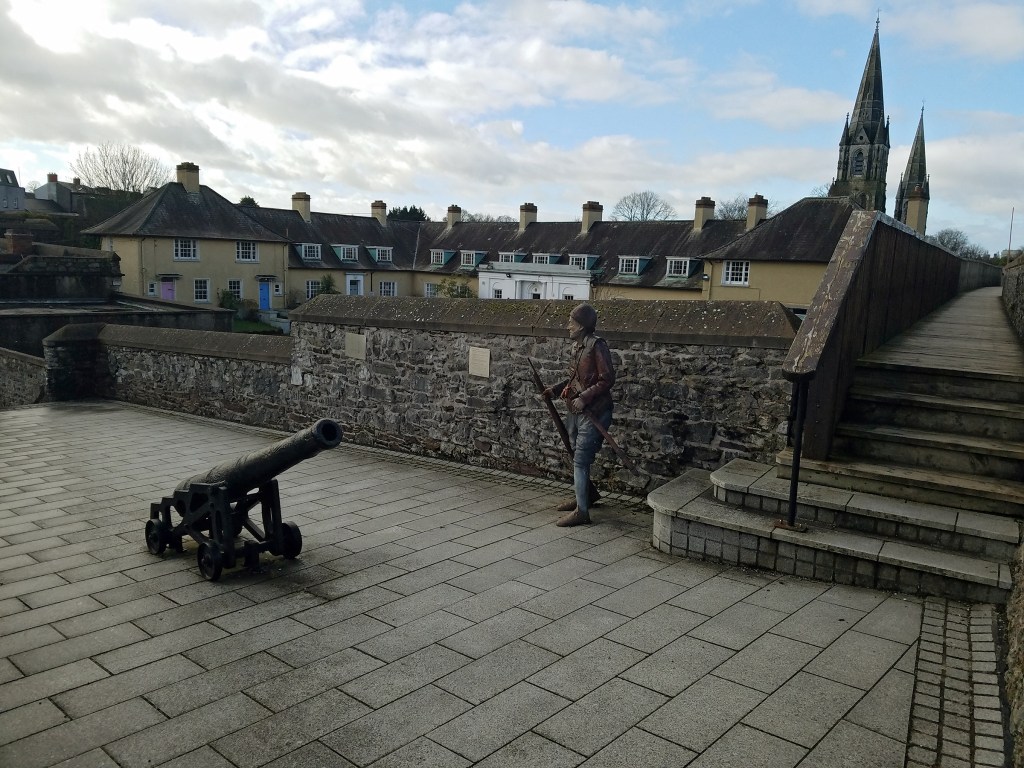
Yesterday’s adventures featured a lengthy stroll through The Lough neighborhood, on the south bank of the River Lee. Featured attractions are St. Fin Barre’s (Finbar) Cathedral, and the 400 year old Elizabeth Fort. We also had our first group social event, meeting up with a few SF aficionados to discuss Amal El-Mohtar & Max Gladstone’s recent novel This is How You Lose the Time War. The event was a success, not only because of the good company and lively, free-ranging conversation, but it was also the first appearance of Toto’s Africa on this trip, making it an official Barry holiday.
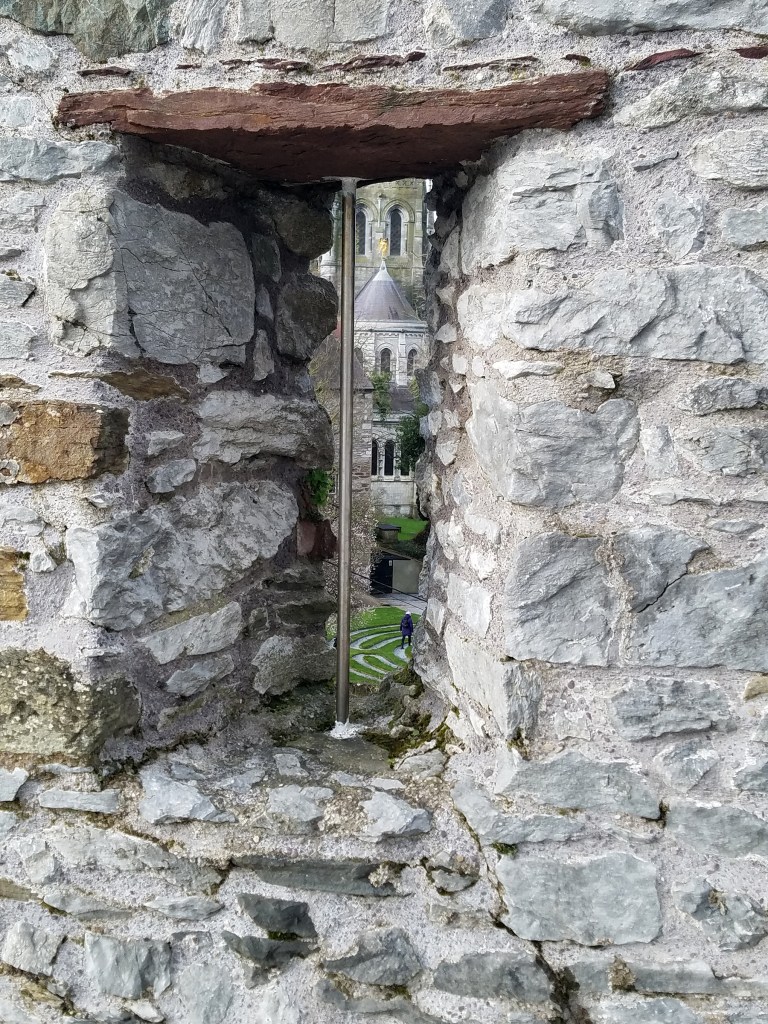
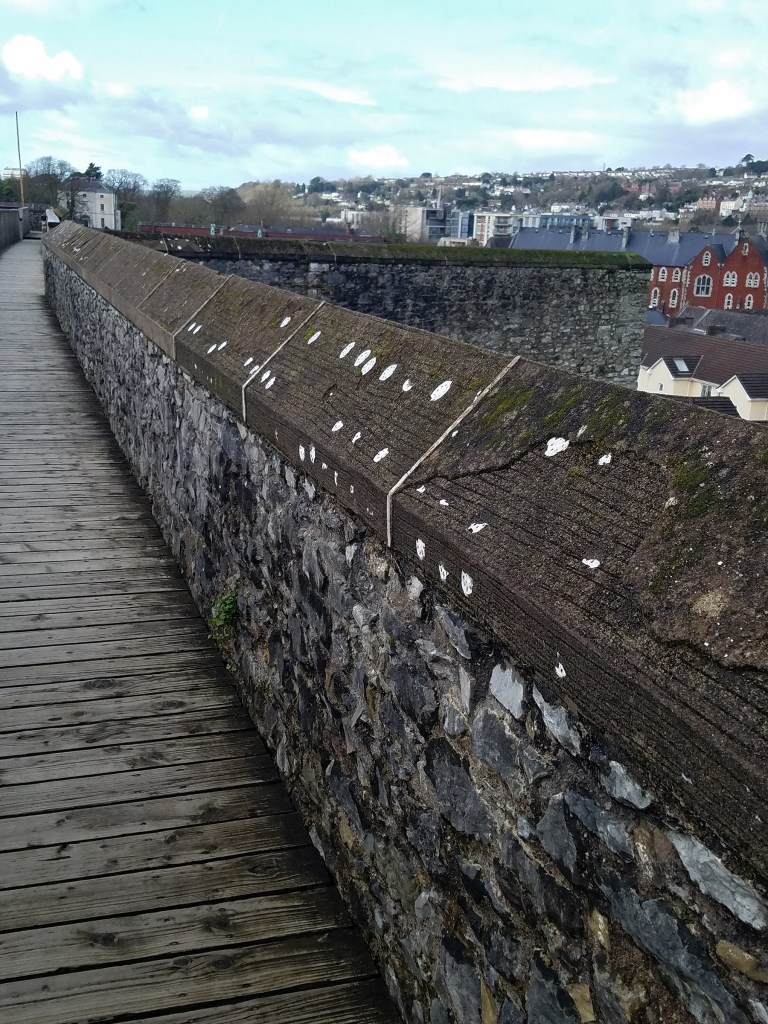
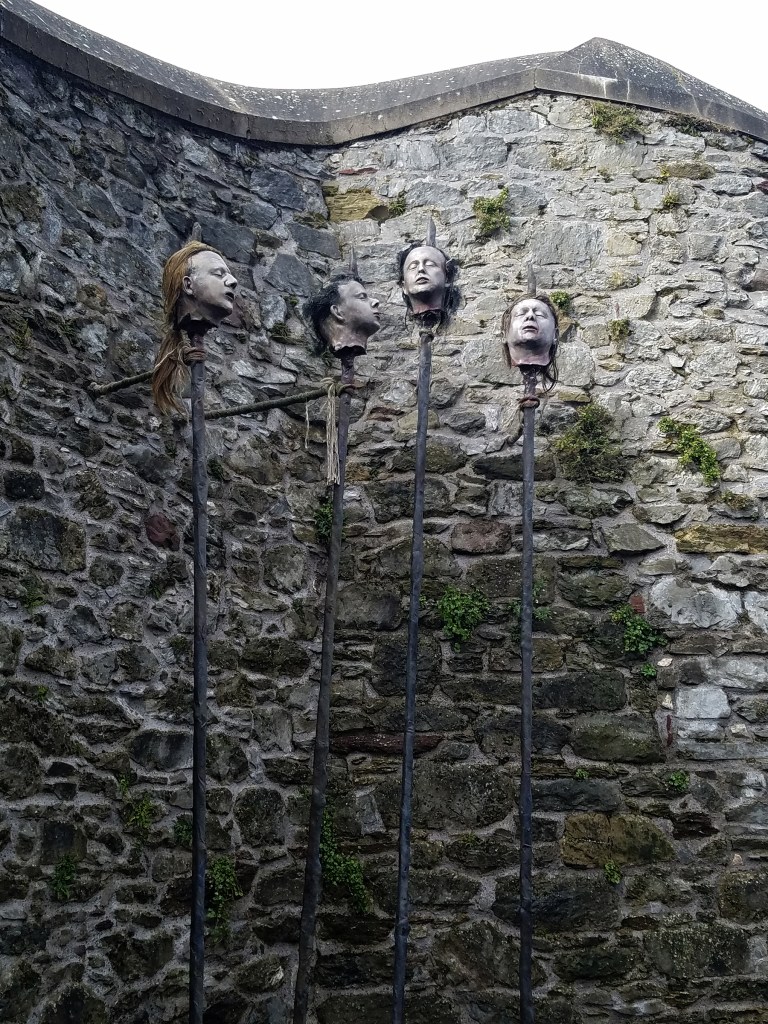
Some photos of the Fort below. Additional photos of the walkabout to follow.
St. Fin Barre’s, from the Fort.
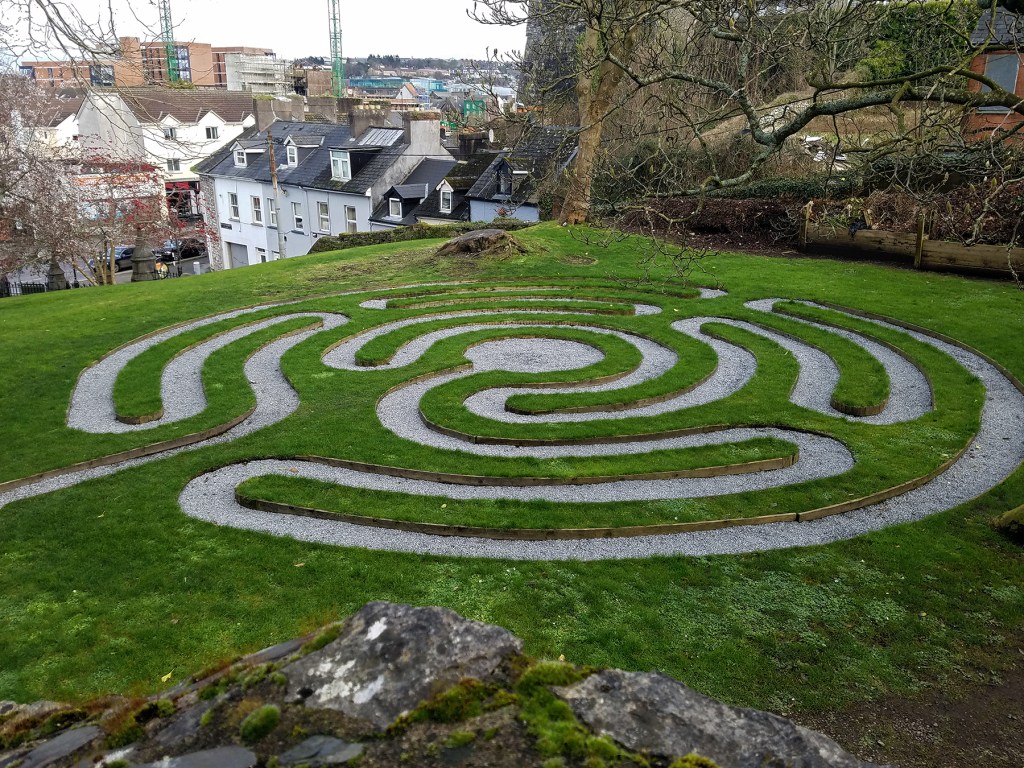
Arrow slit, or loop hole, looking onto the Labyrinth at St. Fin Barre’s
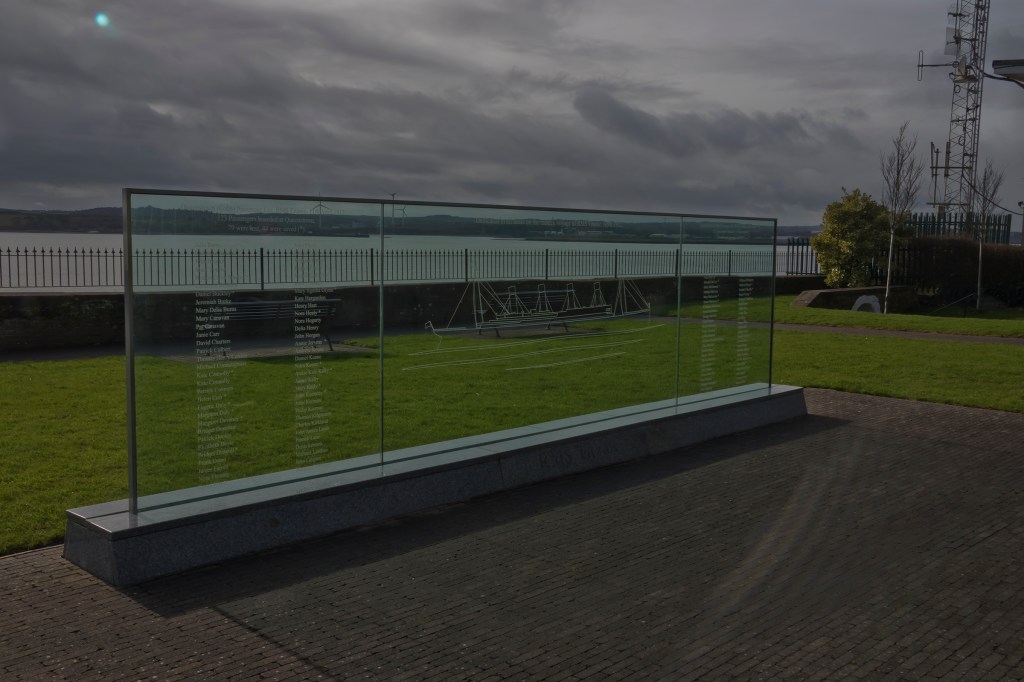
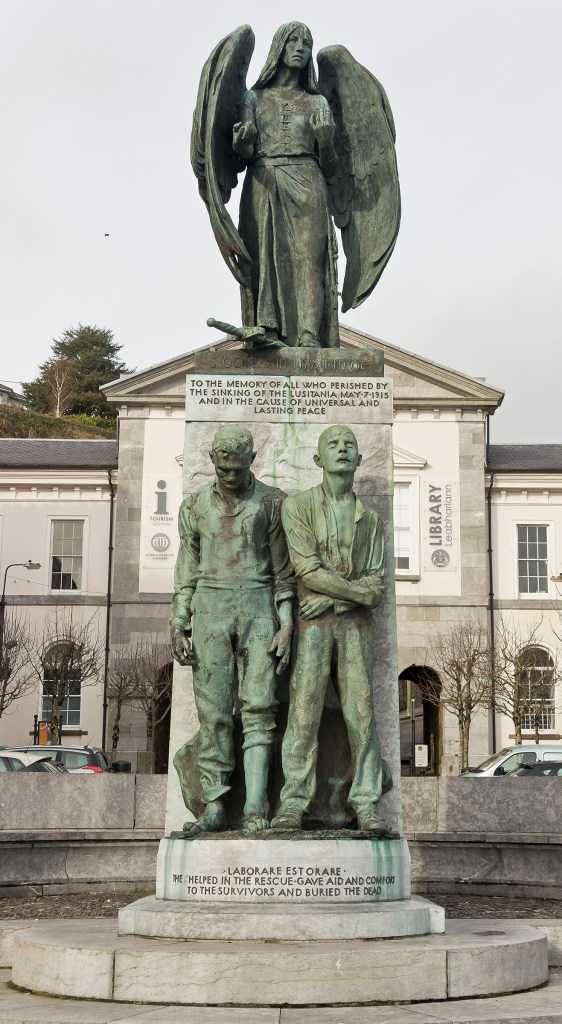
On Wednesday, we bought a couple of Leap Cards and took the train down to Cobh. Cobh is in the big part of Cork Harbor, and is a port of call for the big cruise ships like Norwegian, Cruise and Maritime, and Princess. That’s also part of its history – the Titanic stopped in Cobh after leaving Southampton UK on its way to New York, and the Lusitania was nearest the port on its way back to Liverpool from New York when it was torpedoed in 1915. Both events feature prominently in the memorials set up throughout the town.
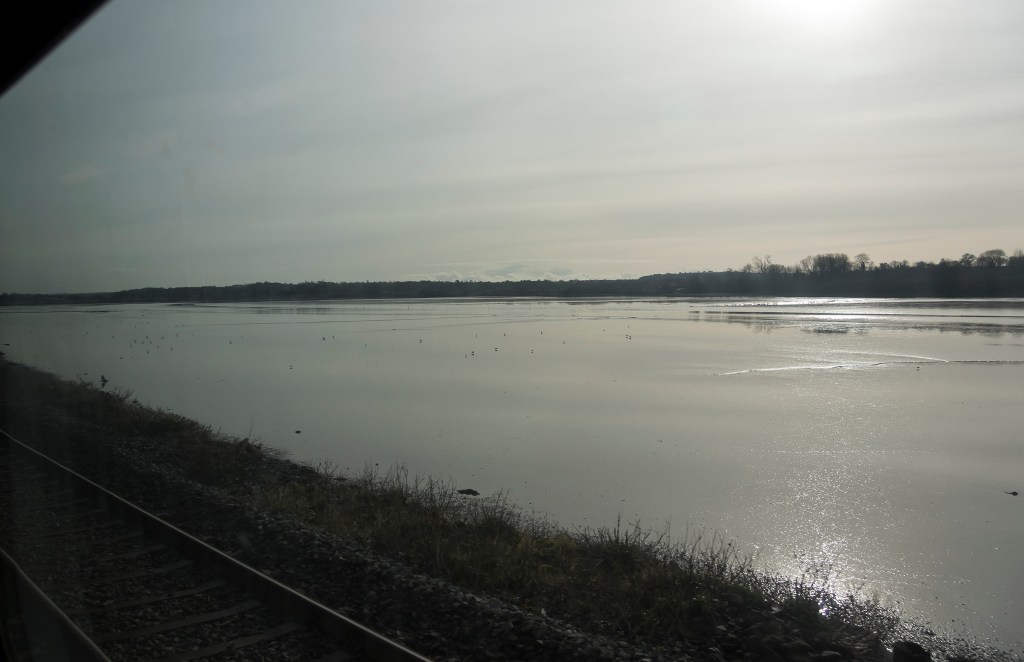
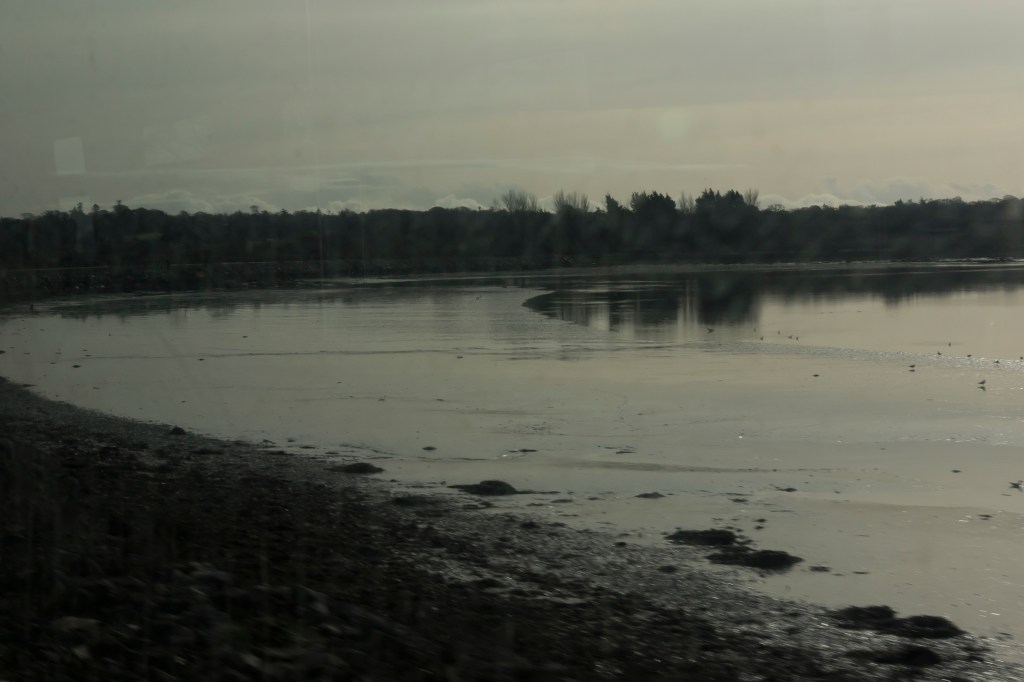
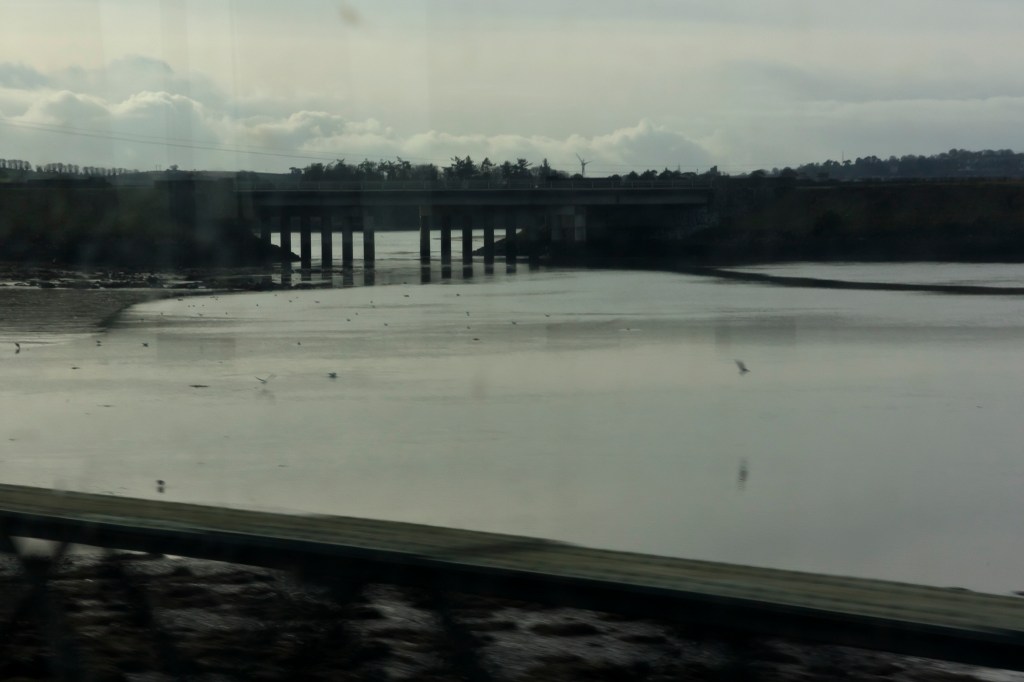
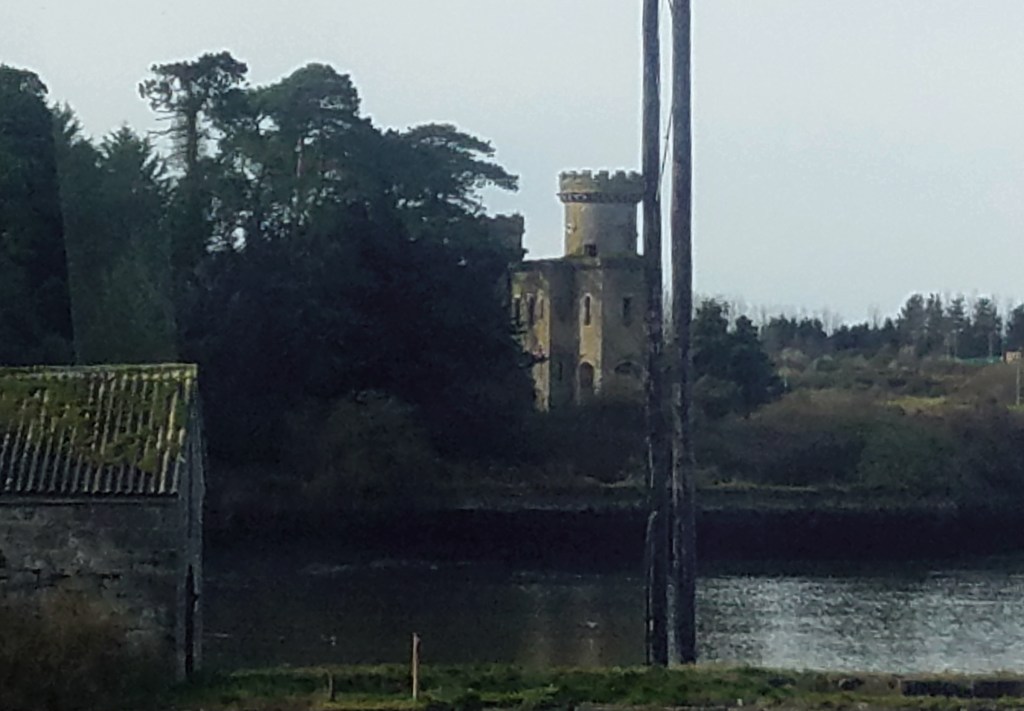
A few views through a dirty train window. On the lower right is Fota Castle.
Many of the people we’ve met have encouraged a visit to Cobh. It’s a scenic enough town, but, at least when there are no cruise ships at dock, a lot of the restaurants are closed, and many of the bars have their kitchens closed as well. On leaving the train station, the first stop is the Heritage Center, which provides details on both the Titanic and Lusitania, as well as some of the history of Irish emigration.
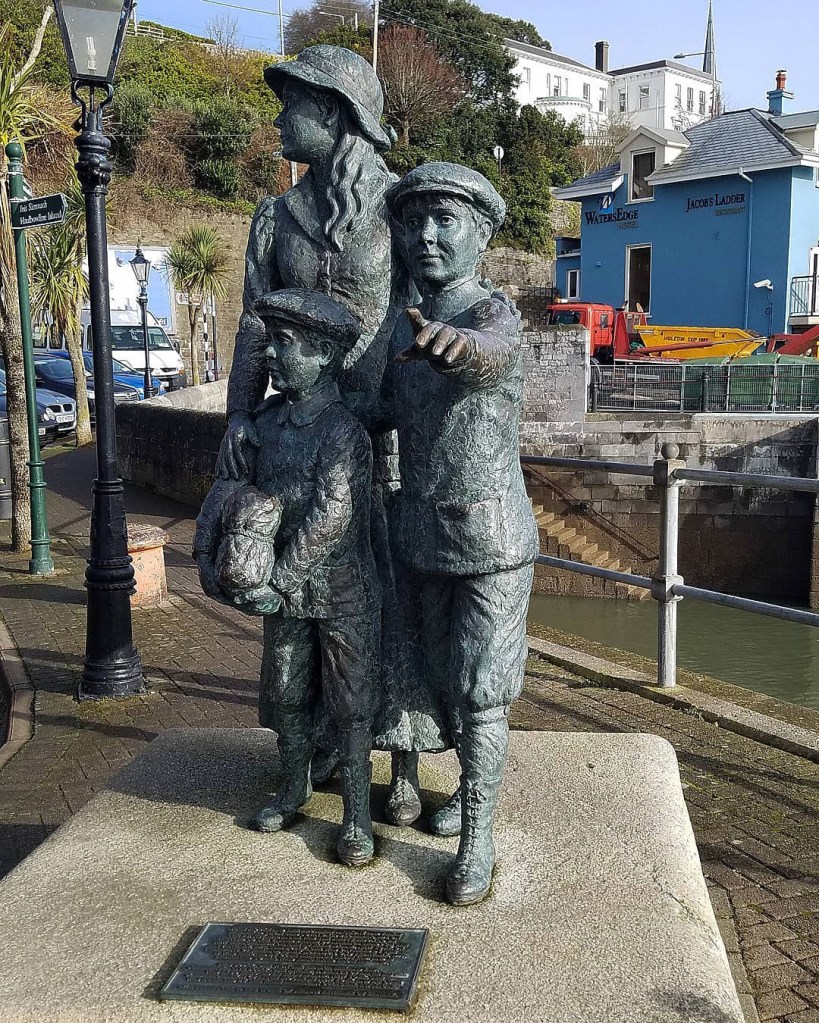
This statue commemorates Annie Moore, the first immigrant to pass through the new Immigration Center at Ellis Island, in New York City, in 1892. My family arrived there at the beginning of the 20th century. Claire was able to find her grandfather’s embarkation records. He sailed on the Saxonia, which departed Queenstown (as it was known before Irish independence) in April 1906, and arrived in Boston on the 26th of the month.
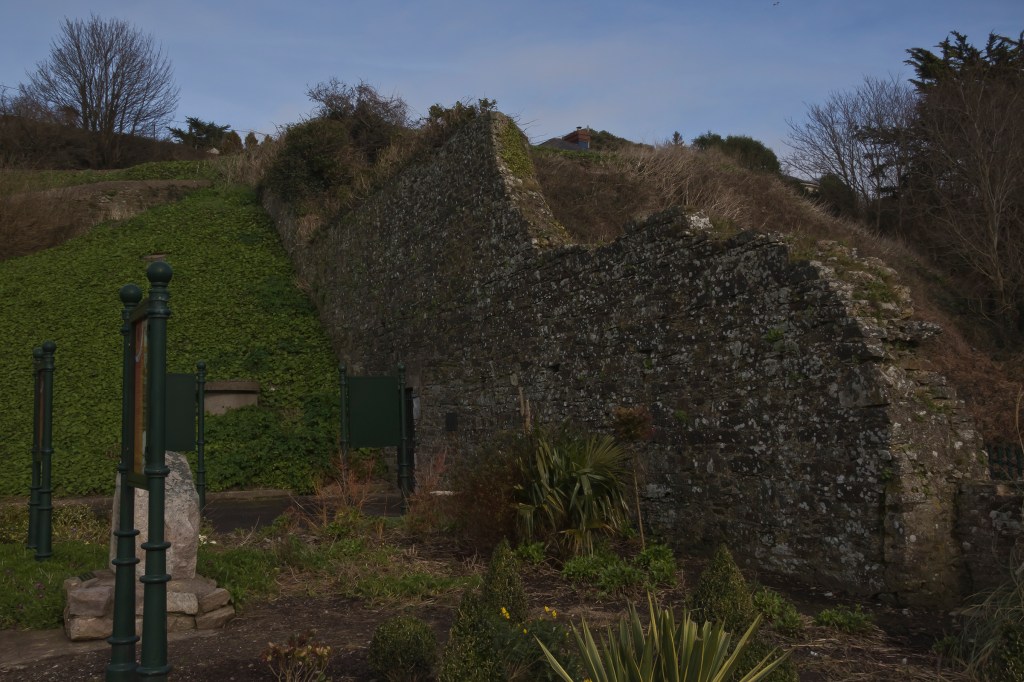
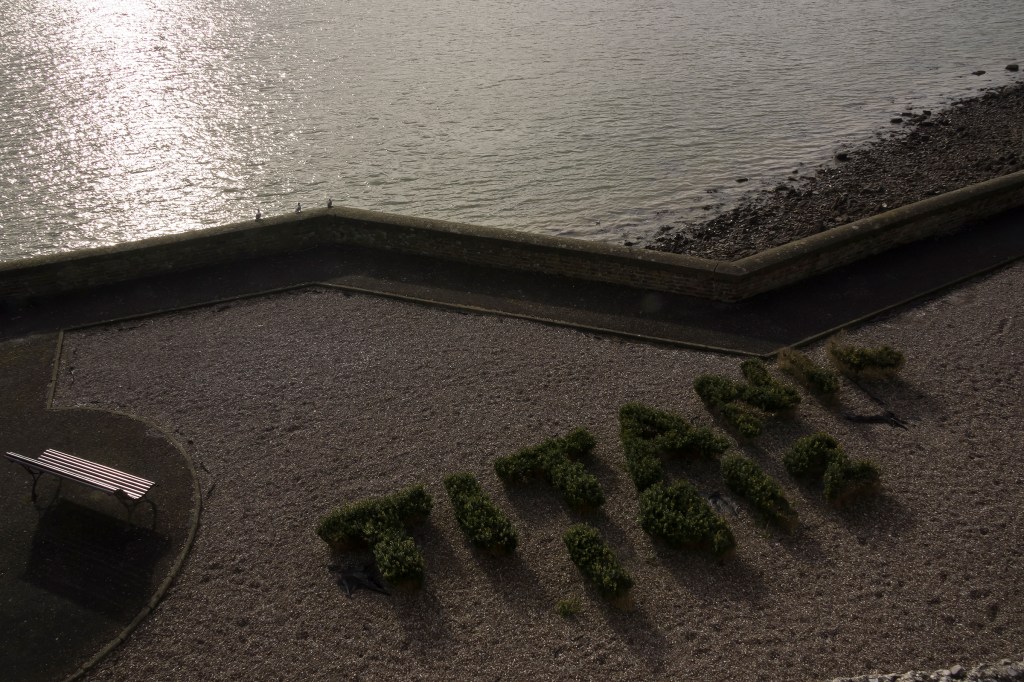
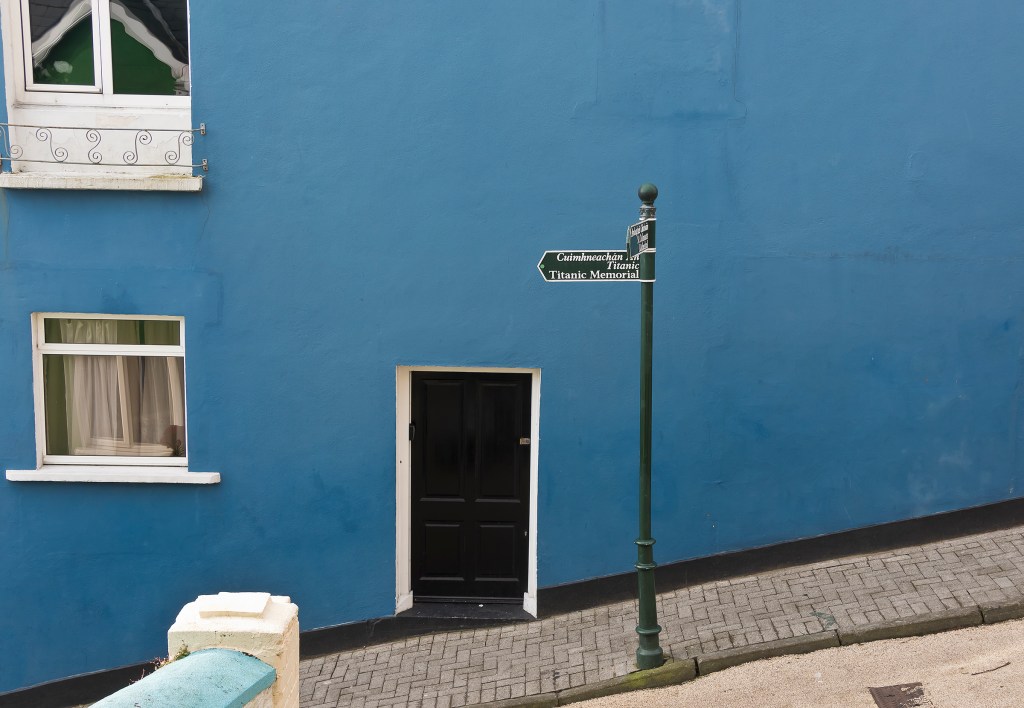
It’s about a 20 minute walk from the Heritage Center through town and beyond, to the Titanic Memorial Garden.
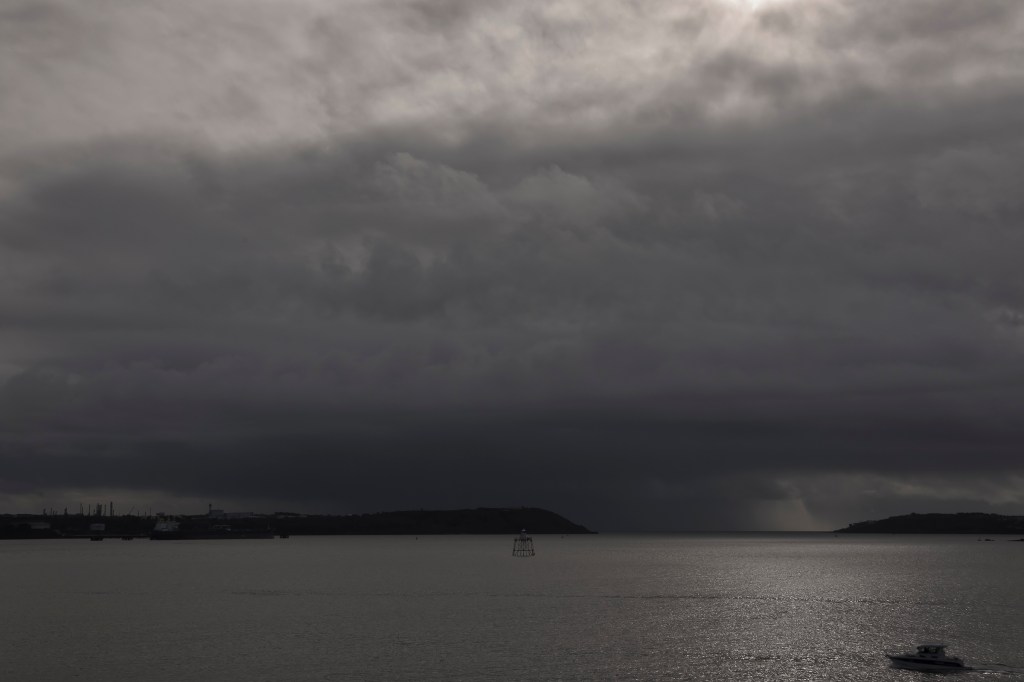
Bottom right – view through the channel to the ocean from the garden.
Survivors and victims of the sinking of the Lusitania were brought to Cobh.
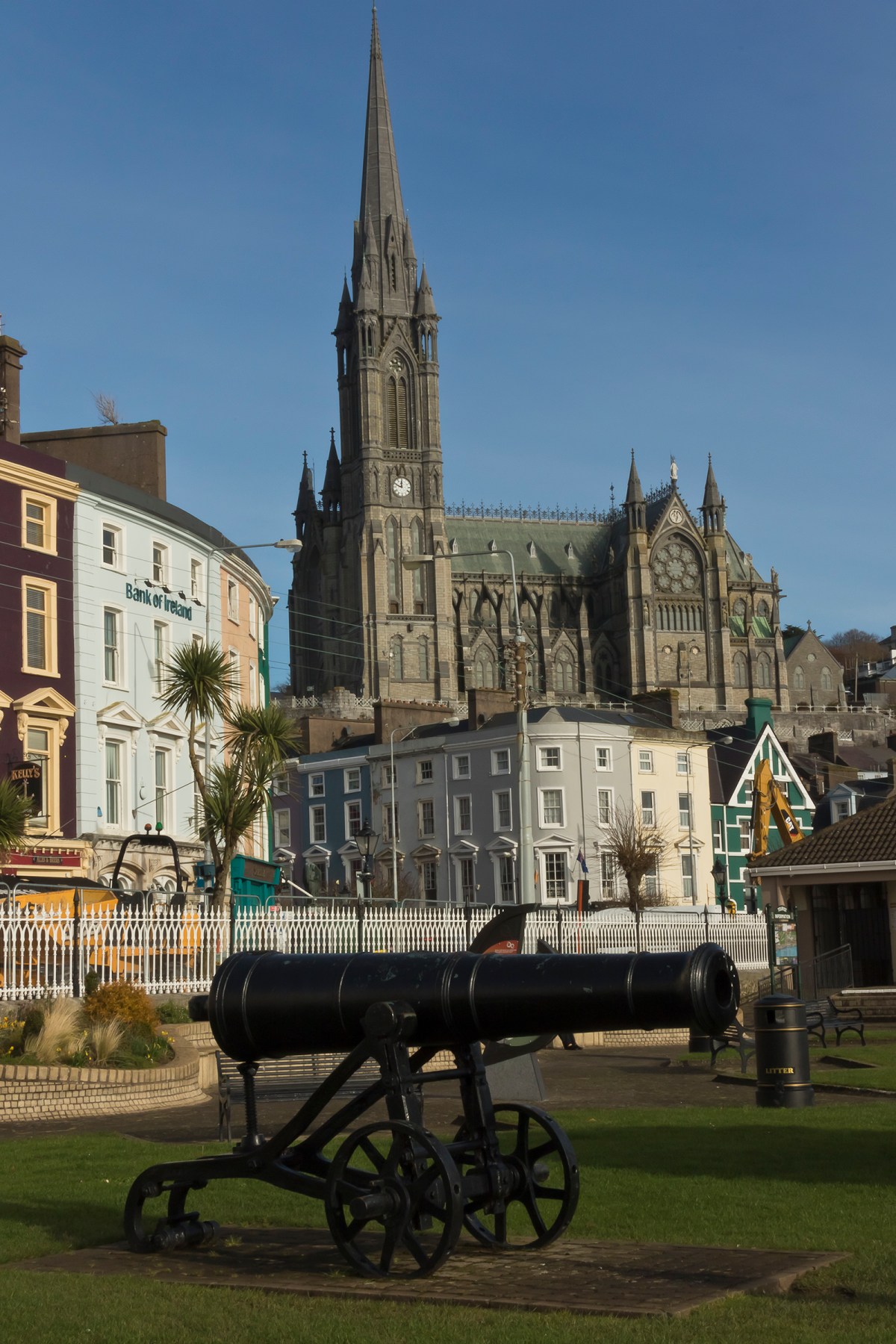
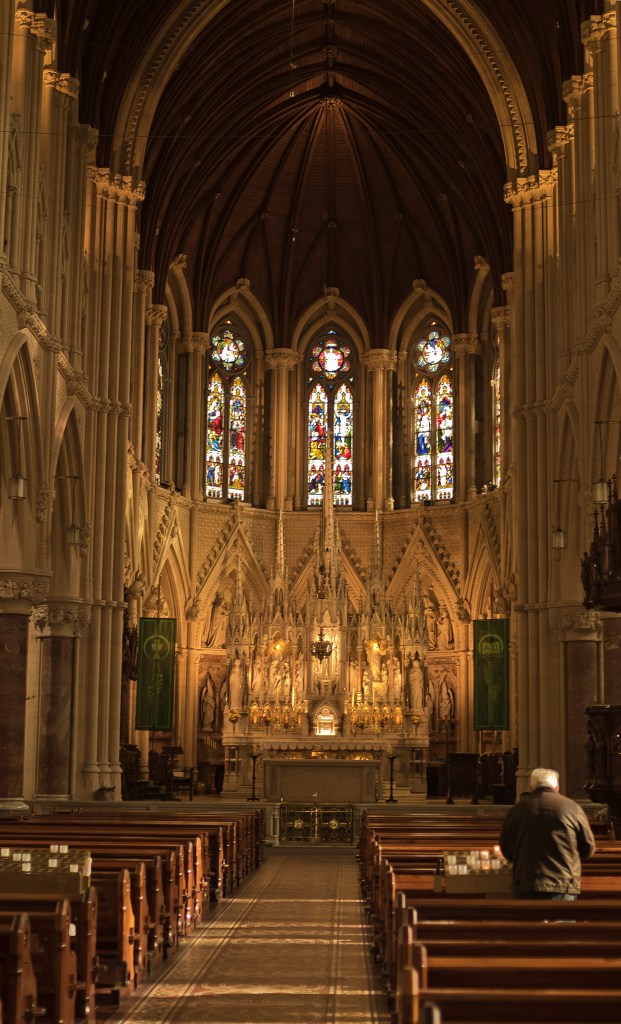
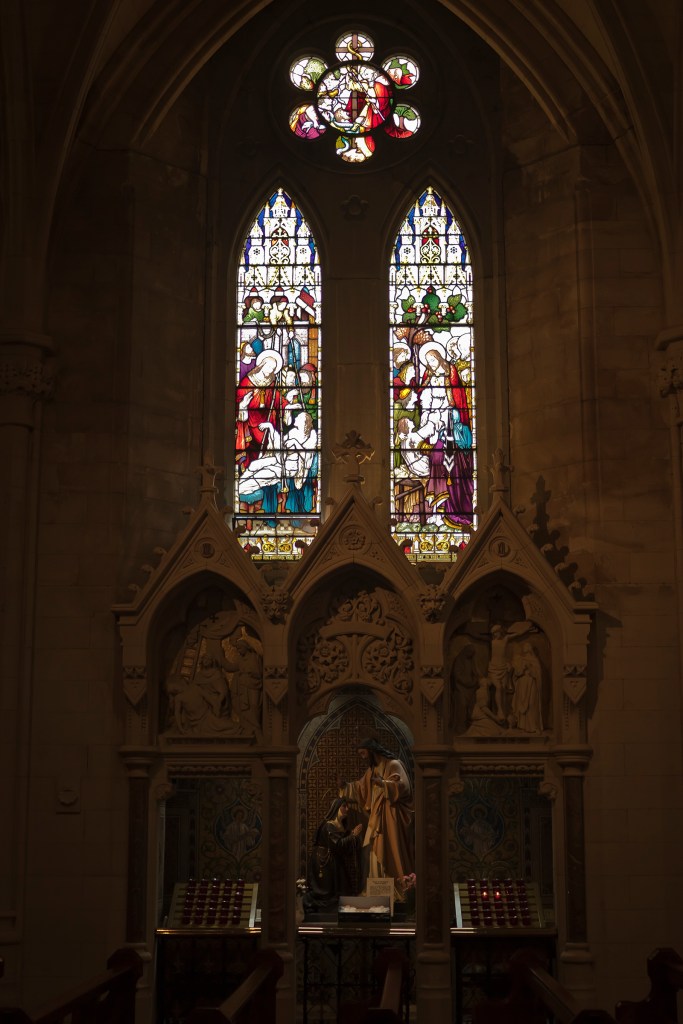
Like any number of towns we’ve visited, the dominant building in Cobh is the Cathedral. This one is St. Colman’s.
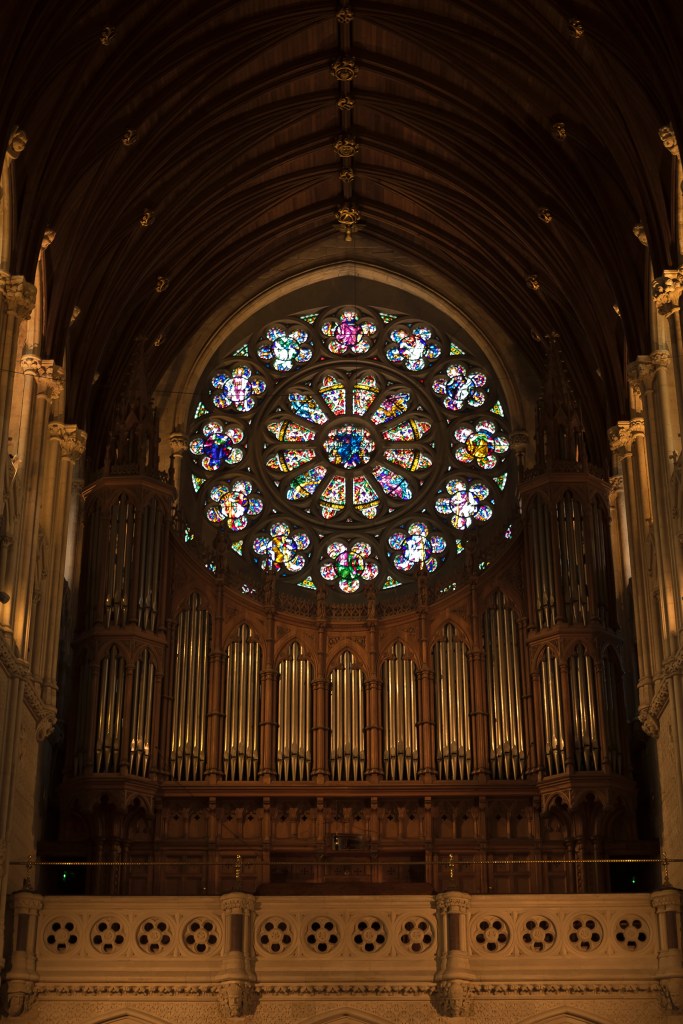
Like many great buildings, it’s bigger on the inside.
Yes, that’s a pipe organ.
Climb the hill past the school and the residential part of town, and the views of the countryside are pretty spectacular.
For me, though, the architecture, especially the old residences, was the most interesting thing in town. I could spend days there taking pictures in the changing light.
We’ve explored the city enough on foot that we decided to take a short train ride to Cobh (pronounced “cove”), a commuter town where the River Lee turns into a bona fide harbor.
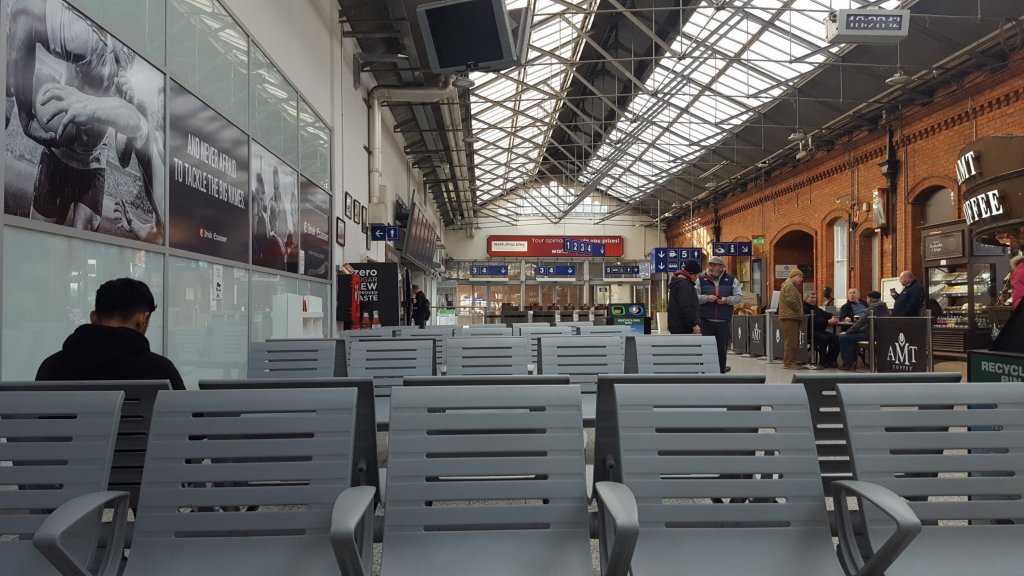
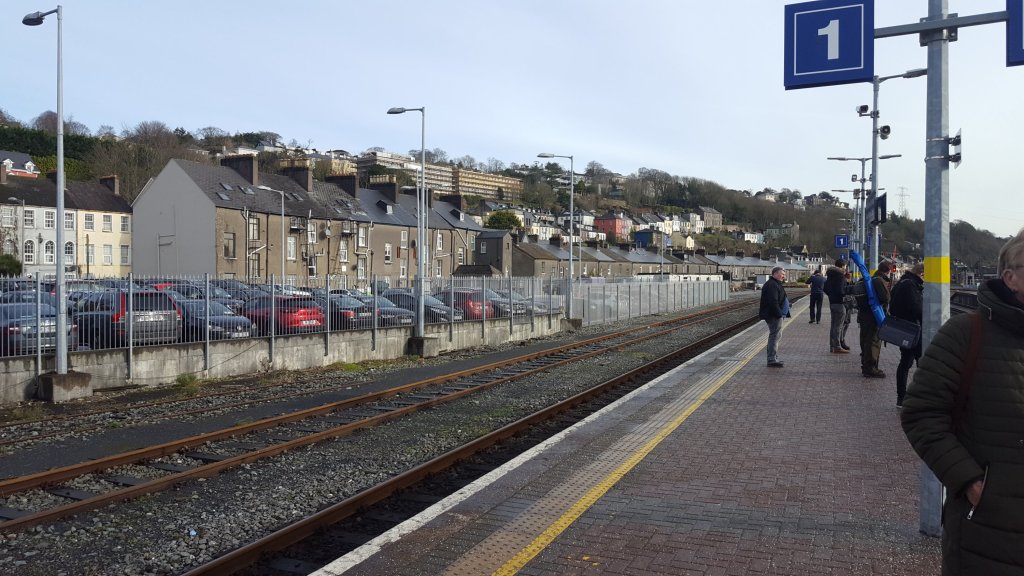
The Cork Kent train station.Awaiting the train in Cork.
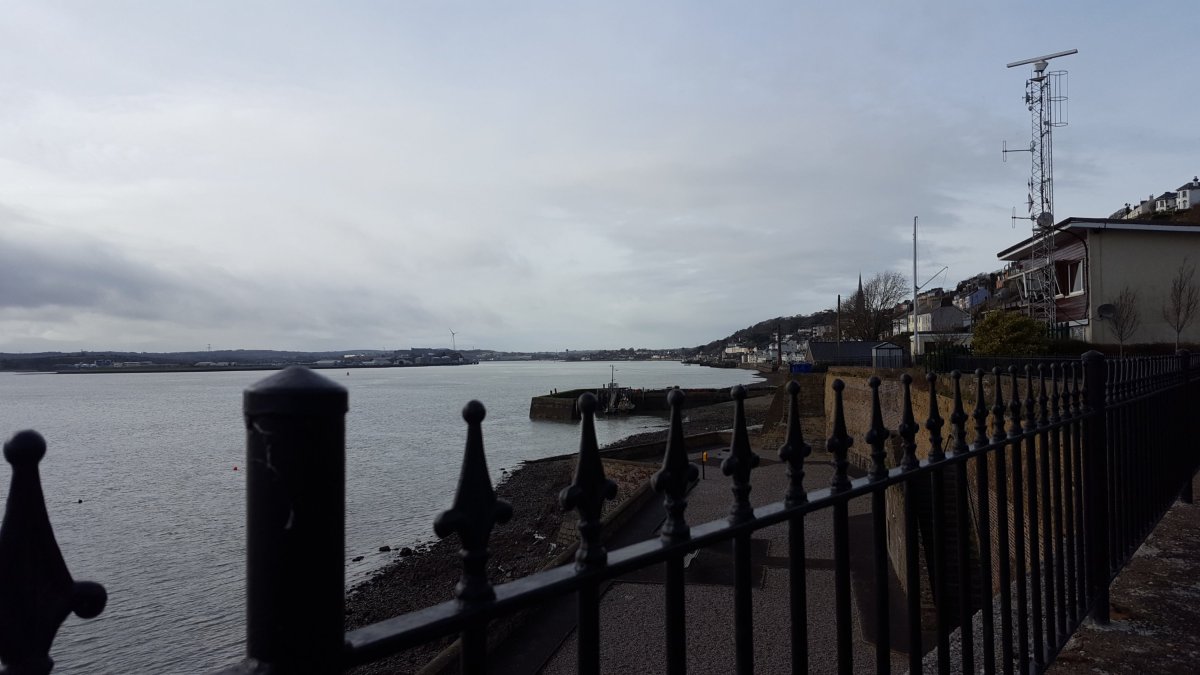
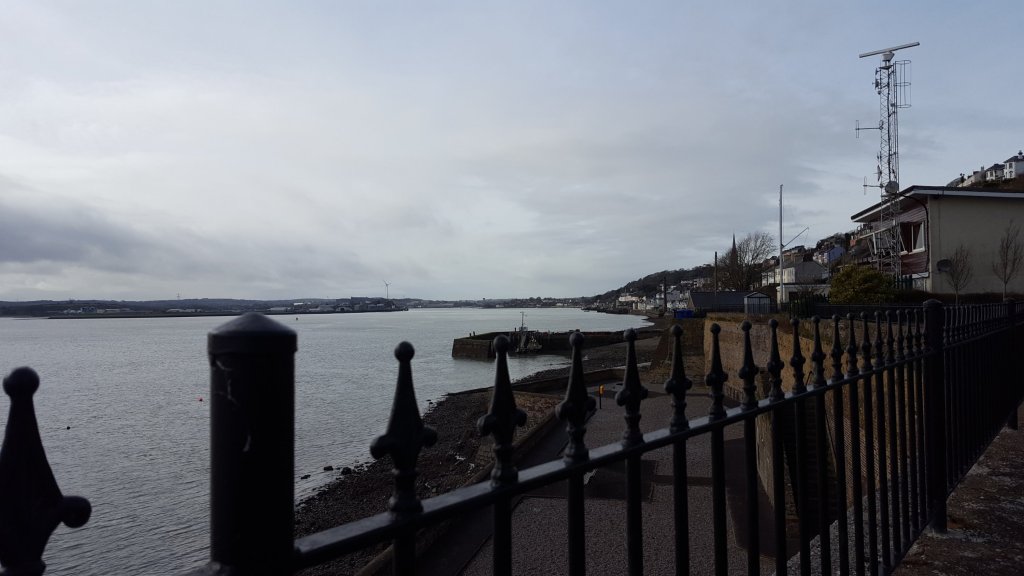
The train ride itself was pleasant, and had some scenic moments. It follows the river, and then the harbor, so there were water views most of the way. That said, much of the water was low tide muck, and it is very much a working harbor, so while there were some charming streets and houses along the shore, there were also a lot of piles of shipping containers, parking lots, lumber yards, etc.
Cobh felt more touristy than Cork, mostly because we passed two or three tour groups. Cobh was the place where most Irish emigrants shipped off to other countries, so there is a small museum about the various migrations. It was also the last port of call for the Titanic, and the closest port of call when the Lusitania was sunk, so there are sites commemorating both of those disasters. There is also a beautiful cathedral, although beautiful churches and cathedrals seem fairly common here: we can see several from our apartment window.
Alas, my phone, and therefore my camera, ran out of juice halfway through the day, so you’ll have to look at Barry’s next post to see the second half of the day.
After lunch, headed back towards the train station, which is right next to the Cobh Heritage Center, the museum dedicated to the migrations. I’m somewhat indifferent to history museums in general, but since this one has more of a personal connection, I was curious to see it. The center also contains the Genealogy Center, and in speaking to the docent there, I was able to discover details about my grandfather’s emigration (he boarded the Saxonia in April 1906, bound for a friend’s home in Boston, but then moved to Brooklyn).
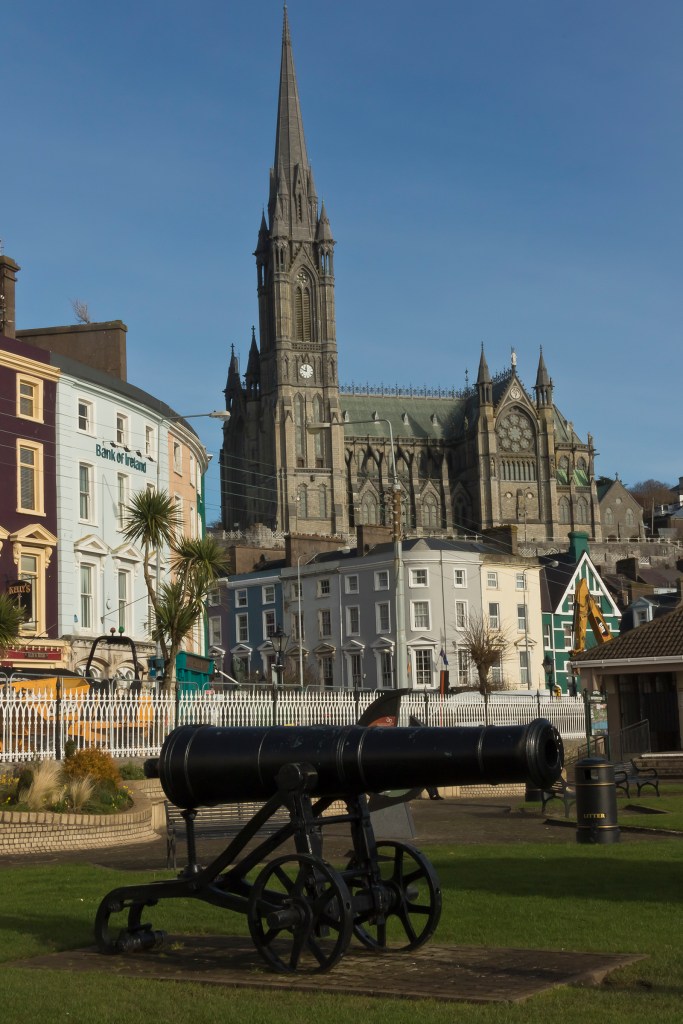
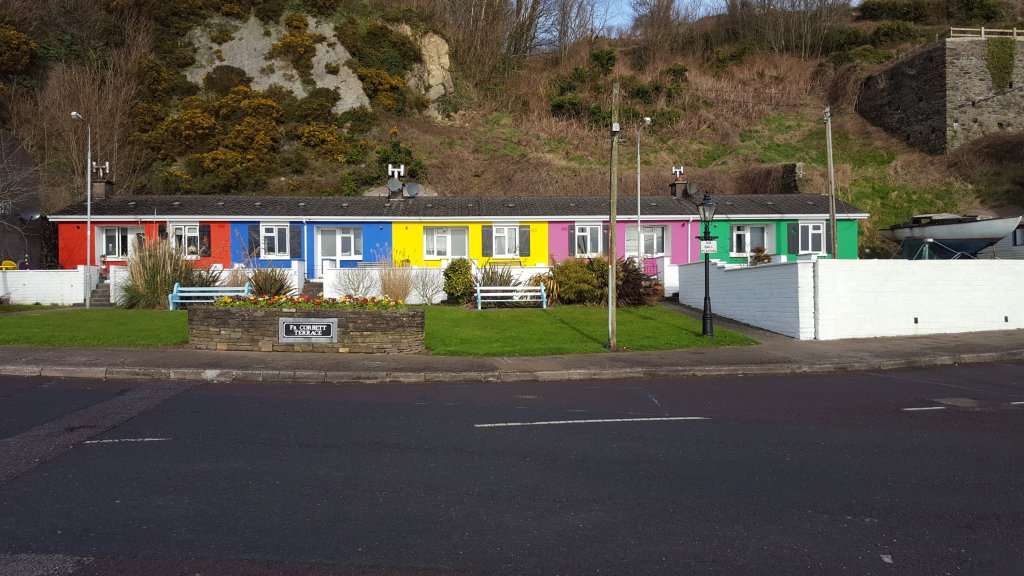
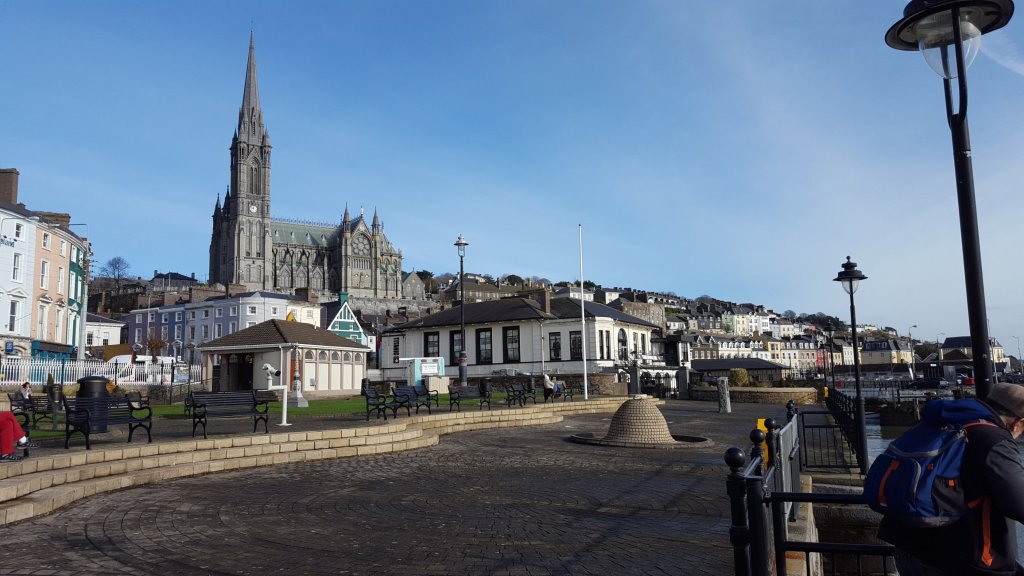
Cobh harborAlong the quayI thought these houses were adorable!A Chinese restaurant, believe it or not.John F. Kennedy park in the foreground, St. Colman’s Cathedral on the hillDowntown CobhA park in memory of the Titanic, whose last port of call was Cobh.
It has not been a surprise to us that the weather in February in Ireland has been chilly and wet. That said, it has actually been quite variable. The old saying that I’ve heard about many places in the U.S., “If you don’t like the weather, wait five minutes” holds true here.
Most days we’ve walked extensively, and even if caught in a bit of rain, the rain has been not much more than a drizzle, enough to splatter the eyeglasses but otherwise not much of a bother. But then there will be a brilliant blue sky, until the next cloud rolls through. The temperature is fairly predictable, ranging mostly from low 40s to high 40s. Without looking at the day’s forecast, a guess of 45 degrees with a 50% chance of rain has a good chance of being accurate. And 45 degrees is actually not a bad temp for some vigorous walking.
The last few days have been a bit more severe. Storm Ciara (rhymes with tiara, with a hard “c”) swept through over the weekend, with wind-lashed rains loud enough to wake us up in the middle of the night. There were reports of power outages throughout Ireland and the UK, as well as some snow at higher elevations. The storm left a cold patch in its wake, so in the past 24 hours we’ve seen a spattering of hail and sleet.
But poor weather just means different opportunities. Yesterday, as Barry noted in his post, we ducked into a café for a cup of tea as weather threatened, and when it later started to rain in earnest, ducked into the Crawford Gallery of Art, a free museum which was on my list to see anyway. A perfect rainy day activity!
Today was colder than usual…the high of the day barely scraped 40. So we took the opportunity to check out the Tabletop Café, around the corner, where we had some noshes and played a game called Unearth most of the afternoon. Had a nice time chatting with Chris, the owner, and Tom, a regular patron. I could see us returning on another cold or rainy day, especially so that I can have a rematch with Barry, who won both games.
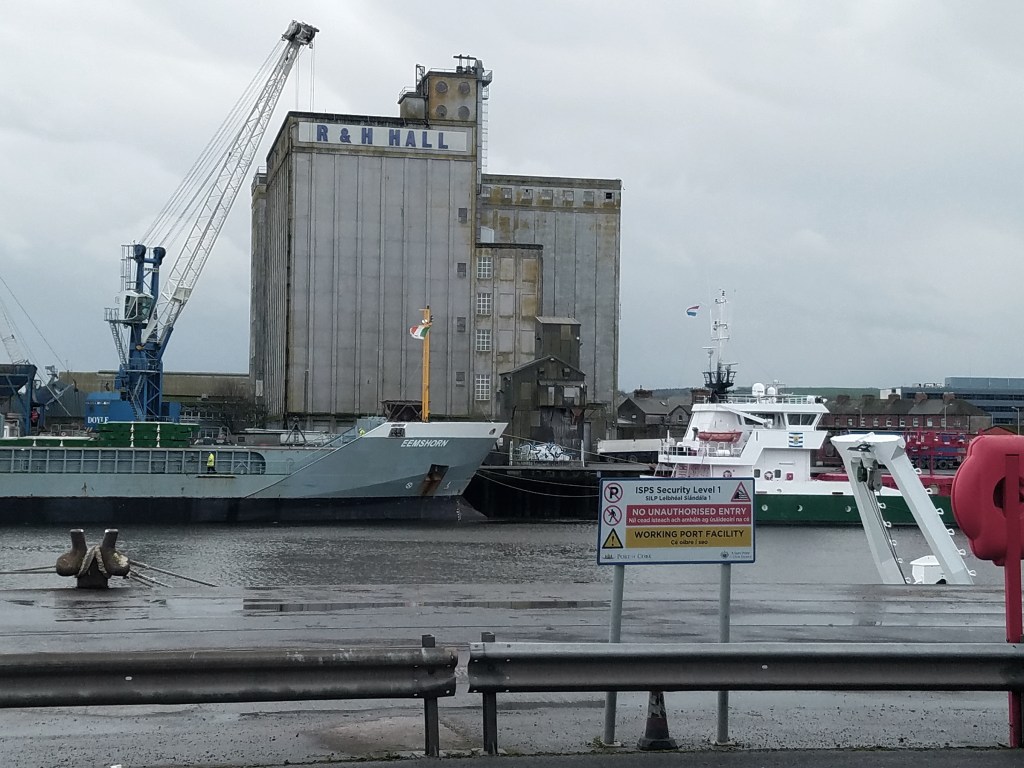
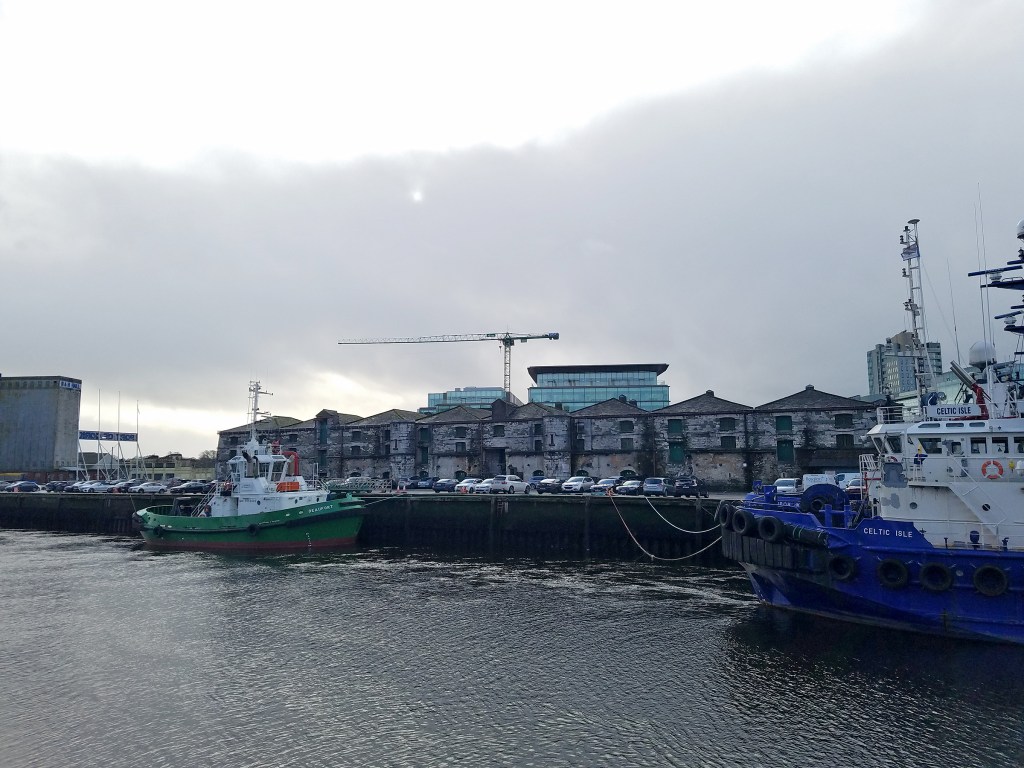
Yesterday was blustery, and rainy in patches. We decided to explore the east side of town across the river, past the first (last) bridge where the big ships are still able to dock.
I believe the buildings on the right are part of the bonded warehouses.
There’s a fair bit of new construction in the area, hundreds of thousands of square feet of “a new kind of work space for a new kind of work,” or some such nonsense. I suppose it will be interesting to see how that turns out in 4 years or so.
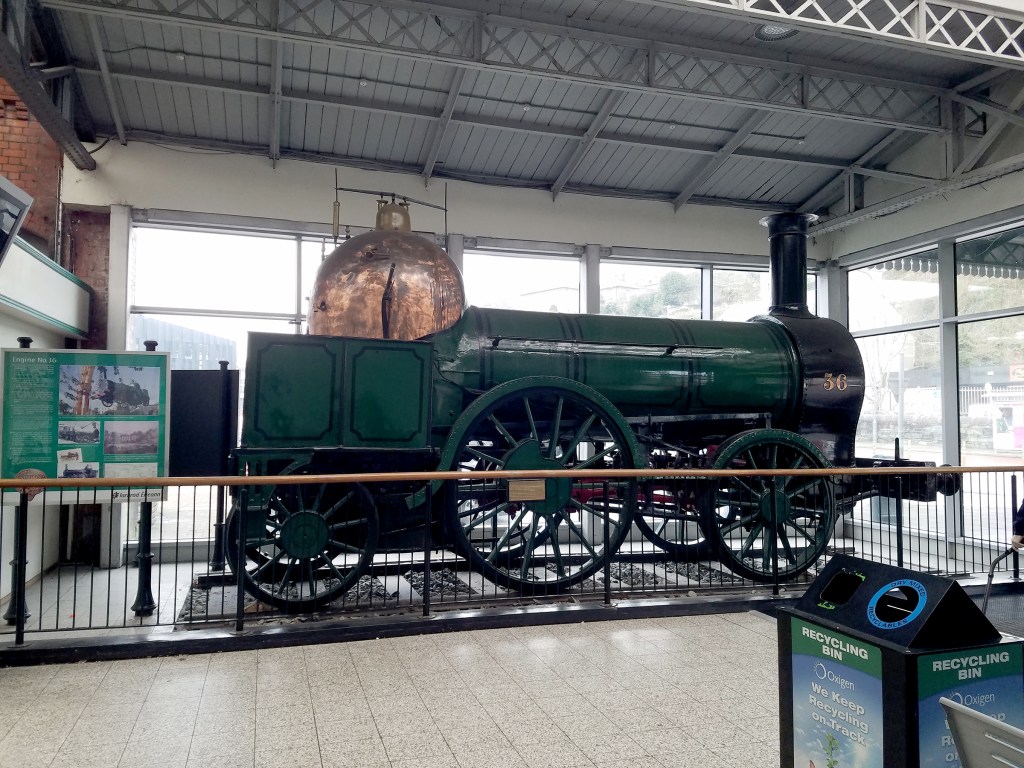
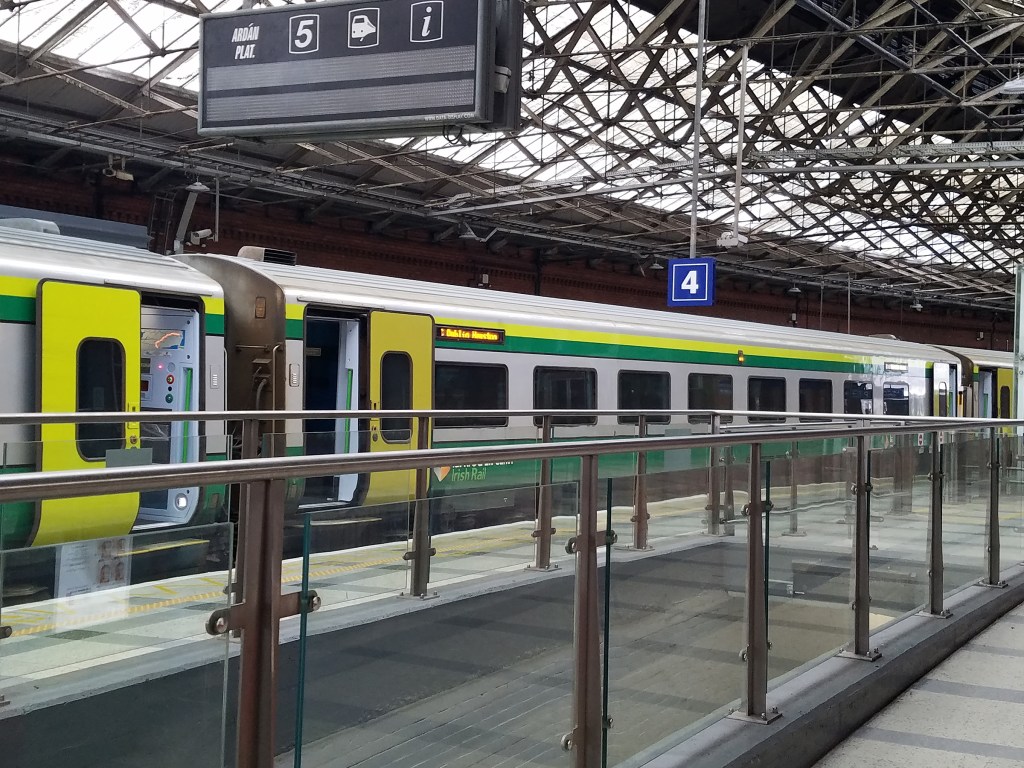
Continuing a few blocks east, we found ourselves at the train station. We plan on taking the train to Cobh and Midleton over the next few weeks, so we spent some time there.
Got into a long talk with one of the senior attendants at the station, a man roughly my age. I guess he was looking for a break, without seeming to be taking one. He showed us some of the less obvious historical features of the station. He also had some interesting ideas about the US Civil War, about which i’ll ruminate later in this post.
After the station, we decided to walk up the hill to the neighborhood called St. Luke’s Cross. The steeple of the namesake church is the most prominent landmark of the neighborhood, though it can’t be seen from our apartment. We made our way there. The neighborhood gets posher the higher up the hill you get.
We kept popping in and out of rain squalls, so we ended up ducking into a coffee shop across the street called Rant. First time i’ve seen people i’d describe as old hippies in Ireland, and a little research helps to understand why.
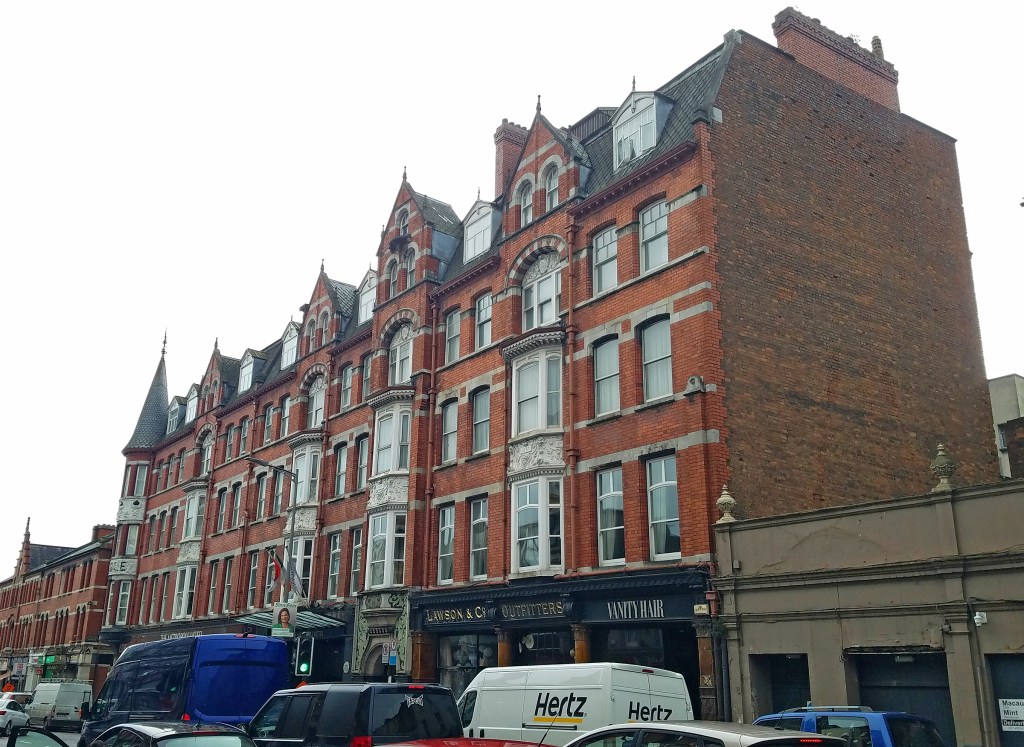
We walked back into town along the Lower Glanmire Road, till it connected to Summer Hill, and then into the Victorian Quarter. It’s a bit of a high street along that stretch.
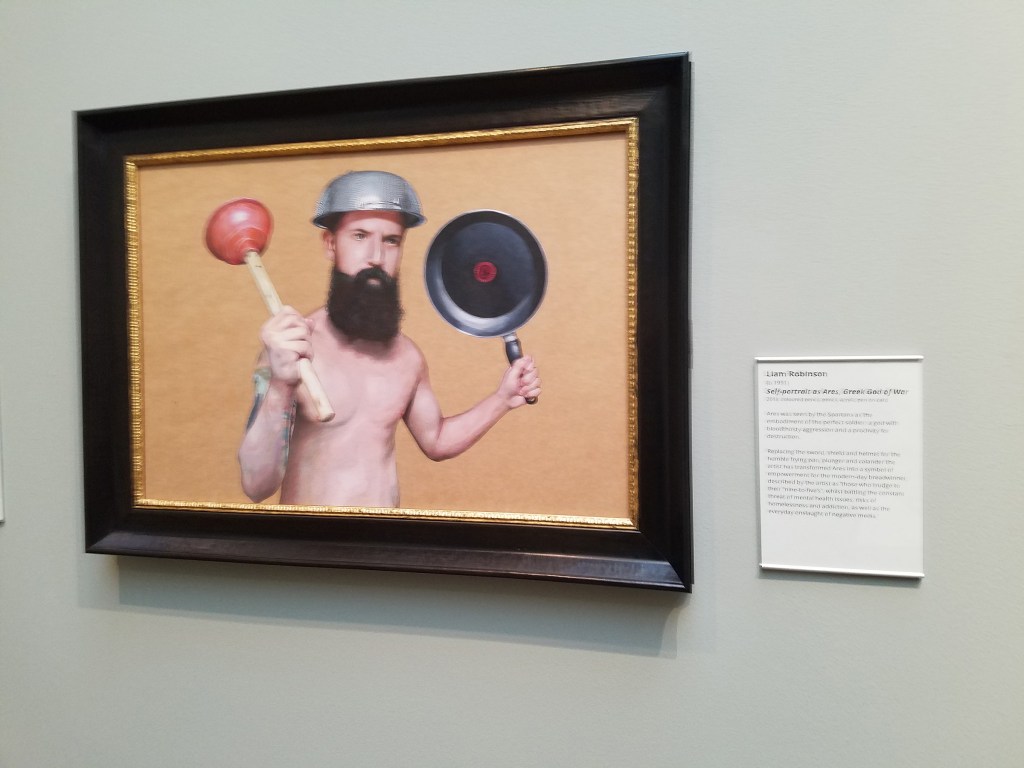
Afterwards, we ducked out of yet another squall and into the Crawford Art Gallery, the municipal museum in the heart of town. It’s located in the old Custom House, from when the docks extended further upriver. I was pleased to discover there are Pastafarians in Ireland.
But i had mentioned earlier a conversation in the train station. A couple of weeks back, on our way down to Cork from Athlone, we stopped in Cashel, to visit the Rock of Cashel, which isn’t really a rock. We ended up walking through a private “museum” of sorts. Basically, just a collection of random artifacts down the hill from the castle, organized into a semblance of a narrative of Irish history over the past couple of hundred years. The proprietor expressed some dissatisfaction with the stories from the States about Confederate statues being removed from the public square, because, you know, history. I was kinda caught out, not expecting to have these conversations here, so i basically disagreed with him, and changed the subject back to Irish history. But i made some mental notes about my response if i encountered that again.
And sure enough, the guy in the train station made almost exactly the same comment. Apparently, the rebel nature of the Confederacy appeals to some segment of the population here, who also consider themselves rebels and the children of rebels.
And it occurs to me that the great con of the Confederacy is claiming the mantle of rebellion for itself. If the Confederacy was about anything, it was about maintaining the status quo of the elites of the day in the face of the mounting anti-slavery rebellion. Slavery had been enshrined in the new country from its founding. The anti-slavery movement began immediately. It represented the change. The reactionaries were pro-slavery. John Brown represented the rebellion. Harriet Tubman represented the rebellion. Sojourner Truth represented the rebellion. In Star Wars terms, Jefferson Davis and Robert E. Lee were the Emperor and Darth Vader.
And how they’ve managed to portray themselves, over 150 years after their deaths, as rebels to a people 4000 miles away remains one of life’s mysteries. But if we do settle here, i know what one of my tasks will be.
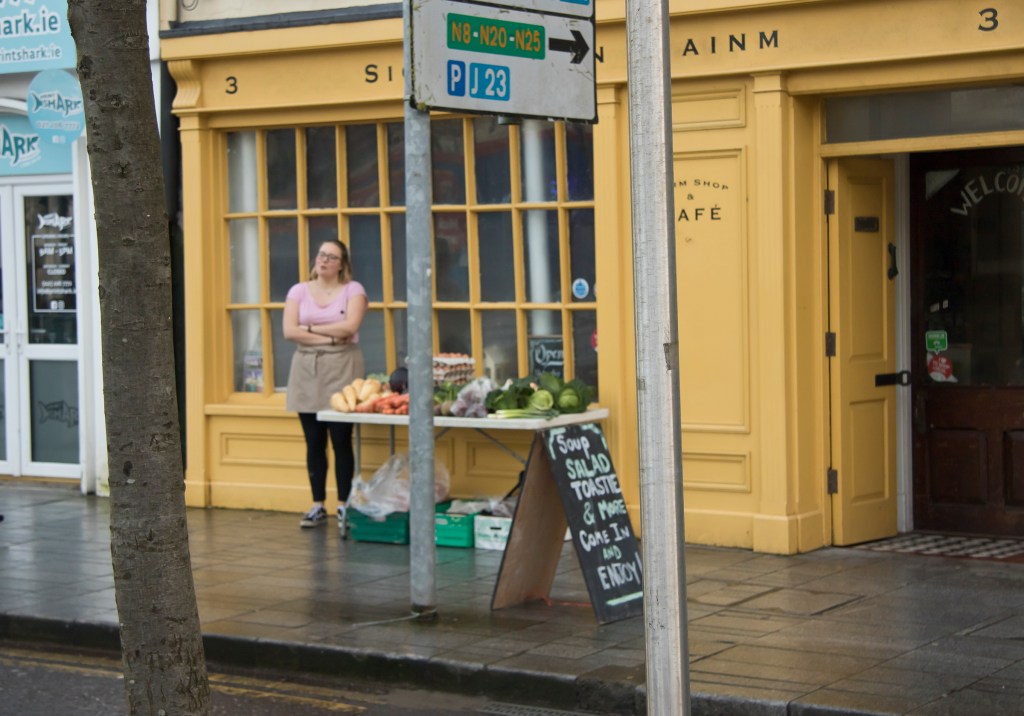
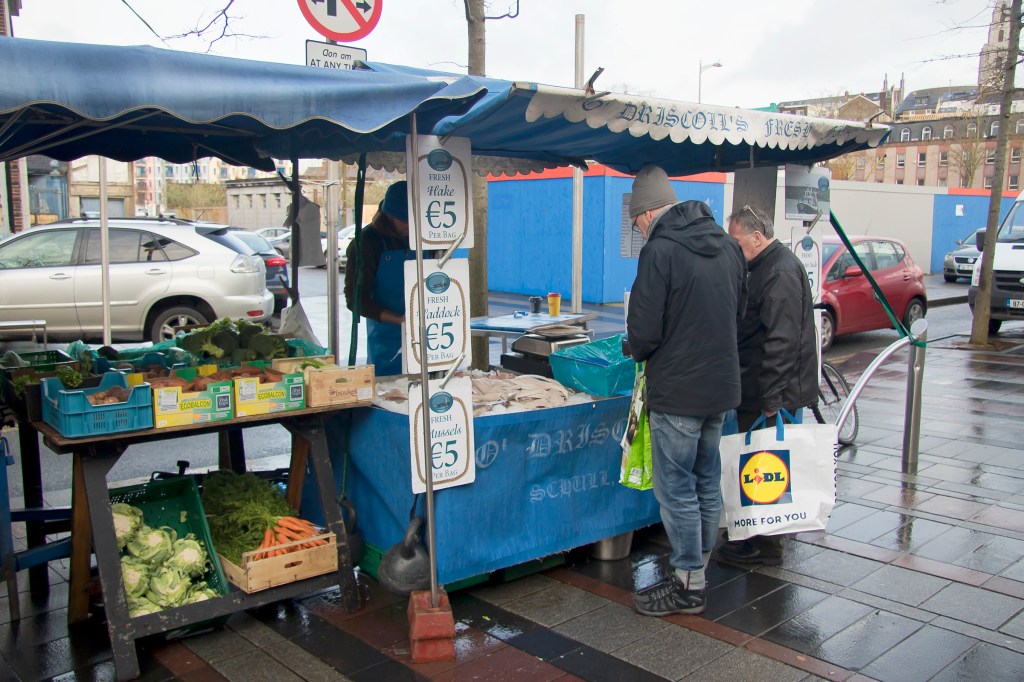
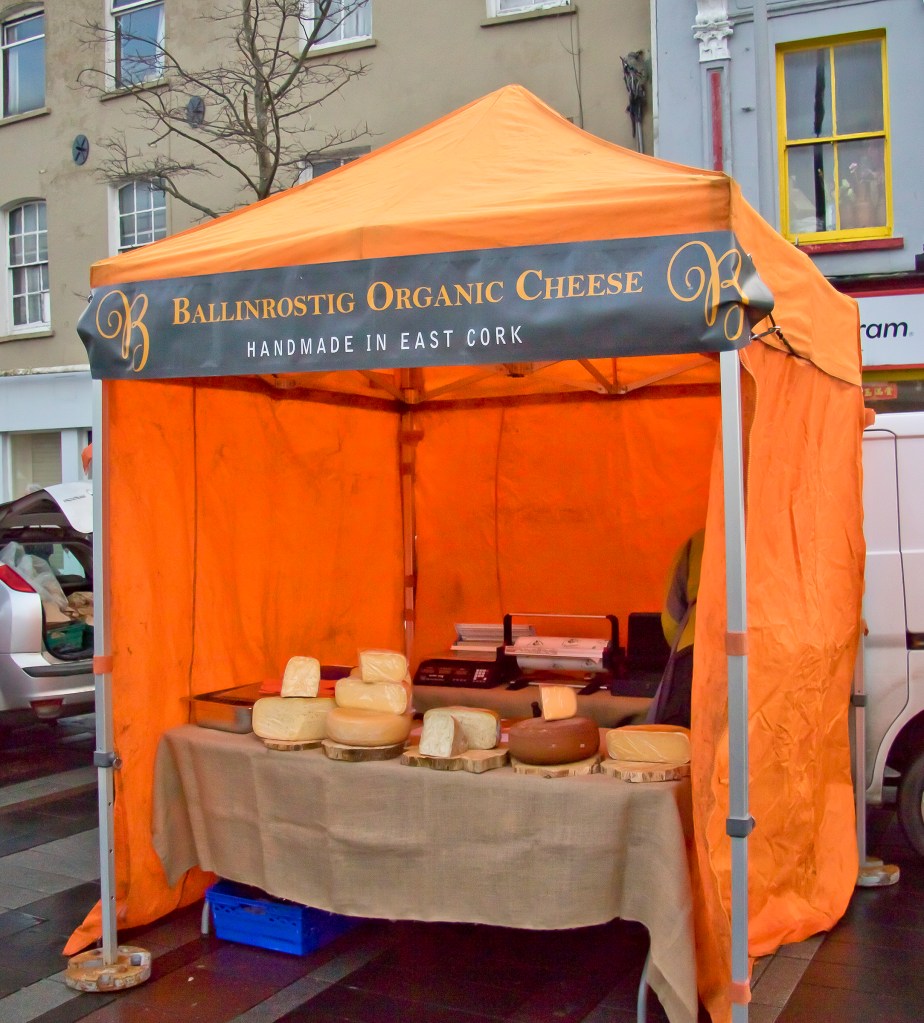
We left the apartment early, discovered the local farmers market on our side of the river, and spent a few hours exploring Shandon and its surroundings.
Farmers Market, Merchant’s Quay
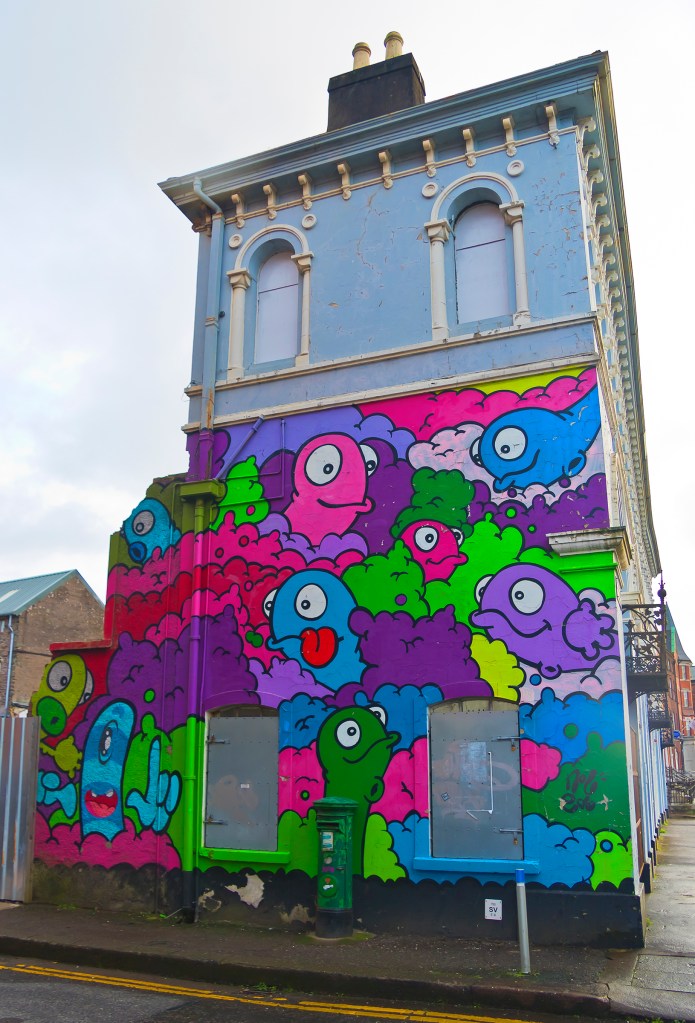
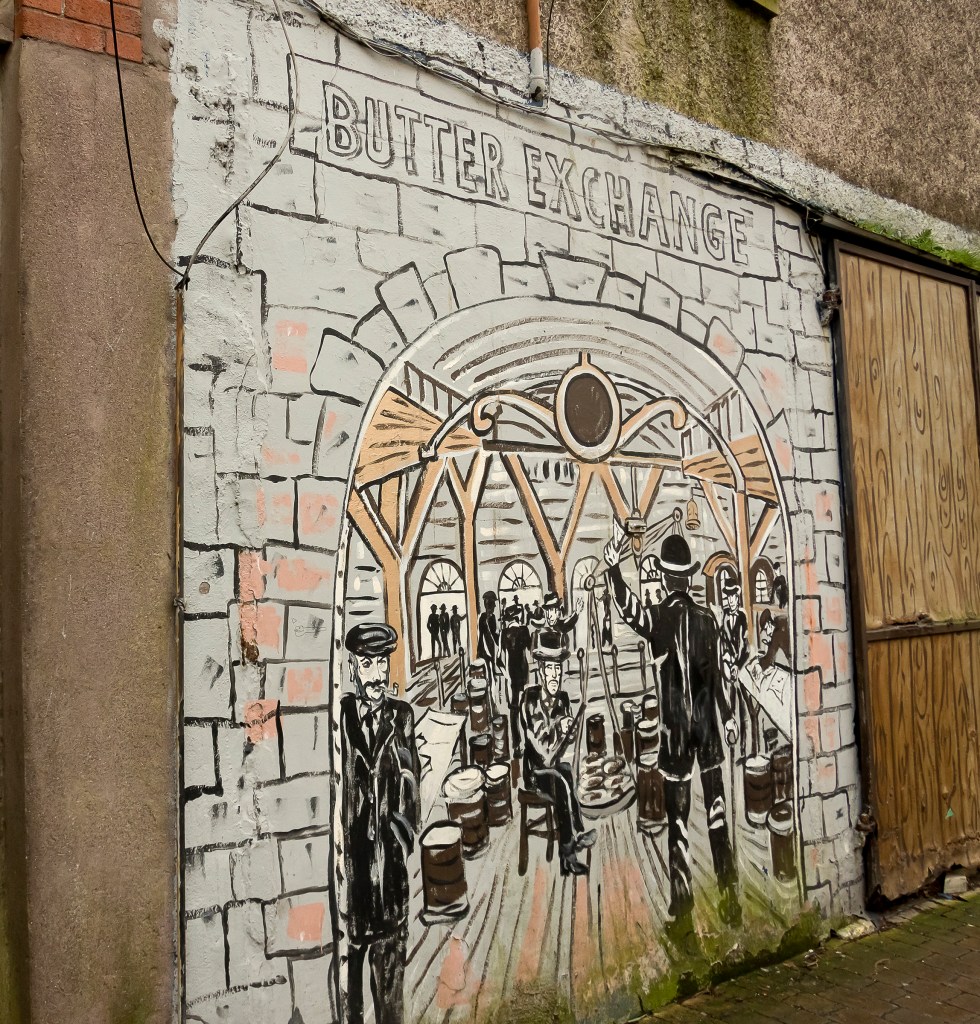
This one will definitely also make an appearance in the next street art post.
One thing i’ve noticed about Cork is that there’s not really much in the way of dedicated green space. You just have to find nature where you can.
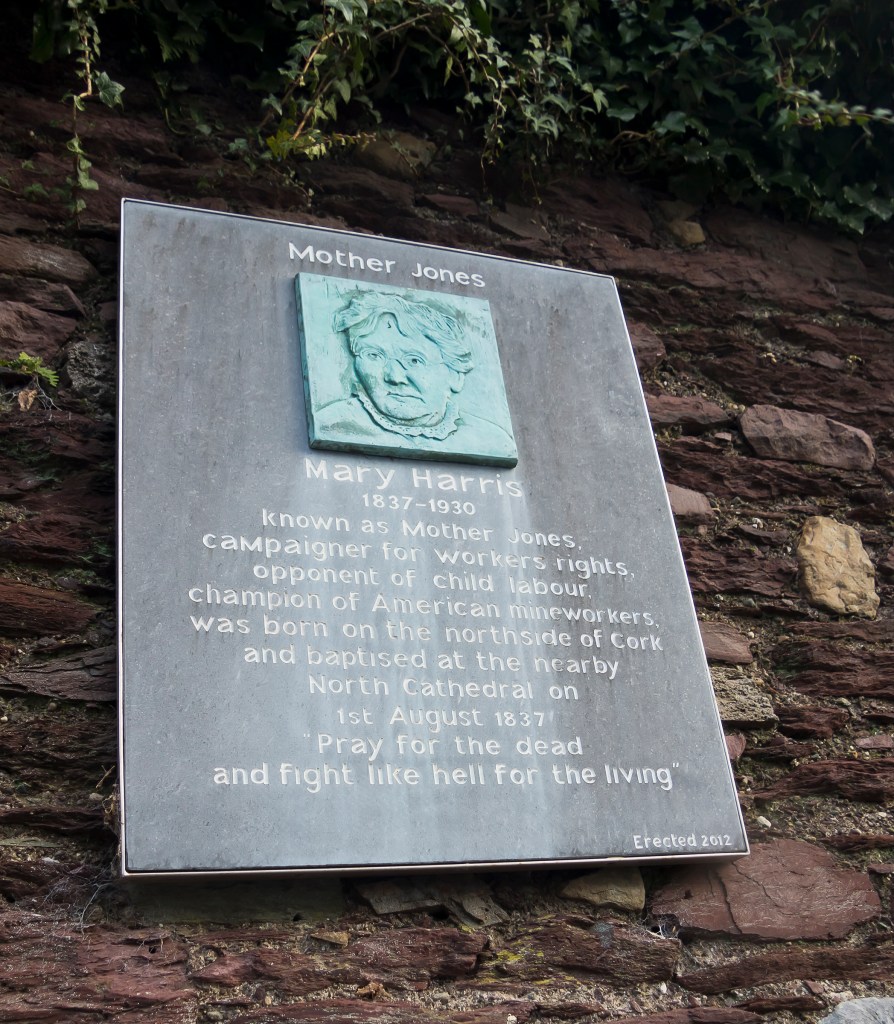
Learned that Mother Jones was born here 183 years ago. We could use her now, no?
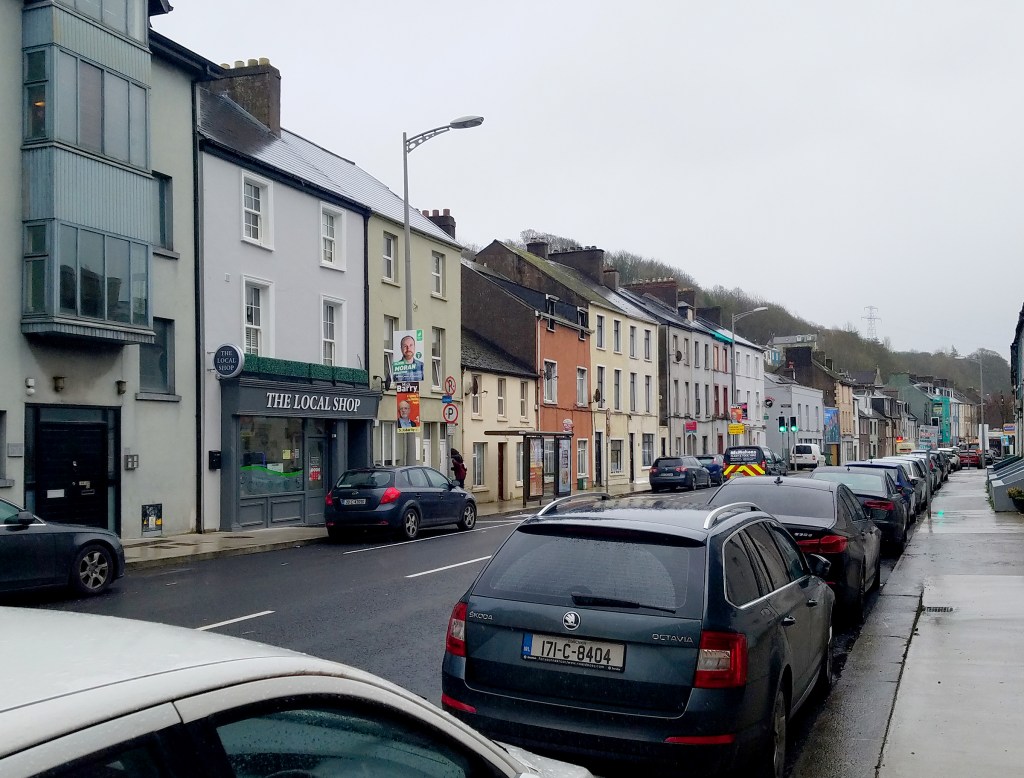
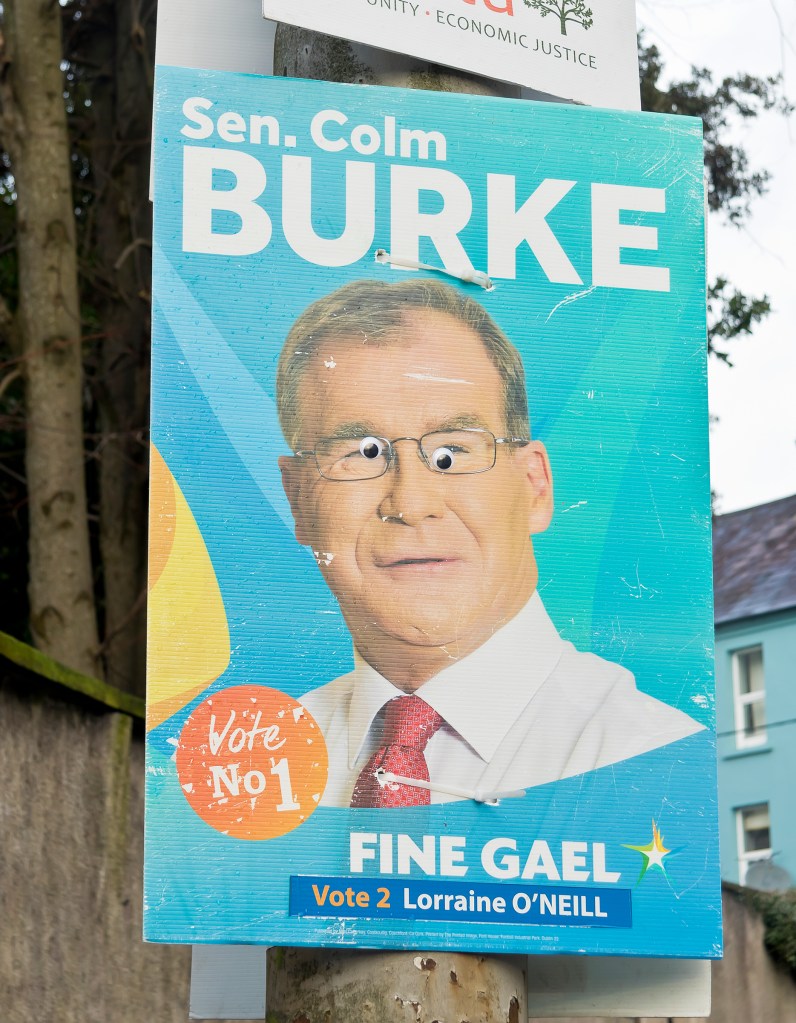
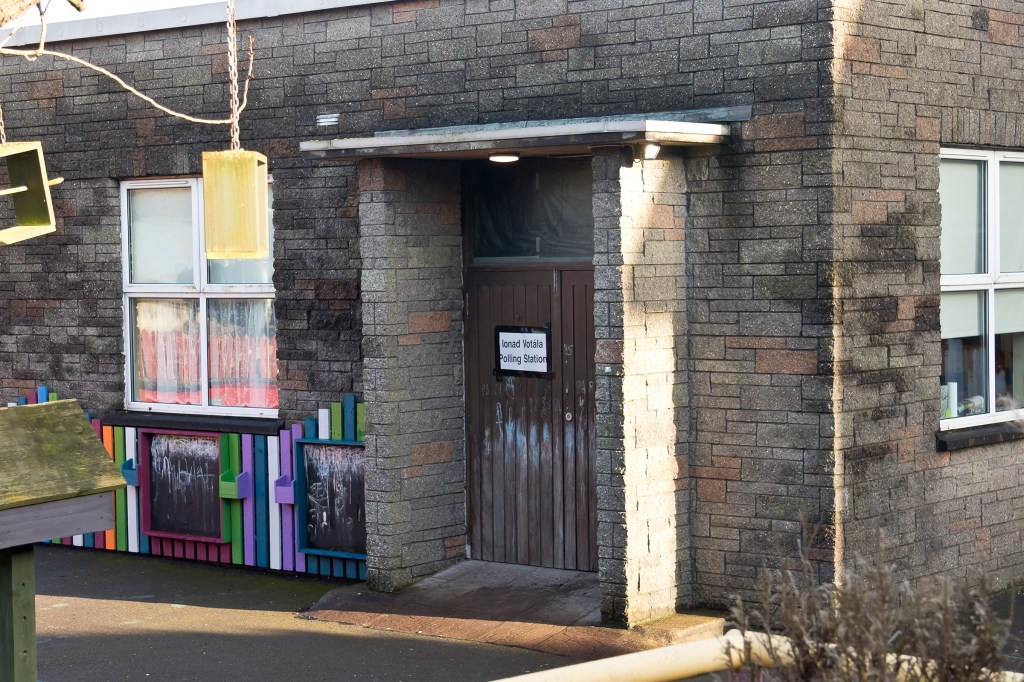
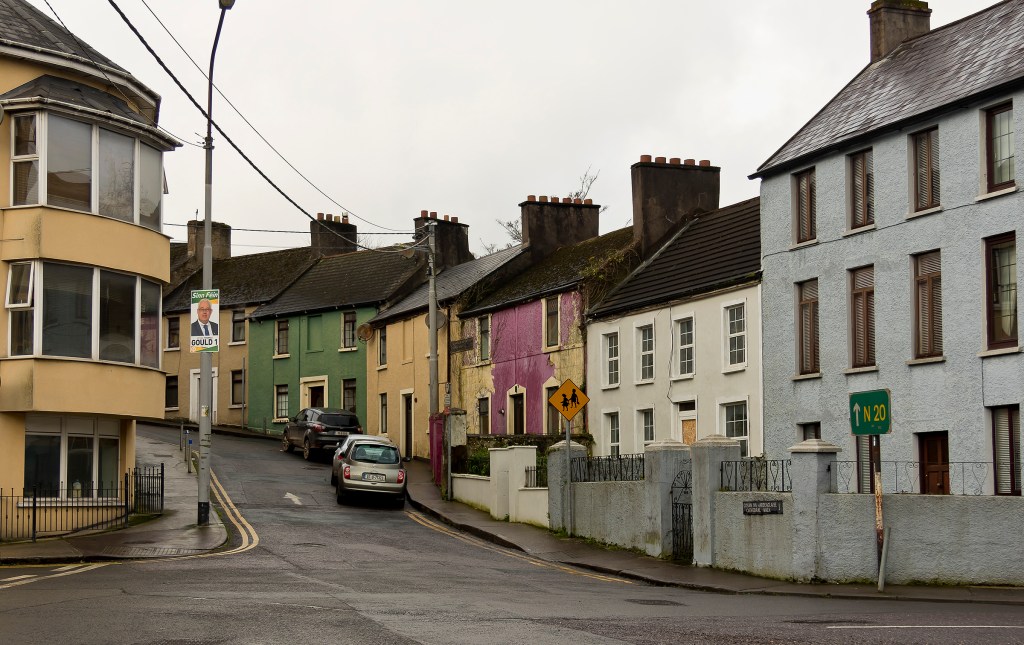
Today’s Election Day in Ireland. I wonder if Senator Googly Eyes will retain his seat?
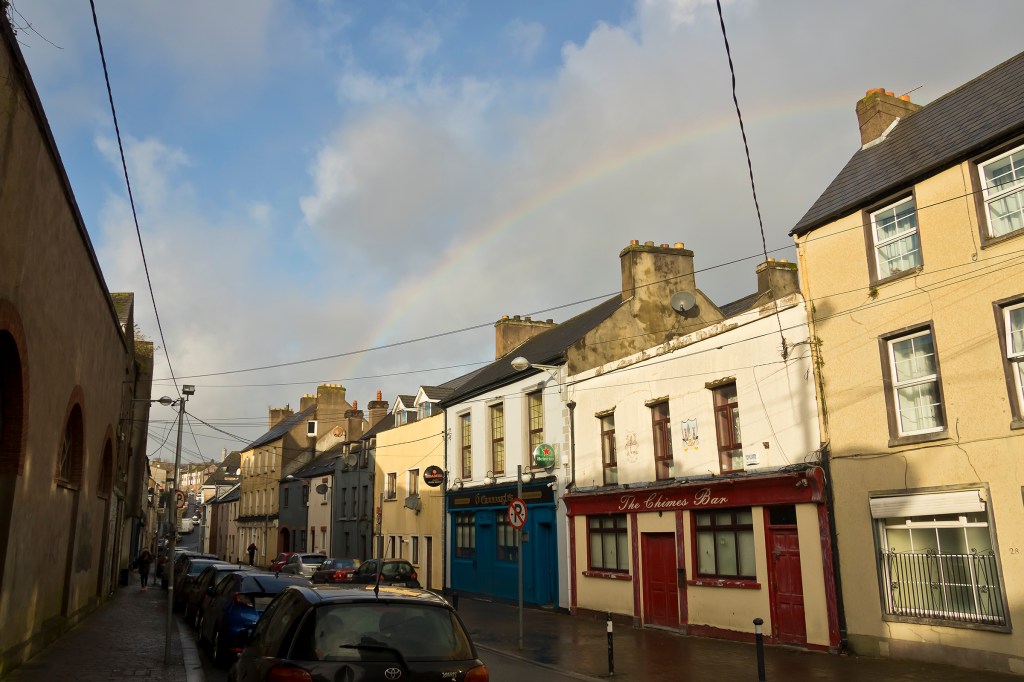
And just a few more pics of our little walkabout.
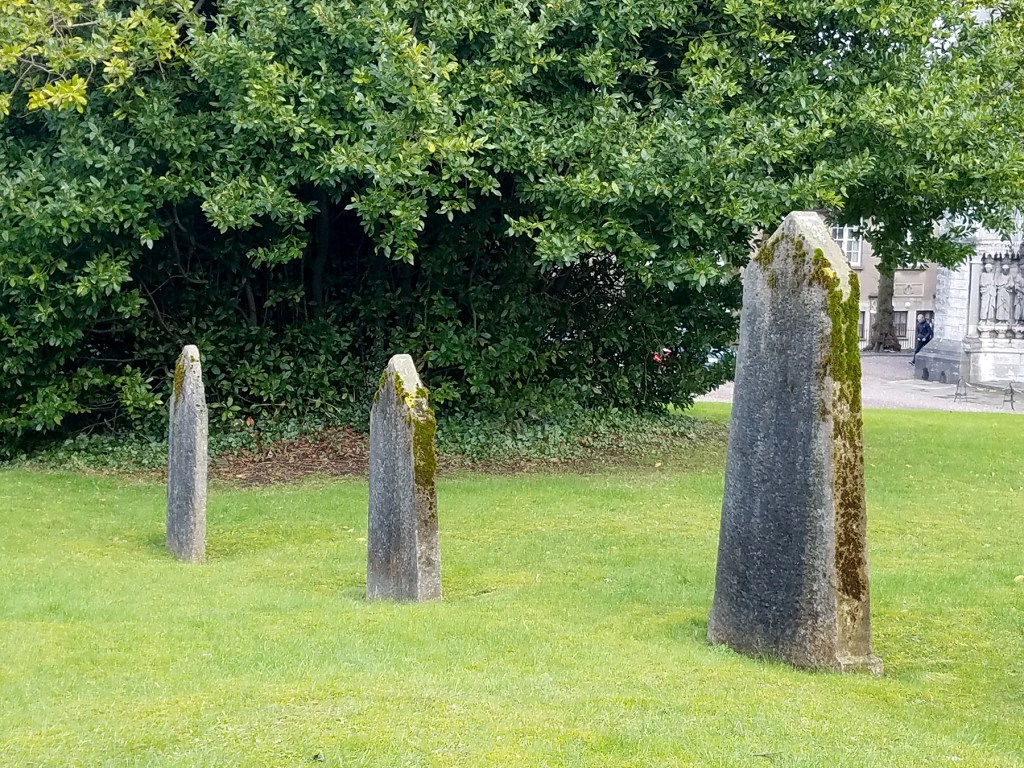
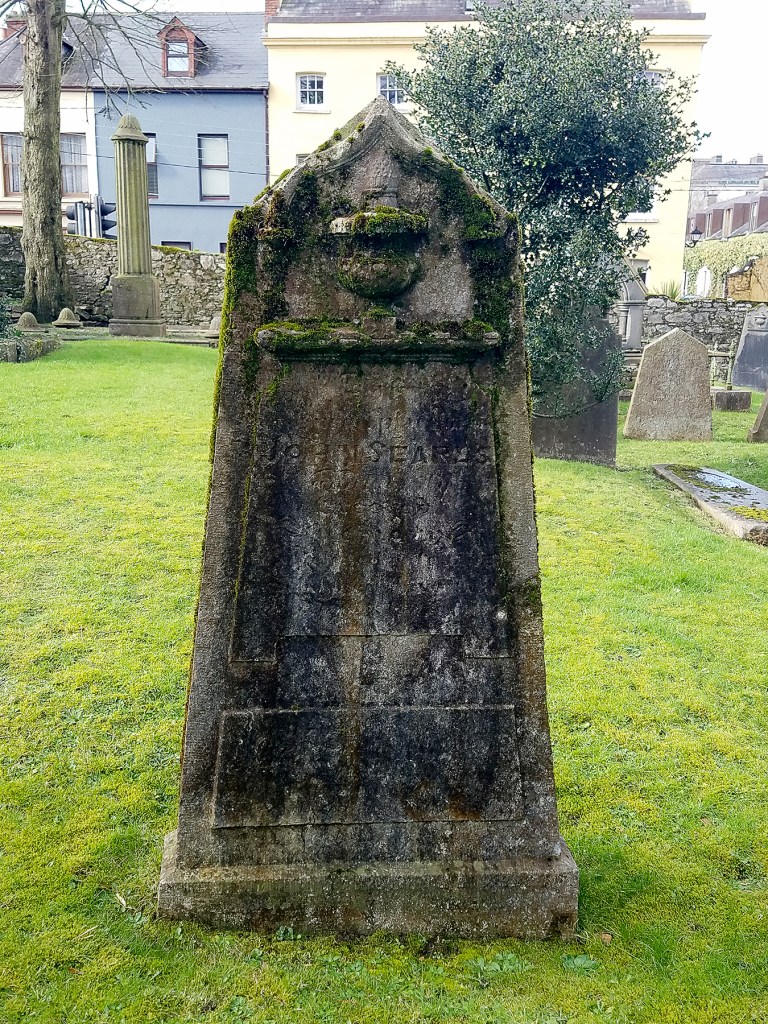
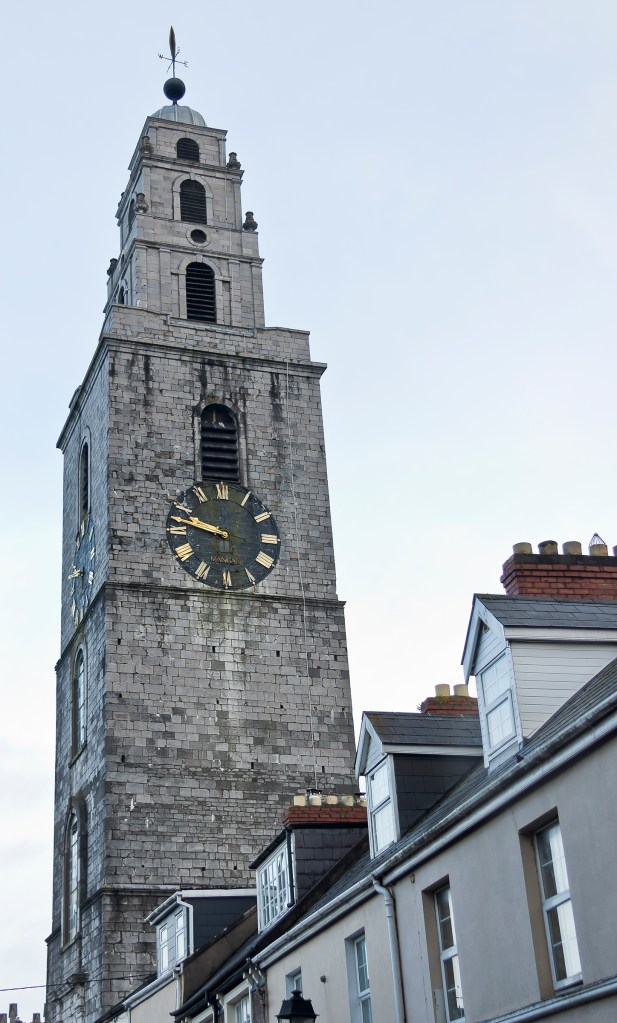
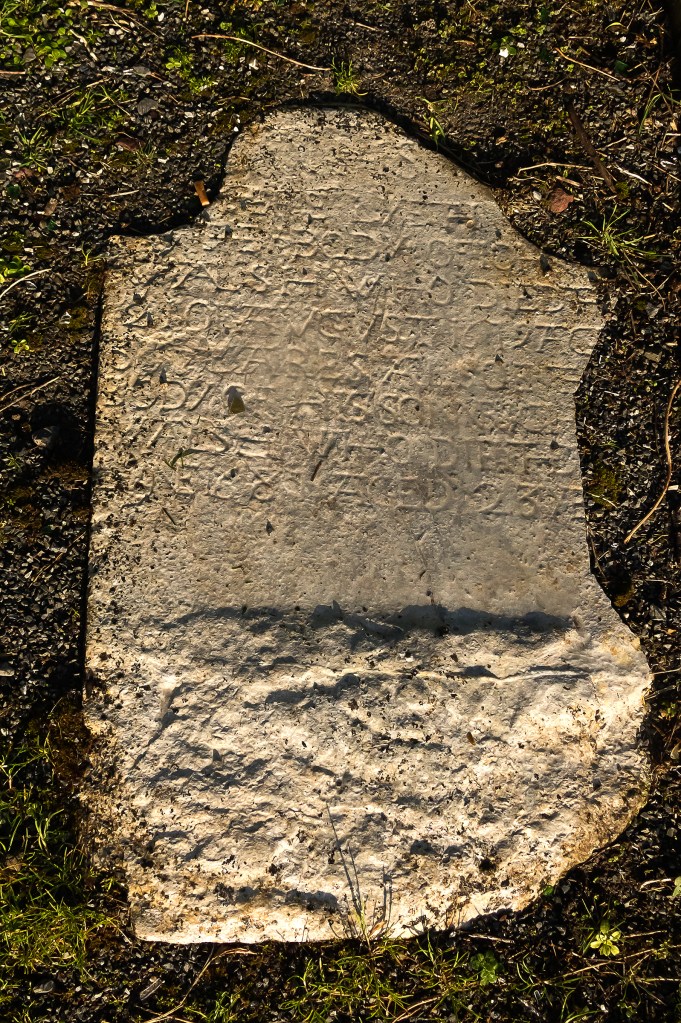
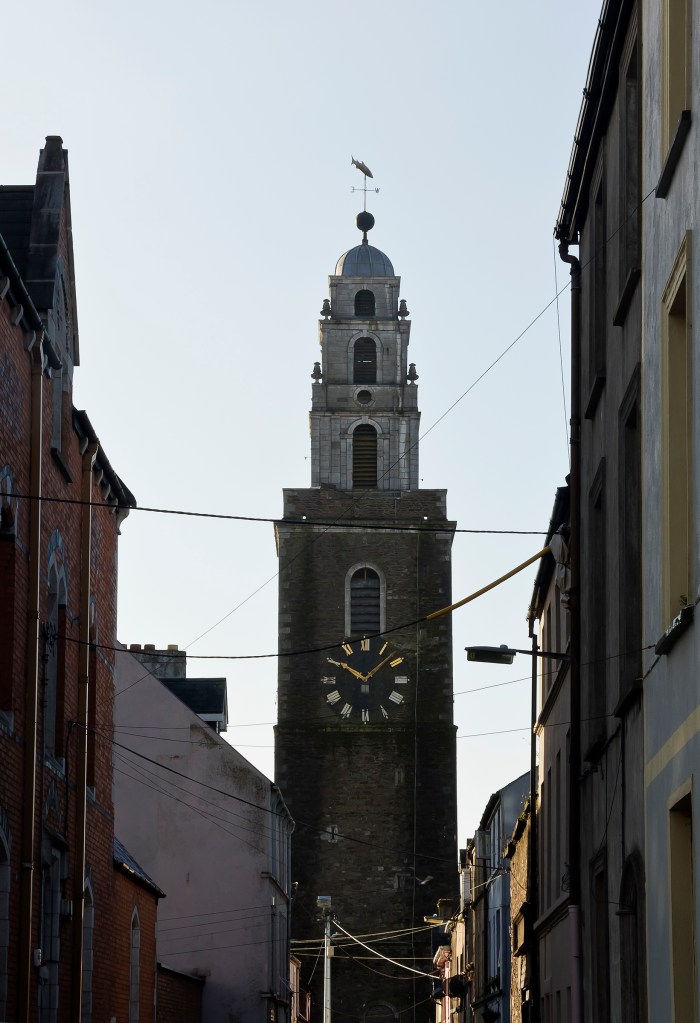
Left, gravestone at St. Anne’s; Right, the 4 clocks on the tower at St. Anne’s are known locally (and, i would guess, affectionately) as the Four Liars, as they are never in agreement as to the time.
I found my peeps, though.
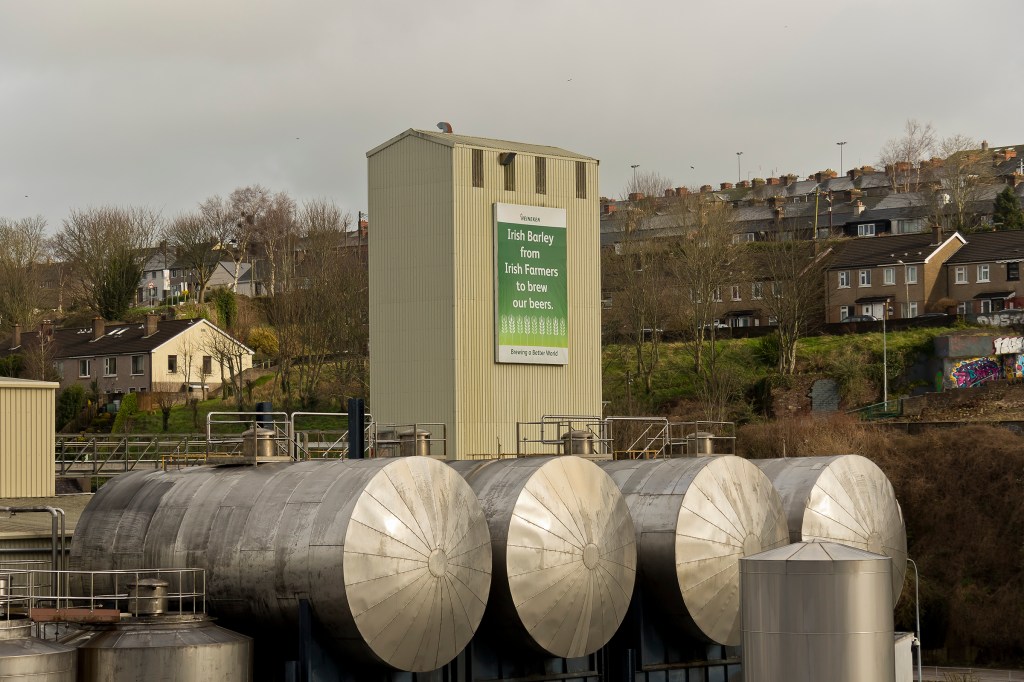
Heineken has a brewery on the edge of the district. Don’t know if they give tours, but it explains why the brand is so prevalent in this city.
It’s been fun running around the city with Barry all week, but truth be told, I’ve also been looking forward to spending a day on my own, popping into whatever stores caught my eye and spending as much time as I wanted without worrying that Barry was bored hanging out in the schmuck chair*.
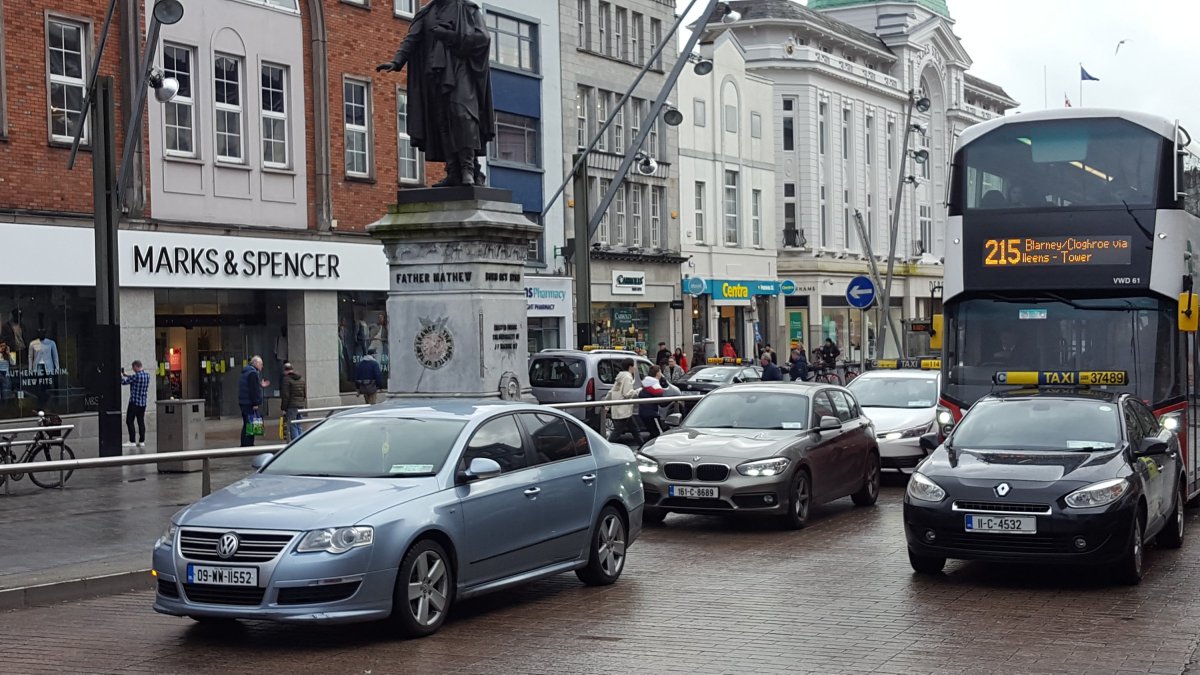
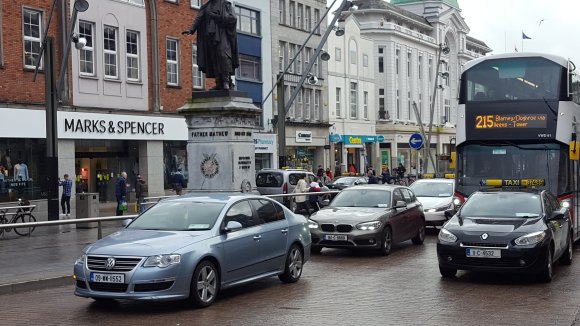
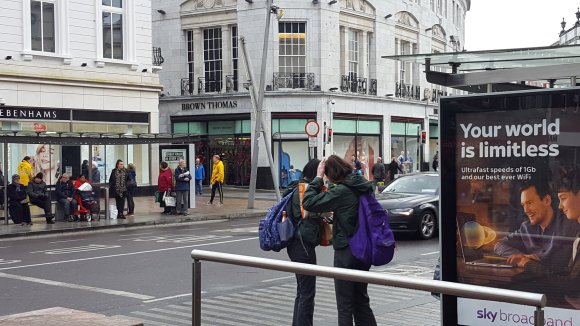
Today I got my chance; he needed a day of rest, so I got to explore the city on my own. I’m not much of a shopper, but I was curious to see the stores here, from Marks & Spencer (which I’ve wanted to see ever since reading the Bridget Jones books) to Brown Thomas (which, according to the Ask Audrey column in the Irish Examiner is where the posh people shop). I also popped into Debenham’s, Dunnes, and several smaller shops that caught my eye.
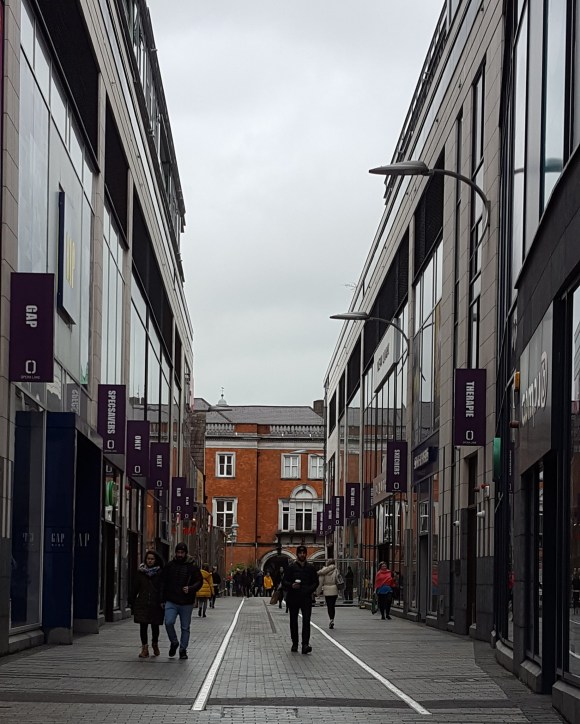
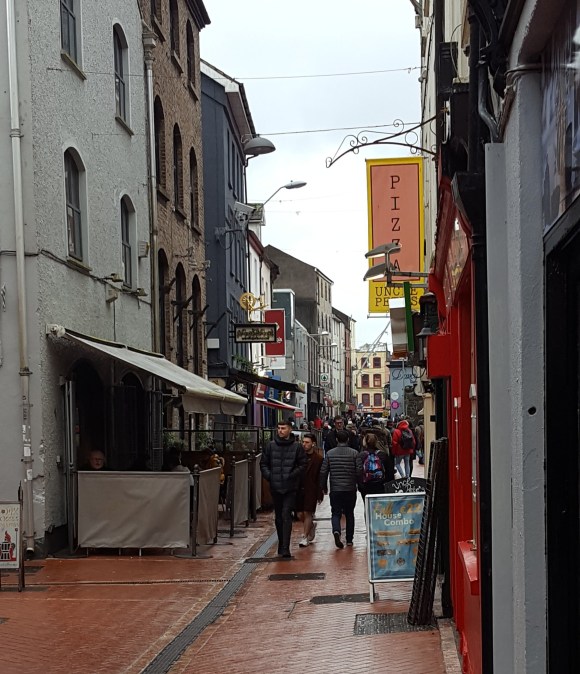
It’s easy to get turned around in Cork City Centre, but difficult to get lost. Streets curve around, there are several enclosed shopping centers with entrances on multiple streets, and the major roads are crisscrossed by alleys: some are mere service alleys, some are wide enough to have one narrow lane of traffic, and others are pedestrian only, often lined with sidewalk café seating.
I simply wandered from store to alley to street, occasionally popping into a shopping center and coming out another side, walking in one direction and discovering I was heading the opposite way I thought I’d been going. The reason it’s difficult to get lost, though, is that the city centre is on a small island, so you can’t go too many blocks before you run into the River Lee. The north branch of the river is wider, with a steep hill opposite (our apartment view); the other is narrower and the opposite bank is flat. So you really can’t walk too far without the river to reorient you.
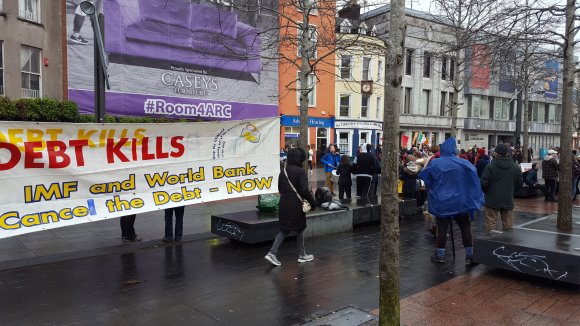
I also ran into a demonstration, from what group specifically I could not say, but they were young and enthusiastic and happy to be banging drums and talking to people about world we are leaving to our children and grandchildren. I also chatted with someone raising funds for a homeless shelter; yesterday I chatted with someone from the Irish Cancer Society, and with a big election coming up tomorrow, we’ve also had conversations with some campaign volunteers. All conversations I would likely avoid in the states, but here, I’m motivated to talk to whoever will talk to me, about whatever!
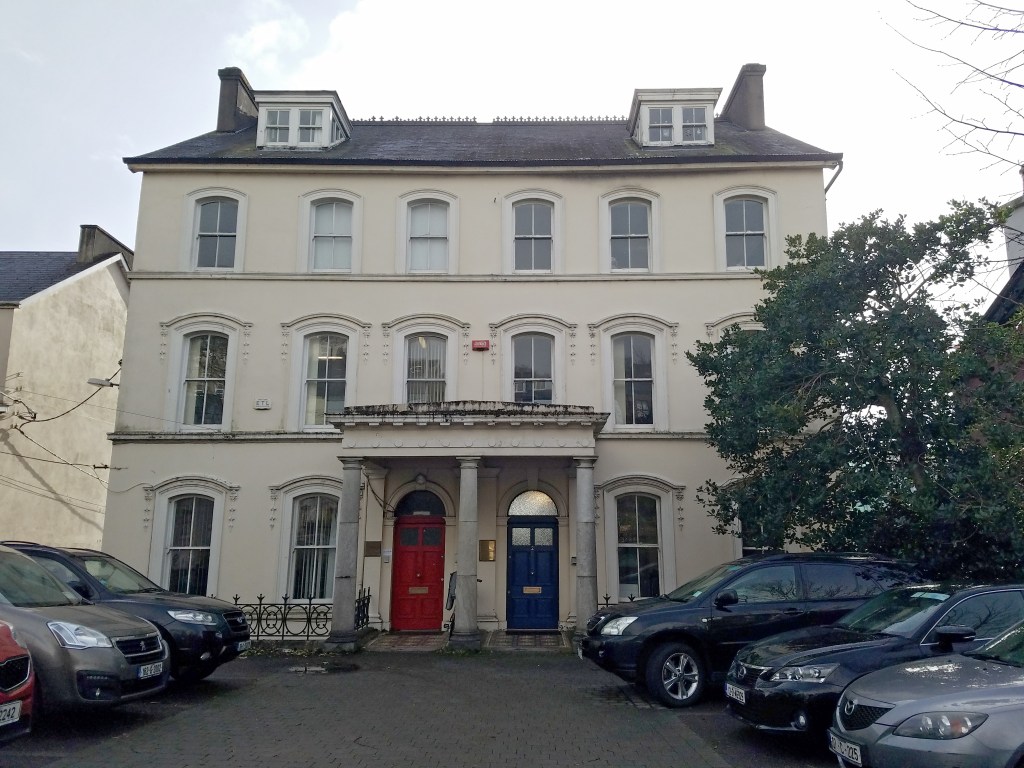
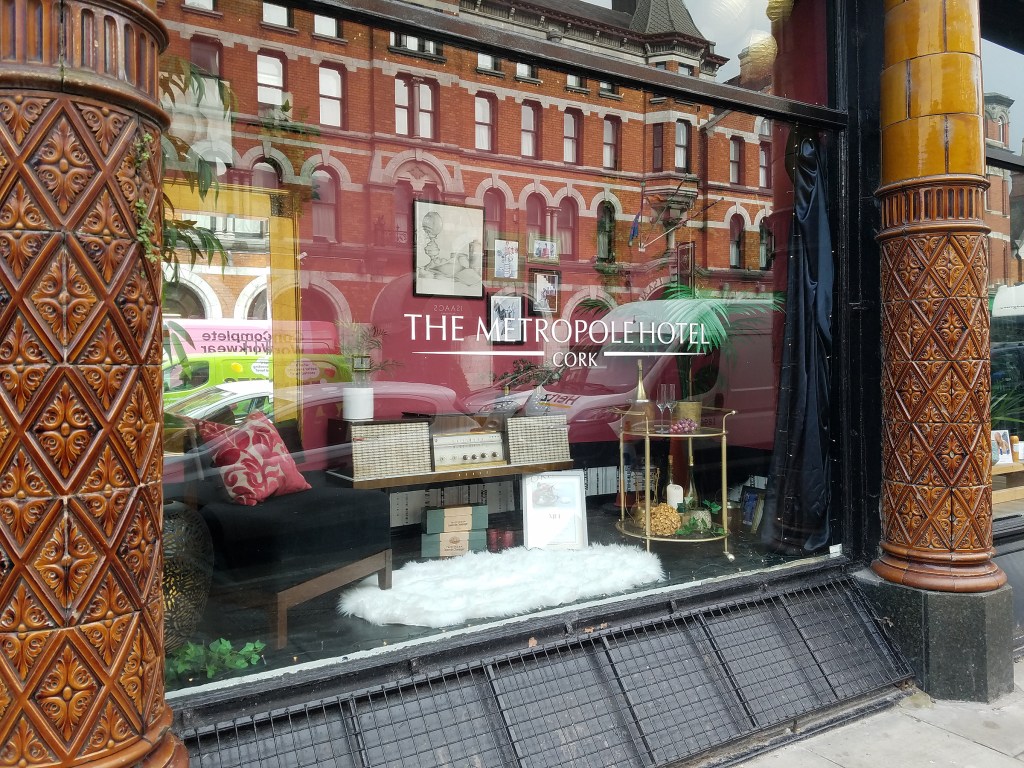
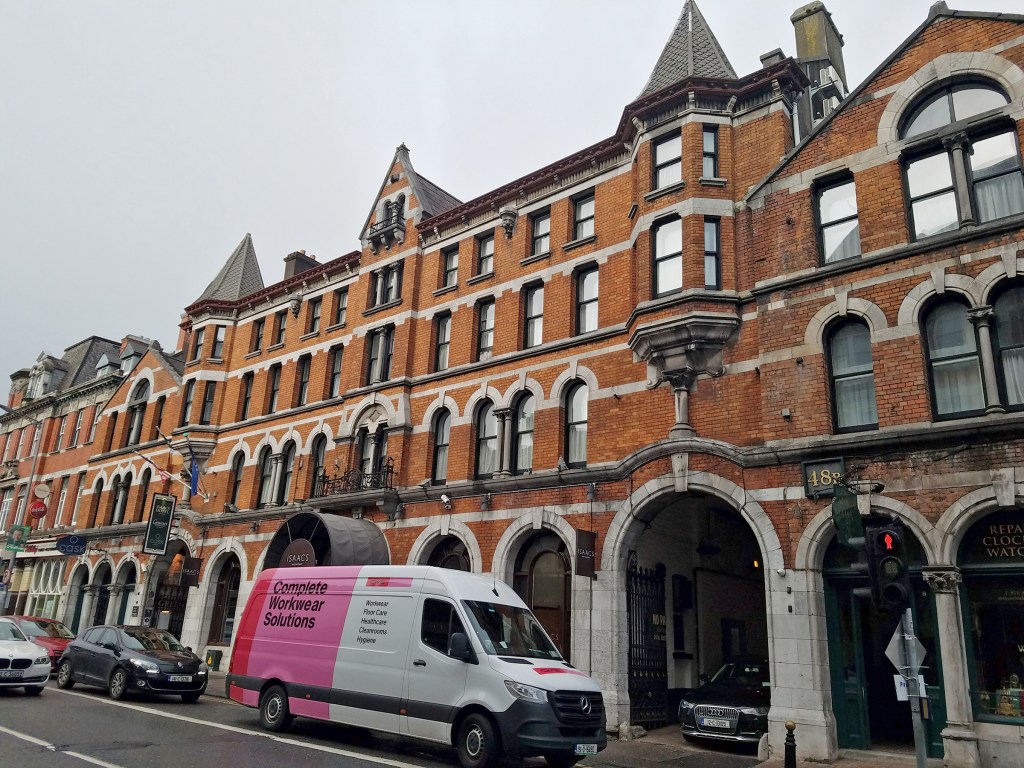
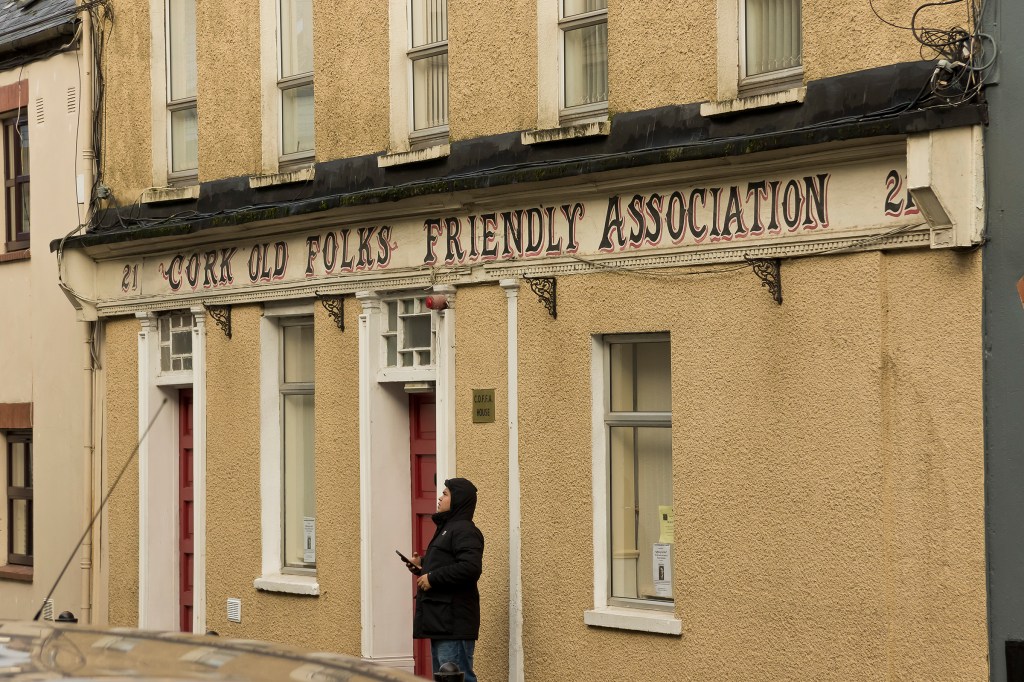
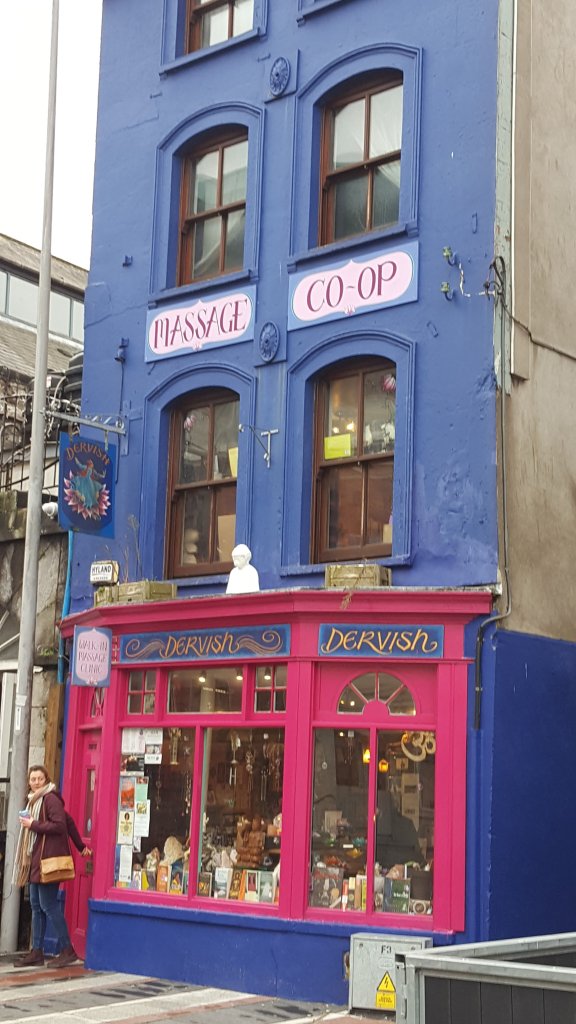
On the way home I passed this lovely building, where, yesterday afternoon, I got a wonderful massage and had a bit of a conversation about politics with the masseuse (she’s voting Sinn Féin).
*The term “schmuck chair” was coined by my friend Glenn for the chair where a husband sits looking bored while his wife shops. It’s not really gender-specific, though, as I have appreciated many fine schmuck chairs in record stores. Sometimes, if you’re really lucky, there’s an entire schmuck living room with a coffee table and magazines.
 Cork Spring