We had only ever planned to spend two months in Cork, so our social sphere was naturally going to be constricted. Our apartment complex above the Gate Cinema on North Main Street consisted of 16 or 18 one and two bedroom units. A couple of them showed evidence of children, but i think most were inhabited by singles. We were far and away the oldest. At a guess, i’d say the median age was maybe 30. We said hello to maybe a dozen different people over the 6 weeks, but only ever had lengthy conversations with Barna, from Zagreb, Croatia, who we would occasionally see practicing his juggling and firestick act on the shared rooftop space. We did not get a chance to say goodbye to him before we left the city.
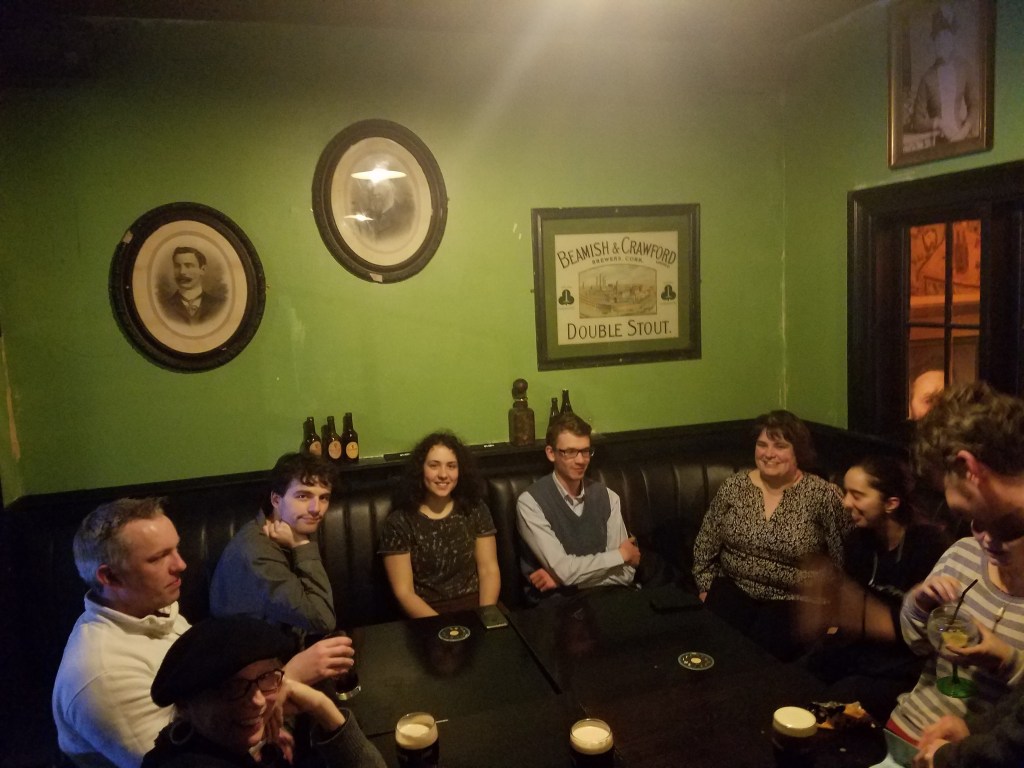
Some of the first people we met were in response to a meet-up posting about a Science Fiction and Fantasy reading group. We were fortunate in that the book being read our first month was quite short, and we were both able to finish it within the week, and join in the discussion, which was lively and opinionated and smart. Thanks for making us feel welcome.
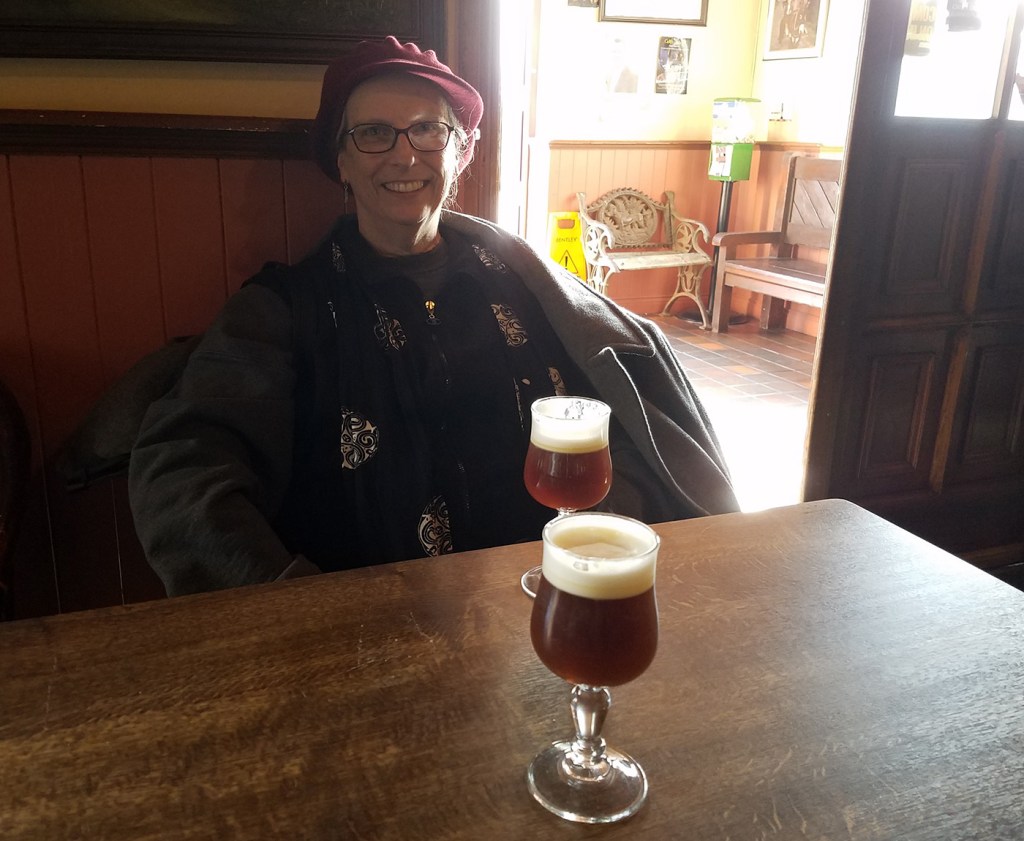
I only got the one very poor shot of the reading group. I had hoped to improve on it in March, but sadly no.
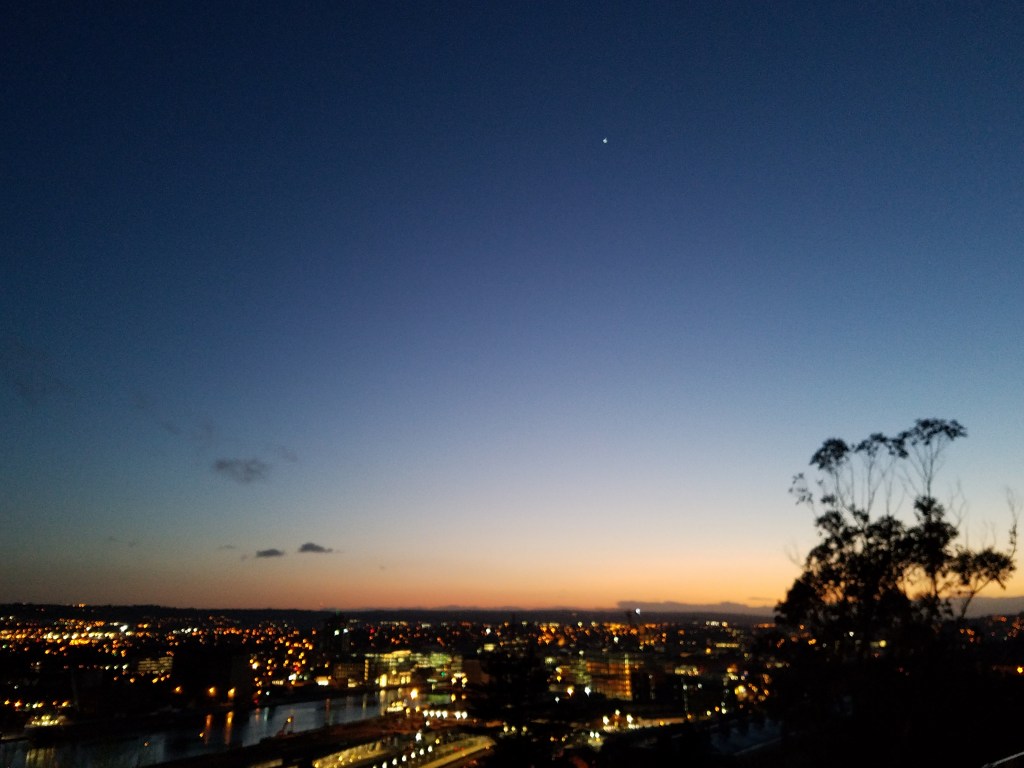
I think i wrote previously about our chance encounter at the Cork Arts Theatre production of The Parish, with a ticket holder who was trying to find a buyer for a pair of tickets that friends of hers couldn’t use. Theresa was very sweet, and one of several people who recommended that we stop in at the Montenotte hotel for sunset drinks. They were all on point.
We met a few shopkeepers and proprietors.
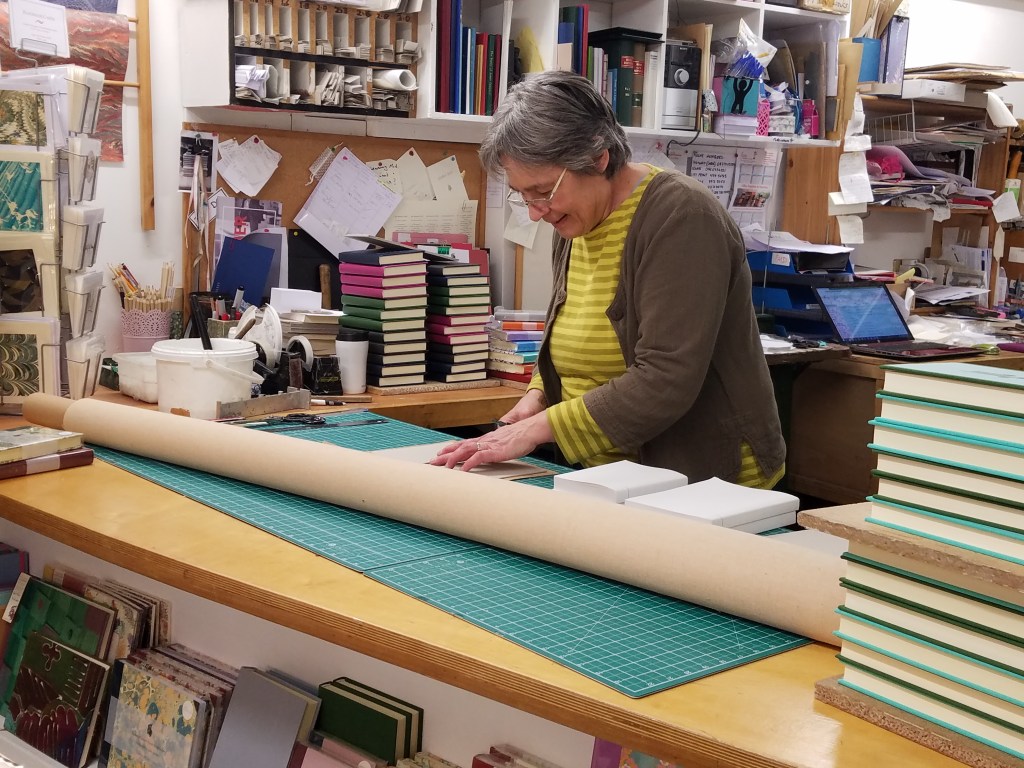
Barbara Hubert is, apparently, well known in bookbinding circles. She was kind enough to allow a picture, and we were able to duck back into the shop on our last day to pick up a couple of small gifts.
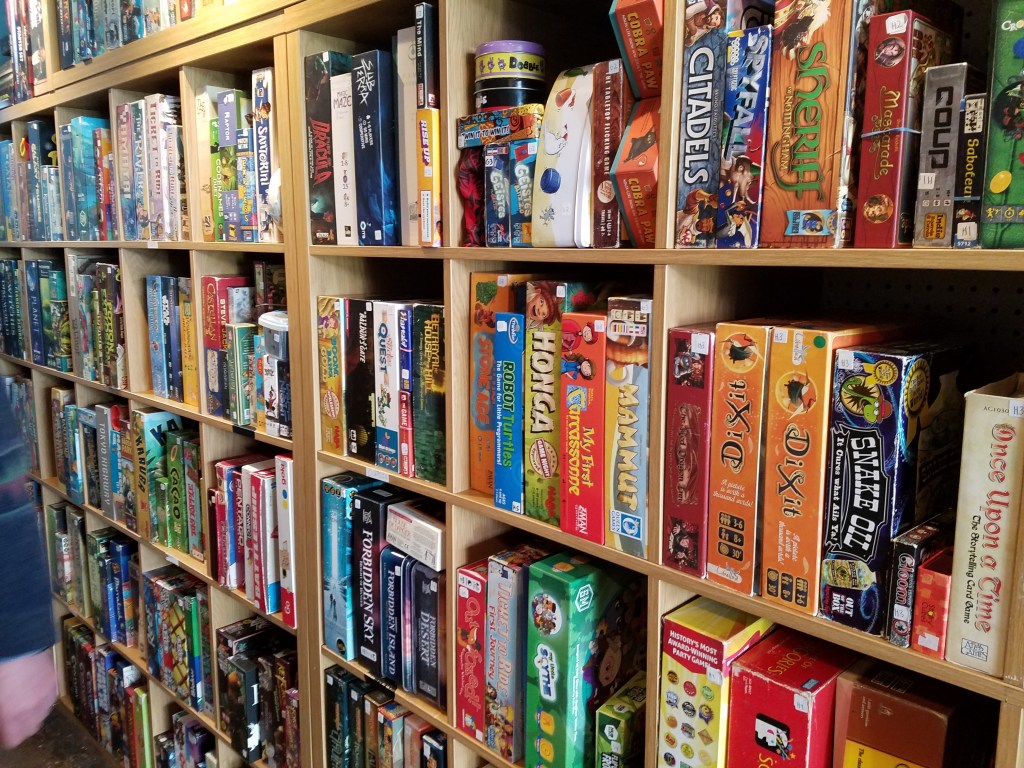
We ended up spending time in a few regular haunts. Tabletop Boardgame Cafe, right down the street from our apartment, was one. Chris, the owner, is an incredibly nice person, and took the time to explain the various games we tried out for the first time. His business is going to take a huge hit, so if you’re in Ireland and like games, maybe consider placing an order from his website? We really want to see him opened when we’re able to return.
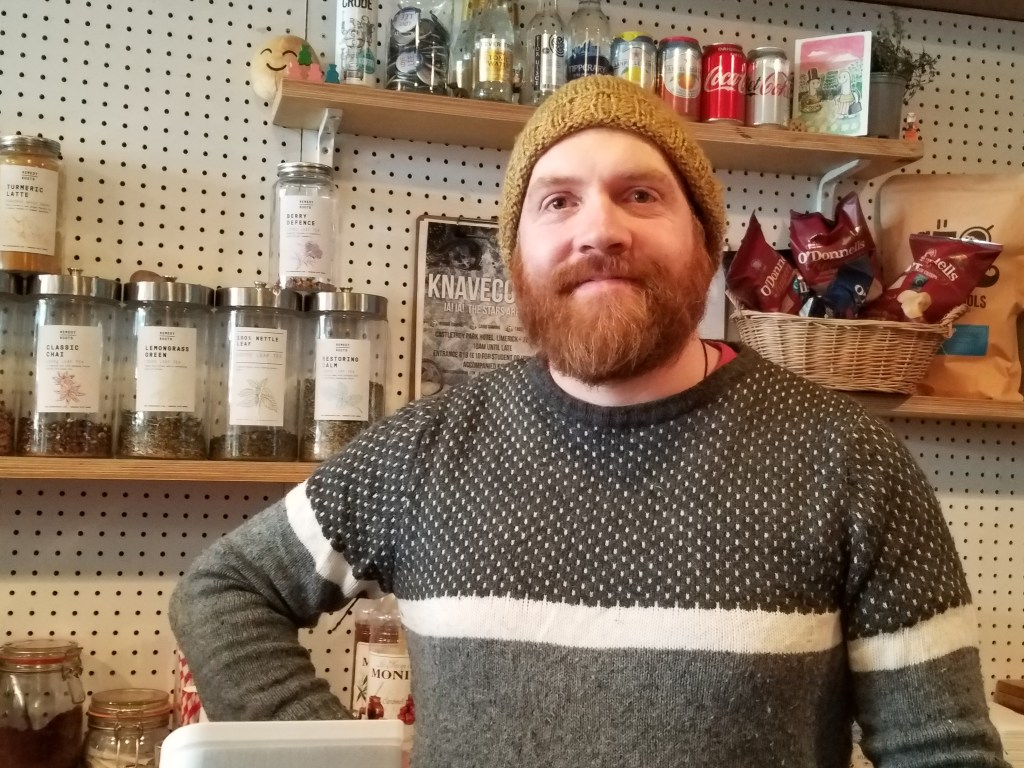
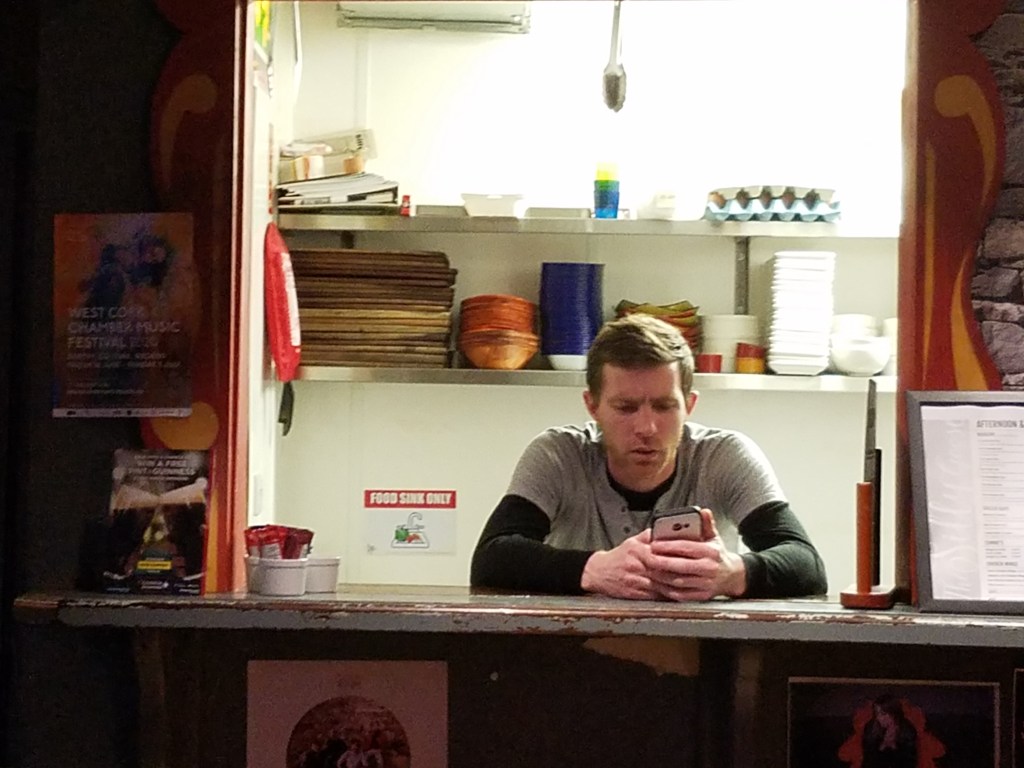
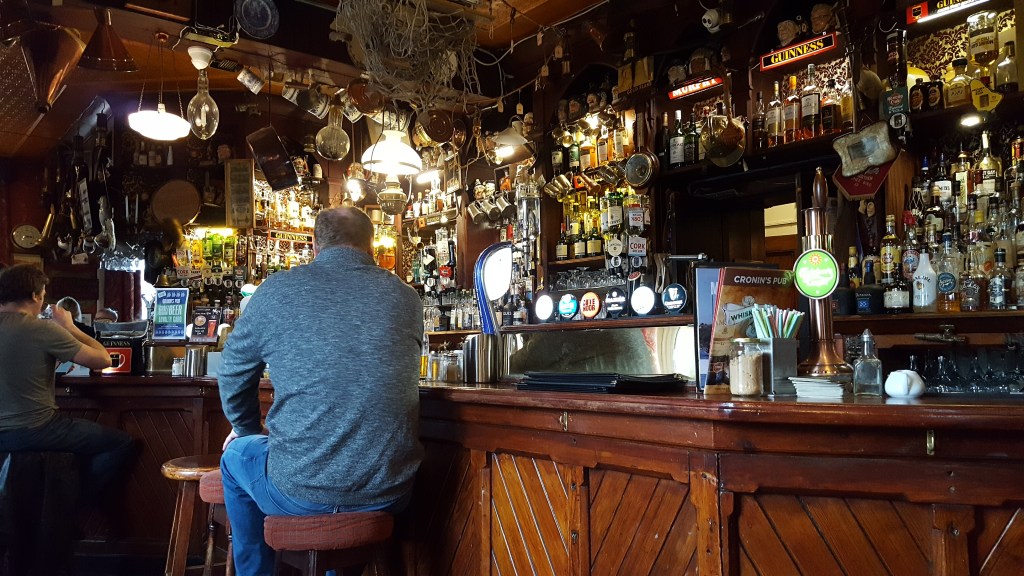
The Silly Goose, about 6 or 7 blocks away from our apartment, became our local, especially on Liverpool match days. Barry, the cook, is a massive fan. If the season is voided, and Liverpool aren’t awarded the title this year, he’s going to be crushed.Again, incredibly nice people, and i hope they’re able to survive the ongoing lockdown.
Probably doing some bantz after a Liverpool goal
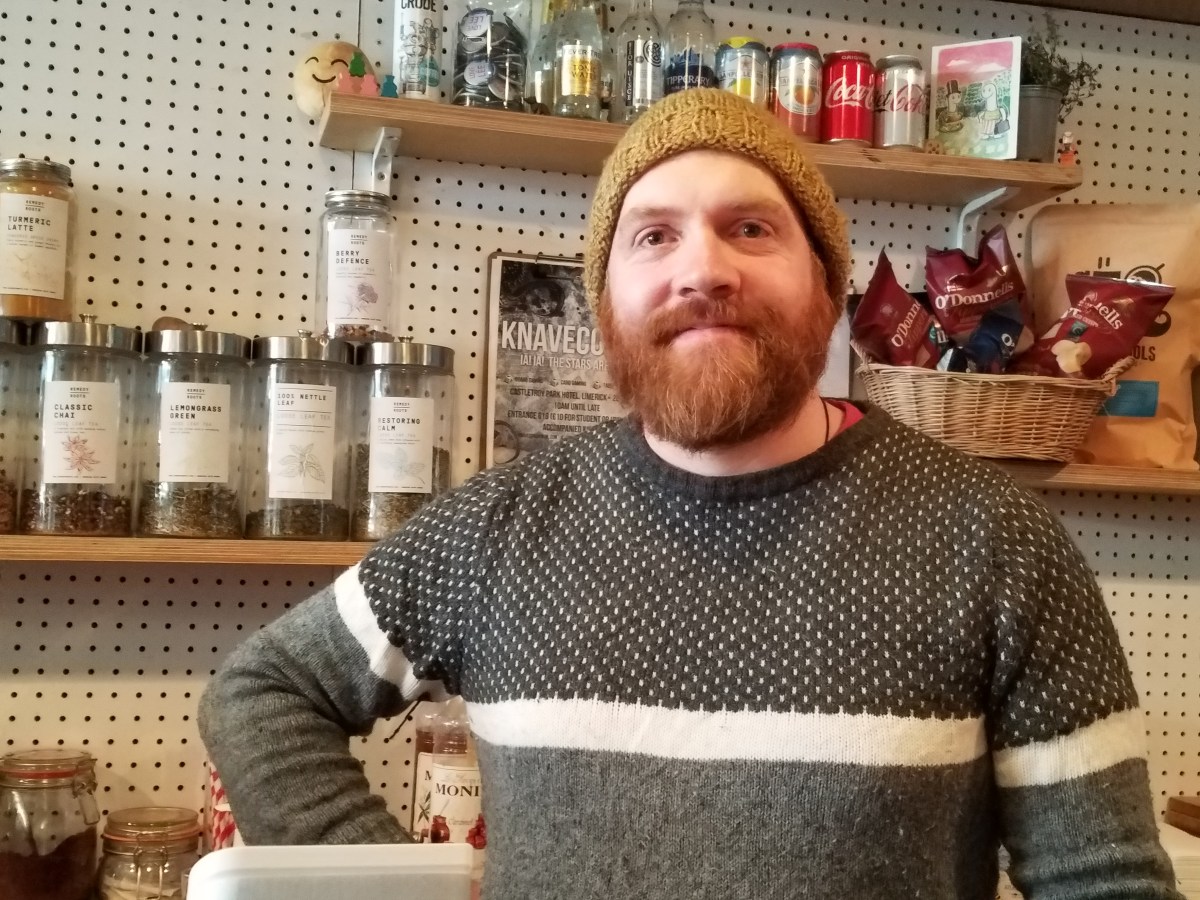
The folks over at iElectron, who repaired my busted camera lens gratis, were also very nice. Hailing from several different states that formerly made up Yugoslavia, we had several nice conversations about Tesla and history, and they were as appreciative of the donuts i brought on our next to last day as i was of the complementary repair. No pictures, though.
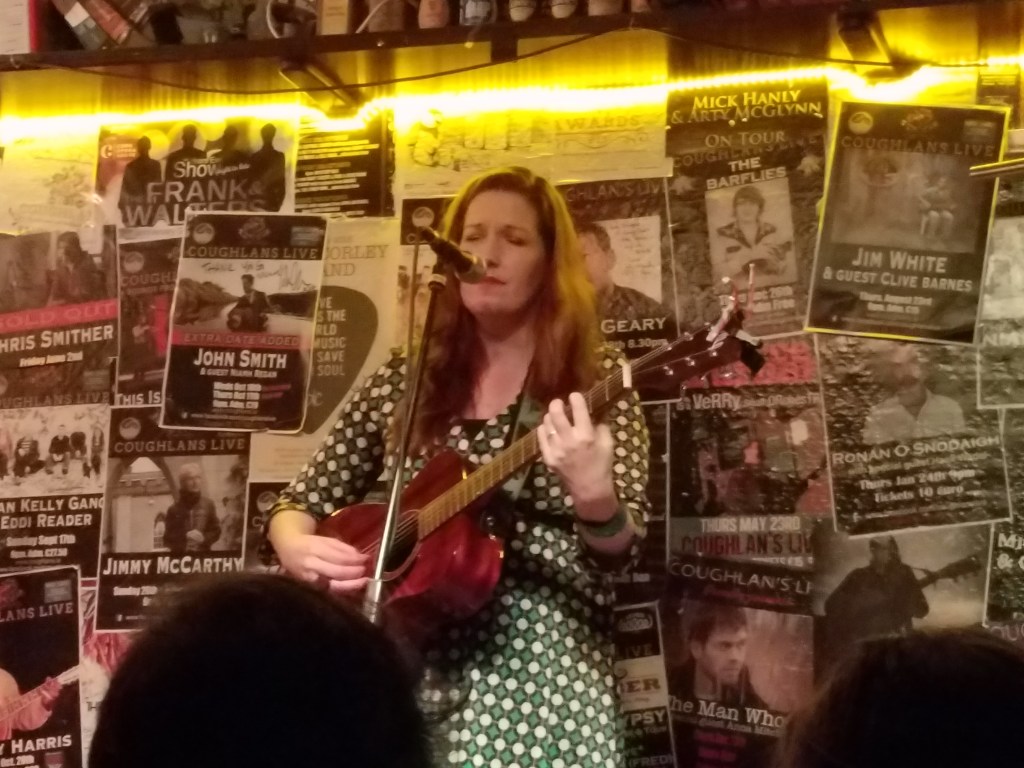
My friend Dave Tilley back in North Carolina is a disc jockey at WXDU, and a record producer. When i told him i was going to be in Cork this spring, he let me know about the singer-songwriter Lynda Cullen, who was playing at Coughlan’s, one of Cork’s premier small rooms. I am so glad i went to that show. Lynda is a delight, and i’m happy to call her a friend.
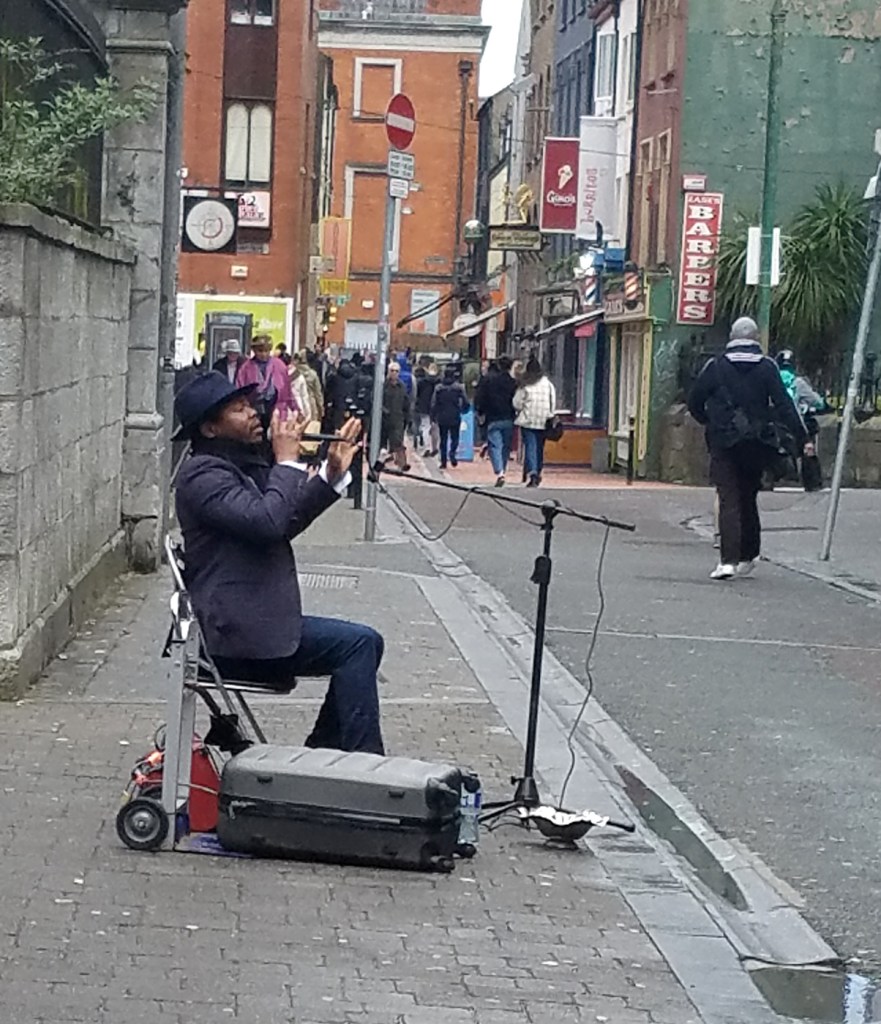
Despite it being early spring, which apparently means half hour rain squalls 8 times a day, except for the days when it rains continuously, and temperatures rarely getting above 6° C , there were a number of regular street musicians. This guy had an amazing voice, and i threw coins his way more than once on the way to or from the grocery store. Never did get the chance to talk to him, though, as a result of our hasty departure. Will he still be around if we’re able to return?
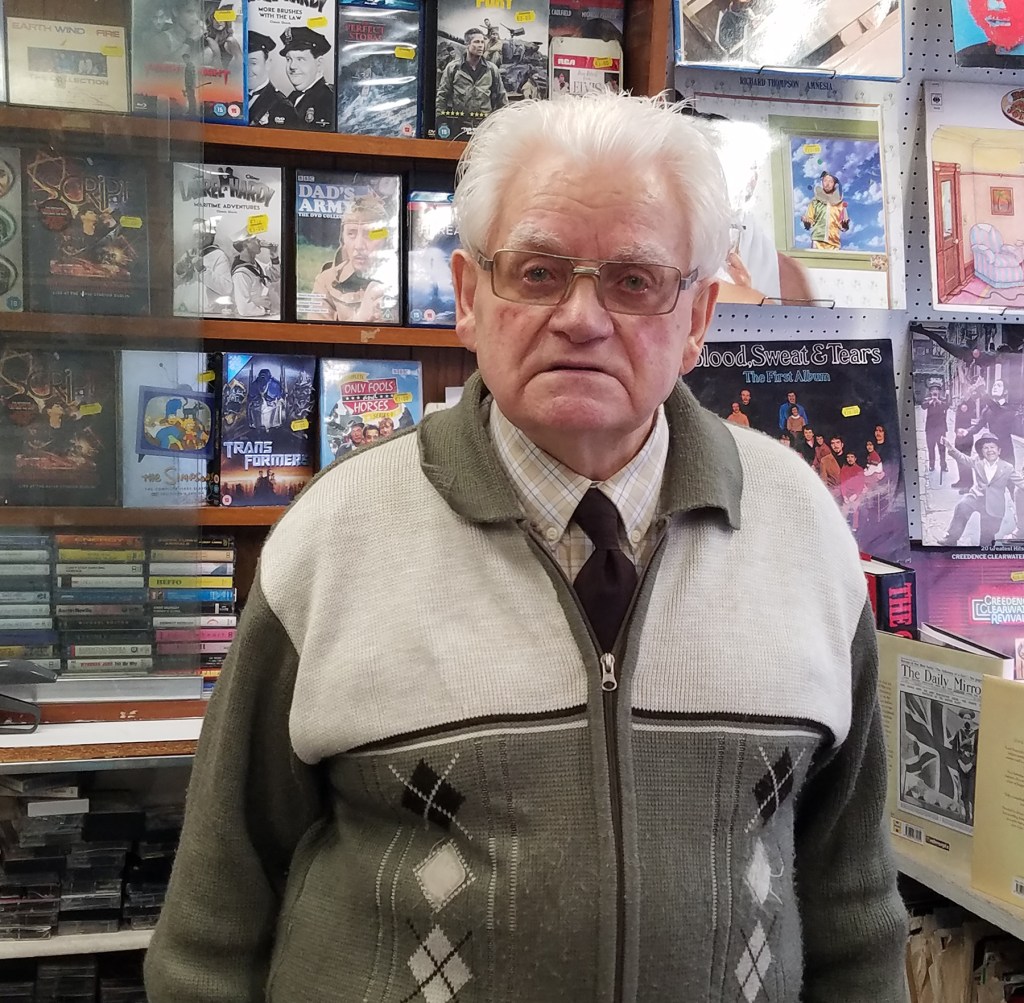
But the man whose company i think i enjoyed most during our several conversations was John Coffey, proprietor of Uneeda Books on Oliver Plunkett Street. Just a lovely man. I want to be like that when i grow up.
One of the more enjoyable things we did in Cork was join a science fiction/fantasy reading group. In February, we read the literary SF novella This Is How You Lose The Time War. It reminded me of nothing so much as the experimental early 70s fiction of Josephine Saxton or Carol Emshwiller, a well i have not dipped into in too many years. The story concerns soldiers from two different cultures, Red and Blue, one gardeners, the other mechanics, who are battling throughout history creating alternate timelines in the hope that, as Feynman might have understood, the sum over histories will favor one over the other.
Not everyone’s cup of tea, but that’s OK. It is, supposedly, being prepped for a TV series, and whether it translates or not, well, we’ll see. It’ll need a lot of Doctor Who type elements to make it work effectively.
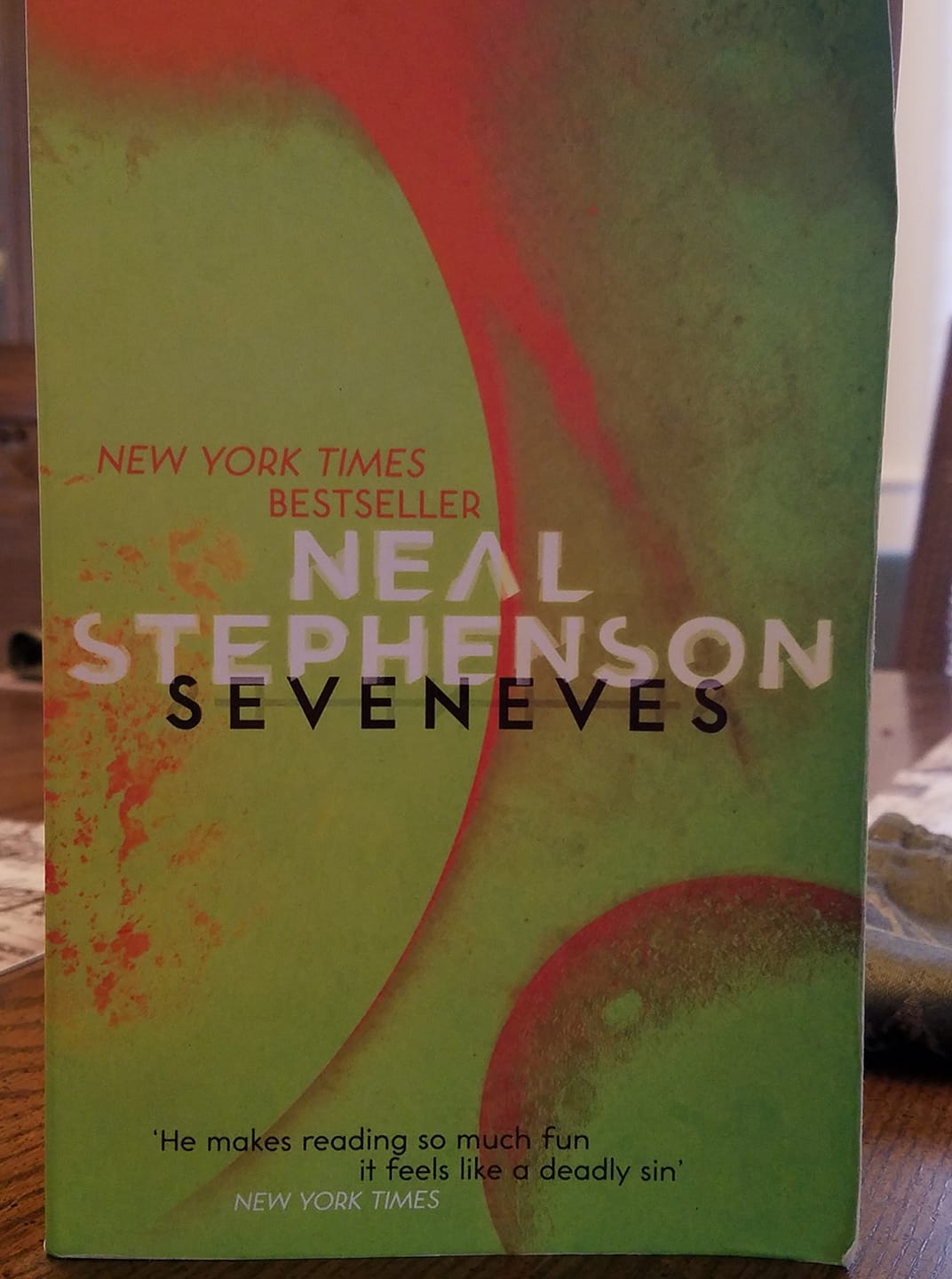
For March, the group decided to read Neal Stephenson’s massive 900 page 2015 novel Seveneves. As it turns out, we’re not meeting in March. But i read this thing, and i had a lot of reactions to it, and given who i am, i’m going to share them here. Because, man, it was a lot of effort to get through this book.
There will be spoilers. You have been warned.
For starters, let me say that this sort of “hard” SF is not my personal favorite sub-genre. But i am neither averse toward good examples of it, nor ignorant of its history. I read The Foundation Trilogy in my teen years. My Heinlein collection spans almost a foot on my bookshelf. I’ve read Joe Haldeman, and Arthur C. Clarke. Larry Niven. Stephen Baxter. More contemporaneously, i’ve enjoyed Kim Stanley Robinson’s Mars Trilogy, Paolo Baccigaluppi’s Wind-Up Girl, and Cixin Liu’s Three Body Problem. I’ve even read Stephenson before, though i won’t say that Snow Crash was one of my favorite reads.
This book, though, was a turd. No exaggeration to say that it is one of the worst books i’ve ever picked up, from its abhorrent concept, through its ignorance of any science (linguistics, sociology, archeology) that is not orbital mechanics, through its author’s disdain for his craft. It is an utter waste of time and paper.
Briefly, an “Agent” passes through the Moon, causing it to split into 7 large, asymmetrically divided, pieces. The “Agent” is never identified, but the most reasonable hypothesis is a micro-sized black hole. It doesn’t really matter, because once the orbital mechanics of the 7 pieces are calculated, the Neal deGrasse Tyson lookalike character in the novel figures out that the resulting collisions among the 7 pieces, and the fragments they will create, will turn into a “hard Rain” in about 24-30 months, which will drop into the greatest meteor shower ever seen on the earth, raising the surface temperature to 500° F and incinerating all life, including the microscopic and sea life, as the oceans are boiled off.
Being the intelligent, foresightful creatures that evolution has shaped us to be, the smartest, best equipped to survive and repopulate the earth segment of the human population, are sent into low earth orbit on board an expanded International Space Station (called Izzy in the future because nothing defines humanity so much as our ability to give things cute names). But because Hillary Clinton has won the 2016 election and is now the most powerful person on the planet, there is also a program in place to randomly select representatives of every planet and culture on earth to join these more qualified folks in orbit, and make sure the new earth to be born out of the ashes of the old gives equal weight to all cultures, and Stephenson’s disdain for the notion that, yeah, all cultures are equal, and none are intrinsically superior to any others, could hardly be more palpable. (It’s not “actually” Hillary Clinton in office, any more than “Doob” Dubois is “actually” Neal deGrasse Tyson, or Sean Probst is “actually” Elon Musk, but you’d have to be an idiot not to see what Stephenson is doing with these characters.
Of course, the program to choose these “multicultural” representatives is the most cynical thing ever constructed, and most of the candidates chosen this way are sent immediately to their deaths, and those that aren’t are shuttered off into portions of this orbital sanctuary that are not going to protect them from the dangers of space, because politicians, especially liberal politicians, don’t really care about people, just about perpetuating their own hold on power. So it’s no surprise when Hillary Clinton violates all protocols and laws and manages to get herself inserted onto the last orbital vehicle leaving the earth and onto the space station. Where, and you’re not going to believe this, she consolidates “political” power against the scientists who are only making the most rational decision about who should live and who should die, and the most statistically correct decisions about which parts of the space station should be protected against cosmic rays and accidental collisions.
As it turns out (and it’s not an accident that i use this phrase, and we’ll get to that in a bit) those decisions turn out to be wrong, but it’s not their fault, and they definitely should be allowed to continue to hold decision making power because democracy is bullshit and only technocrats removed from the people can make correct decisions, and all of the genetic material sent up to space to help perpetuate the human race is destroyed in the first week after life on earth is wiped out, and Jesus H. Christ how are we going to reseed the planet in the future now?
Well, the technocrats come up with one plan, and the humanists come up with another plan, but of course the humanist plan doesn’t allow for the dangers of space (at least the ones we follow; there’s another, break-away group which supposedly leaves to go and try and colonize Mars, and although we’re supposed to assume they died in the effort, Stephenson never really follows up on what happens to them, so maybe they’ll pop up, deus ex-machina style, in the sequel, not unlike two groups do in the last 75 pages of this book.
Anyway, about 2/3 of the way through this book, everybody on earth is dead. Virtually everybody on the satellite who was sent up to save the human race from extinction is dead. Except for 8 people. Who are all women. (All of the men are dead, having heroically sacrificed their lives in order to give the others a fighting chance. Because that’s what men do, right?) And one of the women is too old to bear children. So that leaves seven women to create the new human race, and by god, they’ll be known as the Seven Eves.
Did i mention Seven Eves is a palindrome? A palindrome is a sentence, group of letters, or numbers, that can be read forward or backwards, exactly the same. Perhaps the most famous example of a palindrome is ‘A Man, A Plan, A Canal, Panama.” Do you see how if you start from the beginning or the end, it can be read the same? Palindromes are actually totally devoid of any literary or cultural significance, other than that they’re cool. They’re as cool as fezzes to Matt Smith’s Doctor Who. Matt Smith, of course, was not as good as David Tennant, but he was charming in his own way. And the Vincent Van Gogh episode was particularly a classic. But Smith was definitely a cut above Peter Capaldi, yeah? And Karen Gillan, even though she was a bit of a waif at the beginning, was definitely hotter than Jenna Coleman, who, while not without her charms, lacked a certain quirkiness that we’ve come to expect in the Doctor’s companions. But of course, Billie Piper had been the best of the revived Doctor’s companions without question. She had been selected for some reason which no one now could remember, but maybe being blond had something to do with it. But her performance had been collectively seen as the best, and she had been recognized by all of Whodom as the ideal companion for all the others to strive for.
Where was I?
Oh, yeah, so now, we’re 2/3 of the way through the book, and everybody is dead except for these 8 women, only 7 of whom can bear children, who will be called on to re-populate the human race. By sheer coincidence of the necessity of the plot (because it is here that Stephenson’s real game become apparent, and it is even more hideous than you can imagine) these 7 women represent 7 different cultural and ethnic groups from what will henceforth be know as “Old Earth.” Because, over the next 5000 years, nothing about language will change for anybody who speaks it thanks to the magic of digital recording, except when it’s necessary for specific things to happen in the plot. Thankfully for the future of the human race, one of the 7 is a master manipulator of genes. She’ll be able to, with some modicum of success, create Y chromosomes within a generation or two of the womb creation portion of the program. And then, if we’re lucky, sexual reproduction and sharing of genes will create a heterogeneous population best suited for survival on a future terraformed planet.
Oh again, that’s not Stephenson’s game. See, as it turns out, what Stephenson is really trying to do is create an environment in which the disgraced science of The Bell Curve might actually be applicable. And these seven Eves are given the ability to choose which traits they want their offspring to possess. And one of them, i swear to god, want her offspring to be imbued with the exclusively masculine trait of “heroism.” And so the descendants of these seven Eves basically only make babies with others of their “race”, which should end up with seven pretty much inbred and useless groups of people, but that would defeat Stephenson’s purpose, which is to demonstrate the “scientific” basis for racism.
Because the final third of the novel takes place “Five thousand years in the future.” Which happens to be the time that the earth’s surface has stabilized enough for the re-terraforming efforts to be achieving some success, and colonies from the 3 billion descendants of the seven Eves to start resettling the planet. It was obviously easier to title a subsection of the book “Five thousand years later” than it was to tell any stories about what might have actually happened during that time. Or to figure out how humanity, which took approximately a quarter of a million years to expand it’s population to a billion the first time around could, on a bunch of artificial satellites, have achieved that sort of population growth in one fiftieth of the time on this go round. (Yeah, it’s true, humanity went from 1 billion to 3 billion in a century or less. But the first billion is the hardest.) And oh, did i mention, it wasn’t really “seven” Eves, it was more like 6 1/2, as one of them was about 50 years old, and only had enough time for one child before menopause. Oh, and really it was 6, because one of the others tried a number of genetic manipulations which were unsuccessful, and all of her offspring died, except for 1.
But anyway, 5 thousand years in the future, when there’s 3 billion people, who all are members of distinct “races” with distinct social and psychological and physical characteristics, and everybody’s actions and attitudes can be predicted by knowing which Eve they are descended from, all shit breaks loose, when it turns out there are not one but two groups of descendants of humans who have survived on the actual surface of the planet, one underground, who are actually cousins of one of the Eves, whose father was a miner and who was a real self-sufficient American man who figured out a way to hold a culture together underground, and one underwater because apparently although the seas boiled off during the Hard Rain, they didn’t actually boil all the way off, and these submarines, which were the same ones used to nuke Venezuela under Hillary Clinton’s order (remember there was a character based on Hillary Clinton? You won’t believe what happens to her after she lies and schemes to get on the satellite and foments a democratic overthrow of the rational technocrats) and whoa, you won’t believe that there’s a whole race descended from Hillary Clinton, and man are they just horrible people.
But this shit isn’t even the worst part of the book.
No, i’m kidding, the attempt to write a 900 page justification for racism is the worst part of the book.
But there are others that come close.
Moby Dick is widely considered to be the first Great American Novel. One of its defining characteristics is just how little of the text is devoted to advancing the narrative of Ishmael, signed up as a crewman aboard the Pequod under the command of the insane Captain Ahab, whose obsession with tracking down and killing the whale who took his leg and his previous command drives the novel. But we also get Melville’s almost encyclopedic knowledge of everything about the practice of whaling, entire chapters devoted to descriptions of the harpoons and their functions, the rendering engines, the winches that tie the dead whales to the boats in order to extract the oil to be rendered, the wood on the deck, the social structures of Nantucket Island, basically everything necessary to run a nineteenth century and understand the relationships that exist therein. It’s the kind of distraction from the plot that Tom Robbins excels at, and also Thomas Pynchon. It’s the kind of thing about which that book reviewers will often say, “Robbins skillfully navigates the Scylla and Charybdis of exposition and info-dump that in the hands of a lesser writer would render the text into a 900 page boat anchor.”
Friends, Neal Stephenson is that lesser writer.
His info-dumps are pedantic, repetitive, and almost singularly focused on orbital mechanics. I’m sure he gets that right. In fact, i remember most of them from Frank Reynolds’ coverage of the Mercury, Gemini, and Apollo missions of the 1960s. But Stephenson uses a lot more words to convey the same information. It’s practically a paean to mansplaining. And all told in the passive voice.
But, then, he passes several opportunities where a little exposition would be wonderful.
I read the 2016 Borough Press trade paper edition, so that’s where the page numbers come from.
On page 191, Doob (aka Neal deGrasse Tyson) is in Bhutan to help select and congratulate the two young people who have been chosen to carry that particular culture into the future. Here’s the quote: “The King drove him up the mountain in his personal Land Rover, Doob riding shotgun in the passenger seat on the left—for Bhutan, as it turned out, was a drive-on-the-left country.”
As it turned out?
Seriously? As it fucking turned out?
There are reasons why one country uses the drive on the left system, and another country uses the drive on the right system. It’s not the result of a coin flip. There wasn’t a game of Ro-Sham-Bo 2500 years ago which determined whether chariots would pass each other on the right or the left. There’s a knowable history behind which countries practice one system or the other.
But describing that history, because it delves into imperialism, military conquest, and some of the less palatable aspects of western civilization, has no place in Stephenson’s game; which though he takes great pains to hide, is nothing less than the rationalization of racism as a legitimate foundation of culture.
Oddly enough, when i researched the history of Bhutan for this essay, i learned that the various Buddhist nations of Nepal, Tibet, Bhutan, and their sub-kingdoms and fiefdoms, spent as much of their past in military adventurism against each other as the Europeans over the past 1500 years, or the Biblical tribes of Israel and their neighbors. But that the Bhutanese alliances with the British in the 18th and 19th centuries would likely explain how, as it turned out, the Bhutanese, like the Irish and the Australians, drive on the left. It would certainly have been worth a couple of paragraphs for Stephenson to go down that, um, road. I mean, with 900 pages, he had some to spare.
There’s no shortage of language, whole paragraphs of it in fact, that have the effect of stopping the reader dead in their tracks. And not in a good way. About 8 years ago, i read Gene Wolfe’s “Peace.” About 2/3 of the way through the book, there’s a scene where two people are driving through a rainstorm in a 1940s sedan. Wolfe writes “The wipers sponged generations of raindrops from the windshield as she spoke.” I hit that sentence, and had to put the book down, it was so beautiful. I spent an hour just contemplating the imagery of “generations of raindrops.” I wrote a FB post about how good it was.
Last year, i reread Peace. And while reading it, i honestly forgot about my previous reading. It was a new book to me. Until i hit that sentence, and it knocked me out again. And when that happened, i thought, didn’t i write something about this before? And i looked, and found my years old FB post. That’s the power of someone who cares about the craft of writing.
I hit the sentence “Forward the ice flowed,” in Seveneves, and i had to put the book down. For precisely the opposite reason as the Wolfe.
This was possibly the single ugliest sentence i have ever read in a novel.
If you want to tell the reader that a particular chunk of ice moved in a particular direction, you can write “The ice flowed forward,” and it accomplishes your goal perfectly. If you want to tell the reader that a particular chunk of ice moved in a particular direction, and that direction is significant, you can write “The ice flowed, forward,” and it still gets the job done, perfectly.
If you want to tell the reader that a particular chunk of ice moved in a particular direction, and that you understand somewhat how the cadences of language can make a sentence more or less pleasurable you can write “Forward flowed the ice,” and while it’s less elegant than the previous examples, at least forward is modifying the word that follows it. The sentence actually moves in a direction that reflects the action.
If you want to tell the reader that a particular chunk of ice moved in a particular direction, and that you really want to call attention to the fact that you are trying to impress people with your showy language skills that really aren’t very skillful, you can write “Forward the ice flowed,” and you will accomplish that effectively.
Man, i had to walk away from this book for a day after slamming into that brick wall.
Unbelievably, there’s more. Stephenson will write entire paragraphs that take up multiple pages of exposition that consist of a dozen or more sentences all containing the same “There had been an effort to determine which of the members of the crew should do such and such. And as a result there had been a decision made that resulted in other decisions being made, which had been required to make a decision that no decisions would be made,” construction. That’s bad enough. But then, in the last third of the book, he ascribes the ability to use this exact same “passive voice” construction to one of the seven races of his survivors, in a very deprecatory way. Something along the lines of: “Like all members of her race, she was skilled in using the passive voice to deflect any notion of responsibility for a decision that they had, in fact, consciously taken.” And his inability to recognize his own guilt, and the bias he brings to assigning favor and discredit to the various races and factions he supports or tries to discredit, is appalling.
At one point in the final section, he has one of his characters recognize that she is engaging in what he quaintly refers to as “The Old Racism.” Of course, she’s a descendant of the Black Eve, and she’s feeling prejudice towards one of the descendants of one of the white Eves. But despite describing Every. Single. Character. in the last third of the book by their racial characteristics, not only physical manifestations but also psychological predilections, aptitudes and intelligences, Stephenson is either in denial, or, rather more incredibly, ignorant of the racism he is bringing into play. The number of times he frames a character description with some variation of “As a member of this race, so and so was naturally inclined to believe such and such,” was beyond my count. About the only good thing you can say is that Stephenson’s racism is actually not as malign as his misogyny. He literally has one of his Eves make the conscious, verbal decision, during the end of the second part of the book where the seven Eves are going to determine which characteristics they want to pass on to their descendants (and because they are all women, there’s no possibility that any of them will consider any form of cooperation to benefit the whole group, just what they can do to privilege their own descendants against the other races) that she will give her descendants the masculine trait of “heroism.” And i wanted to gouge my eyeballs out.
No, i wanted to gouge Stephenson’s eyeballs out.
In short, this book sucked ass. Though i’d lay even money it’s Jordan Peterson’s favorite SF novel of the last generation.
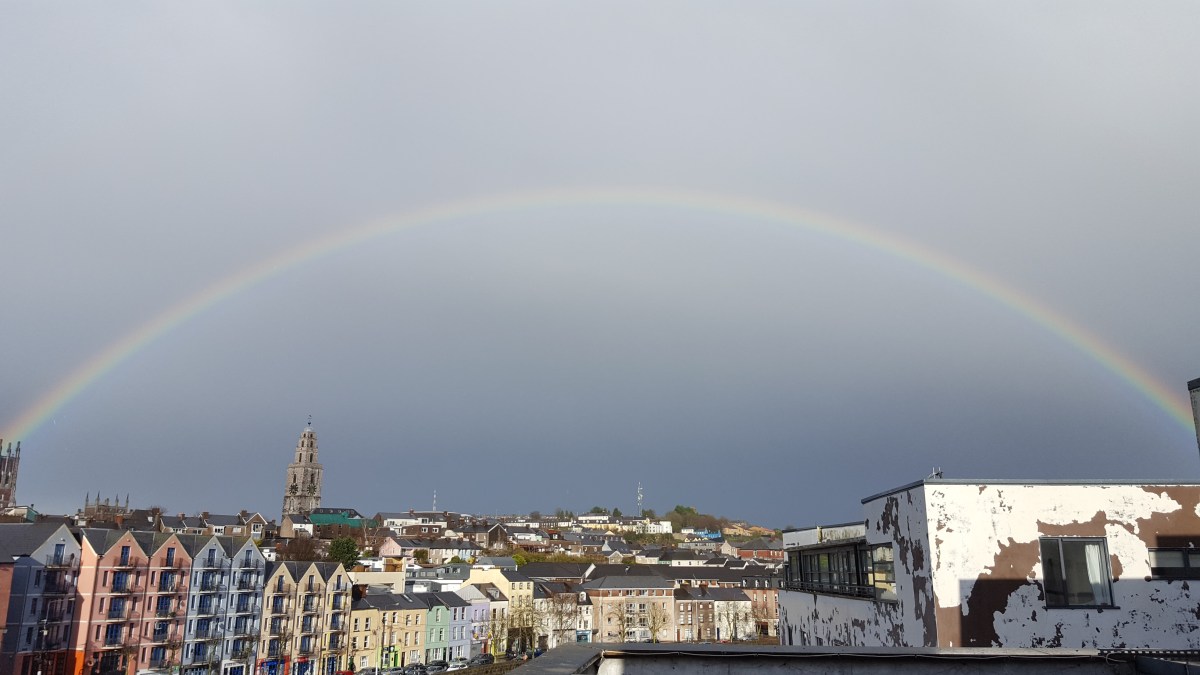
If our time in Ireland taught me one thing, it is that after the rain comes the rainbow. It’s difficult to envision a rainbow right now, as the entire world shelters in place from this storm.
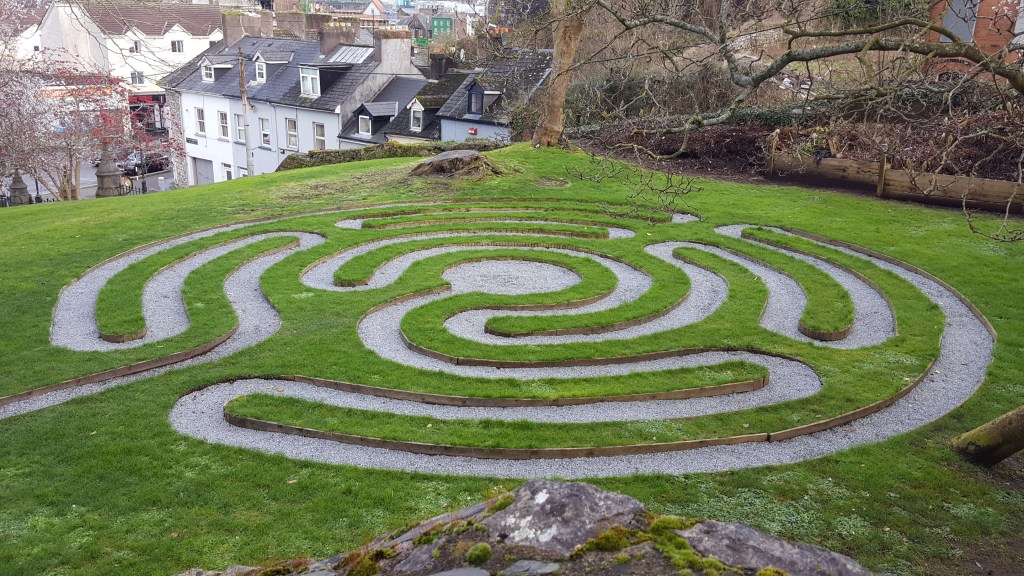
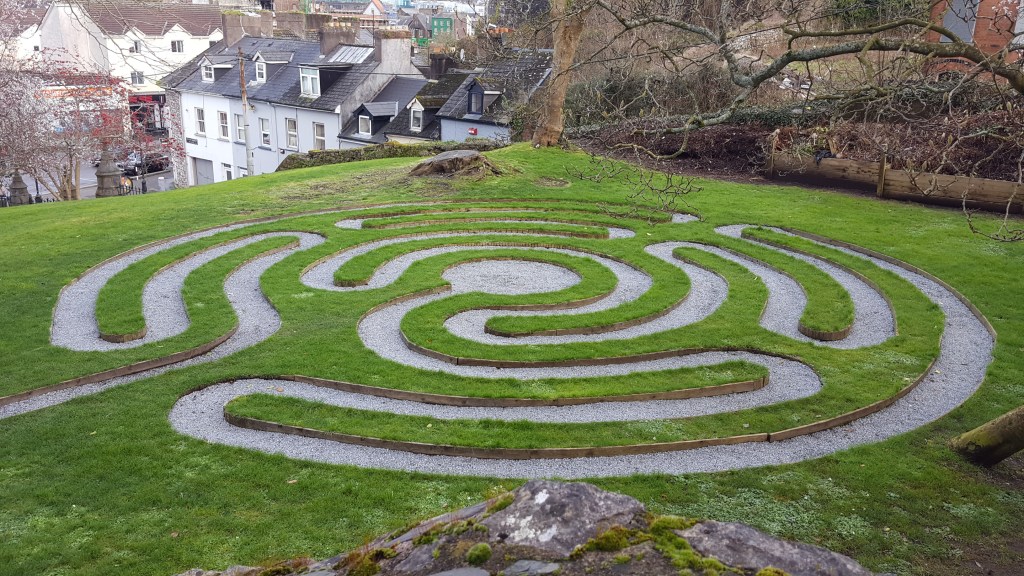
Friday morning was rainy, but we had a lot of packing and cleaning to do anyway. Once our packing was complete, the sun came out, and we went out for a last walk around Cork. We walked the length of Main Street and across the river to St. Fin Barre’s Cathedral, where we walked the labyrinth.
The labyrinth at St. Fin Barre’s Cathedral
We walked back east along the River Lee, then back west along Oliver Plunkett Street. Then just up and down the Grand Parade a couple of times. Being sure to keep appropriate distance from other people, of course.
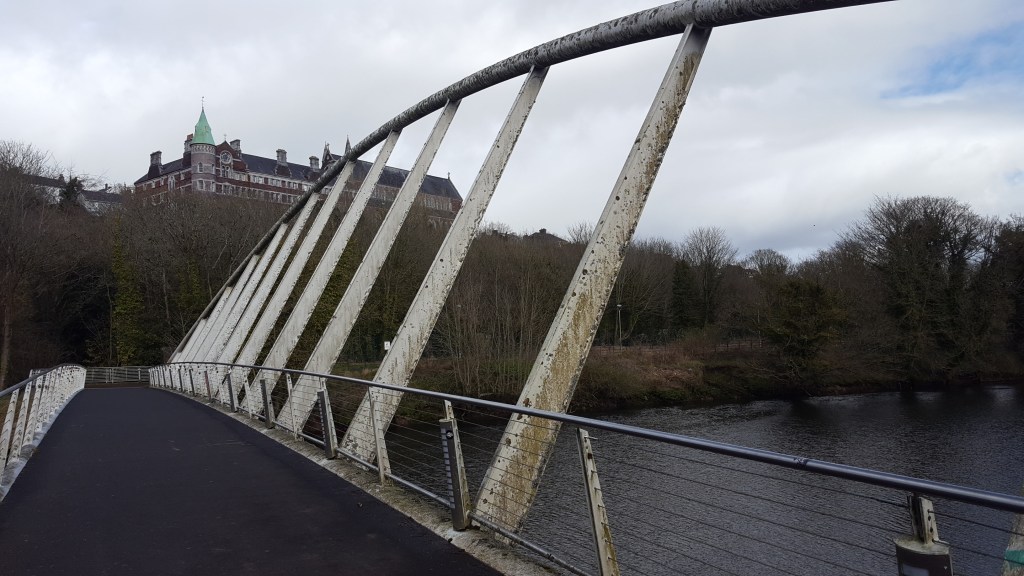
We circled back towards the apartment but weren’t ready to go back yet. So we crossed the river to the north and walked out along the greenway, crossed back on the Mardyke Bridge and circled home.
The Mardyke Bridge over the River Lee. The building in the distance is the Music Department of University College Cork.
There were no direct flights from Cork to the U.S., and we didn’t think it was wise or desirable to spend hours in a UK or European airport on our way home. Our original flights were between Dublin and Philadelphia, so we changed our original, late April flight date to March 15. We rented a car and drove to Dublin and stayed at the Clayton Hotel near the airport. It appears to have several lovely restaurants, but we elected to eat peanut butter and marmite sandwiches in our room. They had hand sanitizer at the front desk, and allowed us to top off the rapidly diminishing pocket-size bottle I’d bought in January.
Soon after we booked our flight, Trump announced that anyone returning from the UK or Ireland would be subject to health screening and could only return through one of 11 airports — and Philadelphia was not one of them. The new restrictions would go into effect the day after our scheduled departure. We really needed to be on this flight.
On Sunday we got up before the crack of dawn and took the shuttle to the airport. We didn’t even stop for coffee, which turned out to be a good thing since I don’t think our bladders would have survived the wait. The airport was a madhouse. Thousands of Americans all trying to get the hell out of Dodge before the deadline. Most were young people — study abroad students ending their semester early, or returning from a limited study trip, or simply having headed to Ireland in the hopes of enjoying a festive Saint Patrick’s Day.
Besides the normal back-up of a crowded airport (the lines at San Diego airport after Comic-con were to date the longest I’d seen), Dublin Airport has U.S. pre-clearance, so you go through Customs there, not upon arrival. And you go through security twice, once for the airport, once for the U.S. area. In the confusion of arranging my toiletries for what I needed in Cork Saturday morning and in Dublin Saturday night and Sunday morning and what needed to be in checked luggage and what I needed to carry with me, I inadvertently left a small bag of liquids in my carry-on. So of course I got pulled over and had to empty the bag (once they saw what it was they wagged a finger but didn’t make me ditch any of it). I also discovered that my fitness tracker triggers the alarm, so I took that off for the second screening.
There were inexplicable delays. At one point, security screenings just stopped, for maybe 30 minutes. In Customs, they sorted us into two groups: people who had been in other European countries in the last 10 days and those who had not. Ours was the smaller group, I believe, so we moved a bit more quickly to the head of the queue to meet with a Customs officer. They have you stand on a numbered yellow square and await the officer at the desk with that number. We were on yellow square #12, next to be screened, when someone came through and said (loud enough for us to hear, but not the crowd behind us) “Stop processing people. Get representatives from the airlines out here.”
At that point Barry turned to me and said “We could be sleeping in this airport tonight.”
We were stuck on that square for about an hour. Most people behind us gave up and sat on the floor. They escorted small groups to the toilets (hooray, no coffee!). They passed out bottles of water.
I have no idea why they halted the Customs processing, or why it resumed, but what the airline representatives had to say was good news: they were delaying flights until everyone was on board. Since we’d had our boarding passes scanned at least twice already, they clearly knew who was at the airport but not yet at the gate.
Once Customs finally re-opened, we were of course next in line, and breezed through quickly. We even had time for Barry to buy a bottle of Teeling whiskey at the Duty Free shop!
Thankfully, we were not held too long on the ground once we boarded the plane. It was crowded but not completely full — we were the only people in a center row of five seats. The flight was uneventful, with little turbulence. We finally got a cup of coffee! We had lunch for breakfast, and I swear to you that airplane food never tasted so good. Even the salad was crisp and delicious. And when they served ice cream about six hours into the eight-hour flight I was as giddy as a 5-year-old.
We had another, even longer drive ahead of us, so we stayed the night at another airport hotel. The Microtel near the Philadelphia airport may well be the second saddest lodging I’ve ever seen (the first is a nightmare stay in a place in Las Vegas that I dubbed The Hotel That Time Forgot, but that’s a tale for a different blog). Whereas we were content to eat in our room at the Clayton, there was no way we wanted to spend any extra time awake in this depressing space. We decided to risk the outside world for dinner at Ruby Tuesday, the only restaurant within walking distance. It was fine, but believe it or not it was the most expensive meal of our trip! And that was with just entrees, one beer and two glasses of wine. No appetizers, desserts, or side dishes.
You would think that with all of this, we would have been in a hurry to get home the shortest way possible. But the shortest way possible is I-95 through Baltimore, DC, and Richmond. We took it to the outskirts of Baltimore, shot over to Frederick, MD, and headed south on U.S. 15. Significantly longer, but a must less stressful road. And central Virginia is almost as pretty as Ireland (but with dilapidated barns instead of crumbling castles).
We returned the rental car this morning, so our trip is now officially, completely over. Now starts the next adventure. A friend is doing a grocery run for us so that we can avoid bringing any airport germs to the Harris Teeter. The cherry trees are in bloom, and even some of the azaleas. It was warm enough to sit on the front porch yesterday evening. We’re home.
We’ve had a fantastic time here in Ireland, especially in Cork City, which we’ve both come to love. And we’ve done a lot of what we came here to do, and more: we’ve been all over the city centre and immediate outskirts, been to Blackrock Castle and Blarney Castle and Gardens and the Ring of Kerry, been to Midleton and Cobh and Kinsale and Youghal. We took advantage of living above a movie theater to see Parasite on a rainy day, and saw one film at the Cork French Film Festival. Barry found “a local” where everybody knew his name when he stopped in to watch a football match. We drank Murphy’s and Guinness and Beamish, tasted some Irish whiskies, ate fish and chips (and chips and chips…lots of chips), had a full Irish breakfast, beef and Guinness stew and seafood chowder.
We’ve also gone places and met people and done things that hadn’t been on our radar. We found a games cafe (not unlike Atomic Fern in Durham) where we enjoyed chatting with the proprietor, Chris, and playing games to while away rainy afternoons or days when we were tired from walking. We had wonderful conversations with the owner of a used bookstore. We discussed Nikola Tesla with some fellows from Serbia and Bosnia. We attended a Science Fiction meetup group, and joined their very lively and amusing discussions on WhatsApp. I discovered the details of my grandfather’s voyage from Ireland to the U.S. We watched the sunset over Cork from the Montenotte Hotel, went to two local theatre productions, visited the town of Crosshaven. We have seen more rainbows than we have ever seen before in such a short time — sometimes two or three a day!
But there’s a lot of things we set out to do that won’t be done, at least not on this trip, as we literally flee the country so that we can isolate ourselves in the comfort of our own home. Barry’s birthday trip to Paris will now be spent at home. All my hard work learning Spanish and Portuguese will go untested as we will not be traveling to those countries at all. If things had gone according to plan, we would at this moment be boarding a train to Dublin so that I could attend a meeting of the Pernicious Anaemia Society, and would have had the chance to meet our Chairman, Martyn Hooper MBE, a tireless leader for all of us who suffer from this condition. We won’t be having a cocktail at Ireland’s only tiki bar tonight, nor will we be having bagels in the Jewish Quarter tomorrow.
We won’t be doing that bus trip to West Cork. We won’t be taking short bus rides to the greenways through Blackrock/Mahon, Ballincollig, Bishopstown. We won’t be exploring the town of Macroom, which looked intriguing when we passed it on the bus to Kerry.
Maybe next time.
Tomorrow we drive in automotive isolation to Dublin, spend the night in a hotel, fly to Philadelphia and spend the night at a hotel there. We cancelled the PHL to RDU flight, figuring eight hours on an airplane is risk enough. On Monday we will drive home.
If I’m lucky, the trout lilies will still be in bloom, and the azaleas will be getting started. I’ll miss looking out at the River Lee multiple times a day, but will walk down and say hello to the Eno, being wary of the ticks that are undoubtedly starting to wake up for their spring feeding. I’ll watch some movies on Criterion and HBO, shoot some pool, sit outside if the weather is above 50 degrees. We’ll sleep in our own bed, cook in our own kitchen, drink in our own bar, and wave to the neighbors from the front porch.
The Covid-19 situation remains fluid. As of last night, there are 34 confirmed cases in Ireland (population just under 5 million), and an additional 16 in Northern Ireland (population 1.8 million). Nearly 1800 people have been tested in the Republic. Authorities are still urging calm, and saying that closing schools and public transport remains unnecessary at this time. France, our next potential destination, has around 1800 confirmed cases (population 65 million), or roughly 5 times the infection rate of Ireland. They are expected to escalate their response to Level 3, which will involve closing most public transport. At that point, we expect our trip to be canceled for us by the airline.
Portugal remains relatively unaffected, with 41 total infections recorded out of a population of roughly 10 million. Travel to and from Italy has been suspended pretty much everywhere, as well as travel within the country. Spain is canceling most public events and large gatherings. Our itinerary puts us in Portugal and Spain between 5 April and 22 April, so we are keeping close tabs on both of those. We have confirmed that we can pick up our rental car from Cork to Dublin at an hour’s notice (currently we’re planning on making that drive between 1 April and 4 April), and that we can change our flight back to the US at no cost. So, if we decide in the next few weeks that it’s time to get out of Dodge, and ride this out in the comfort of our own home, we can do that in basically 24 hours.
Once again, our thanks to all of you who have expressed concern over our well-being. We are somewhat stressed, possibly inconvenienced and disappointed, and likely out some money. But we think our risk of catching this virus remains relatively low (my personal assessment is that it is no greater here than in the States), and there are far many people in much worse shape than we are.
Back to our travels!
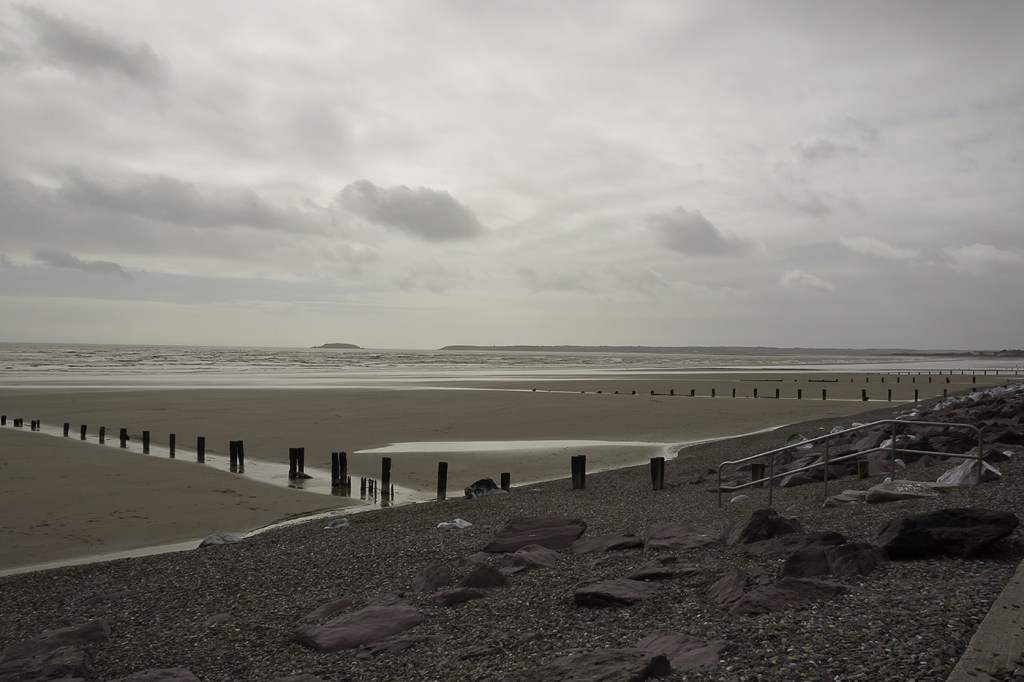
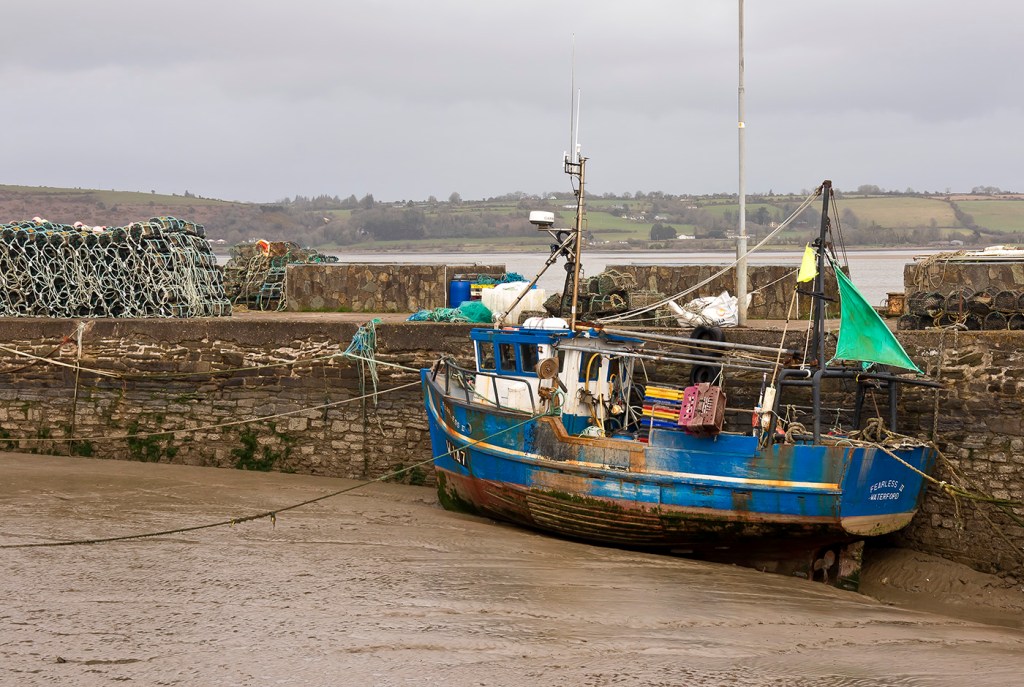
Today is the midpoint of our planned trip. Yesterday we took the bus to the coastal community of Youghal. On our 2017 trip to Ireland, we passed through this town on our way between Waterford and Cork, and spent a couple of hours walking around. It was high on our list of places to return to.
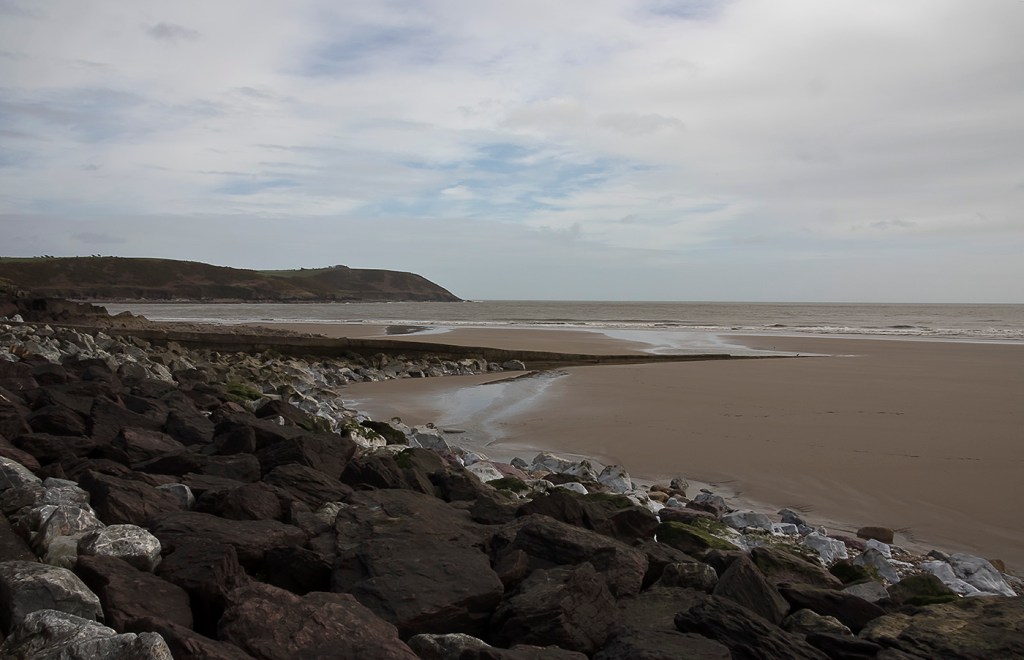
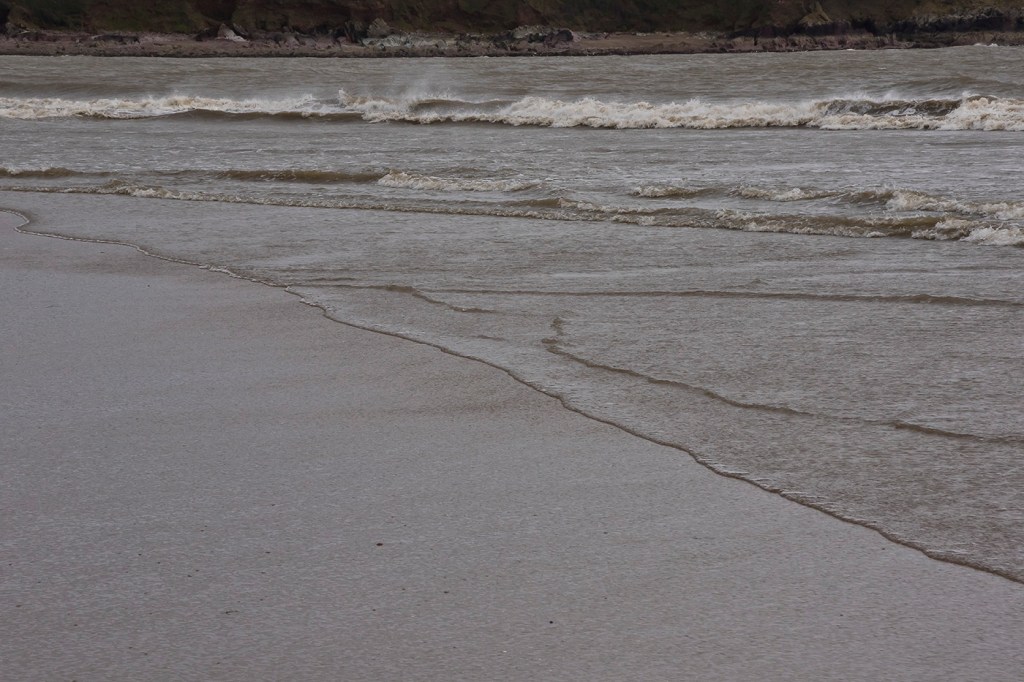
We misread the bus schedule, and thought there was only one stop in the town, so we inadvertently got off 2 km from the town center. That turned out to be fortuitous, as we found ourselves at probably the nicest beach in the Republic. It was cold and windy, but gorgeous. And at low tide, flat and sandy.
I didn’t take my shoes off, but i did dip my hands into the Atlantic Ocean for the first time this year.
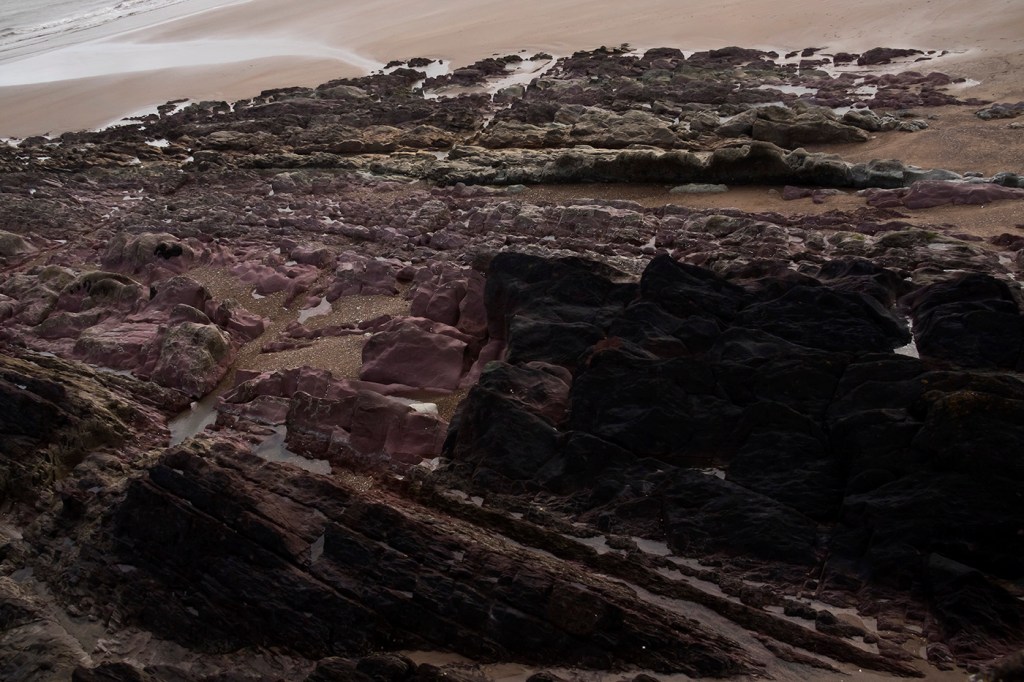
While some of the beach features are clearly man-made erosion control, there are some fascinating rock formations as well.
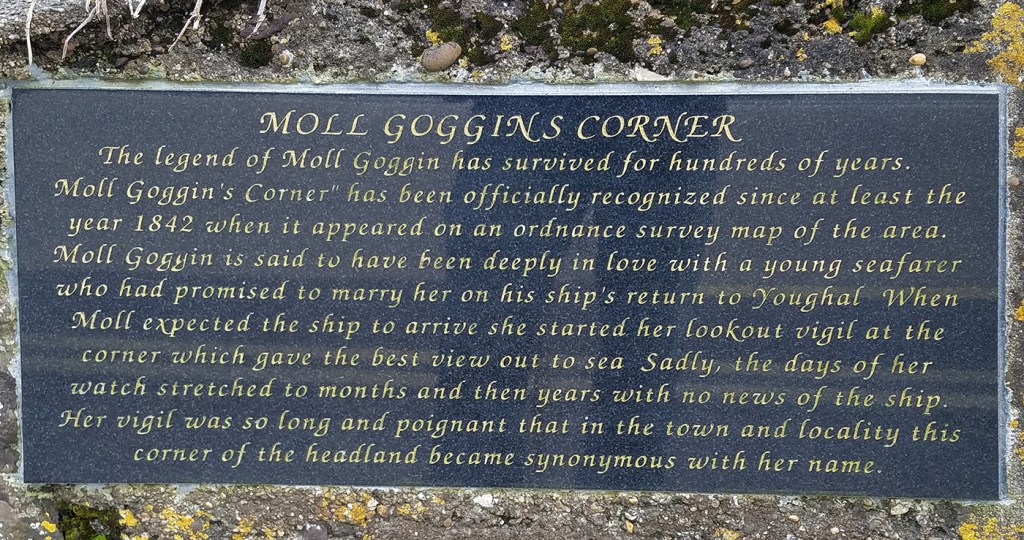
This little memorial would be called “Brandy” if it were in the States.
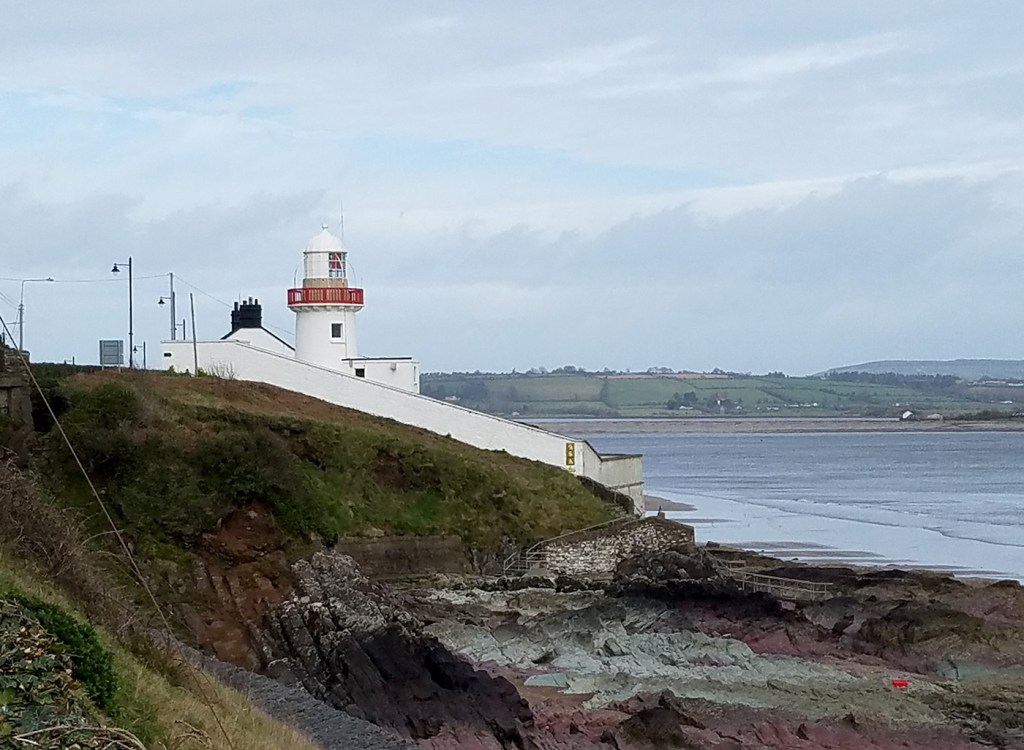
The story of the Youghal lighthouse is pretty cool. There’s been a light on this site for pretty near a millenium. A couple of hundred years ago, some town leaders thought it would make sense to move the light to an island a mile or so offshore. Construction got about halfway through, when the faction arguing that the light should remain in its traditional location returned to power, and the island project was abandoned. You can see the island in the second picture above, although at blog resolution i don’t think you can make out the light. It’s now a bird sanctuary. A new lighthouse was completed on the original site in 1852.
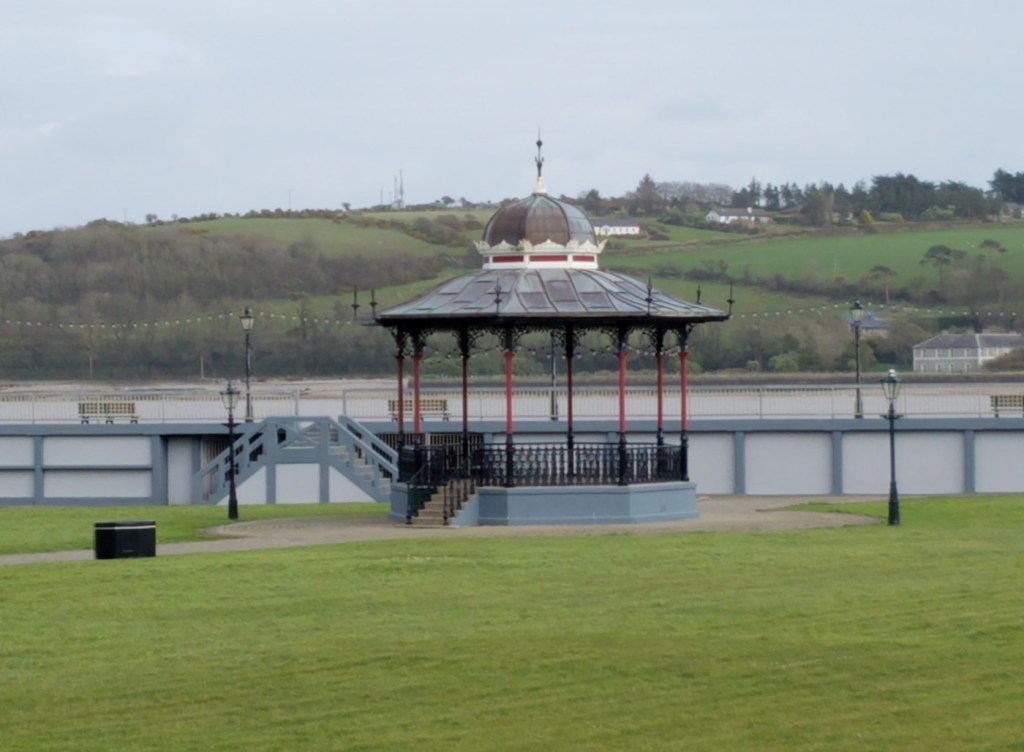
The village green reminded of nothing so much as the Willoughby epsiode of the Twilight Zone.
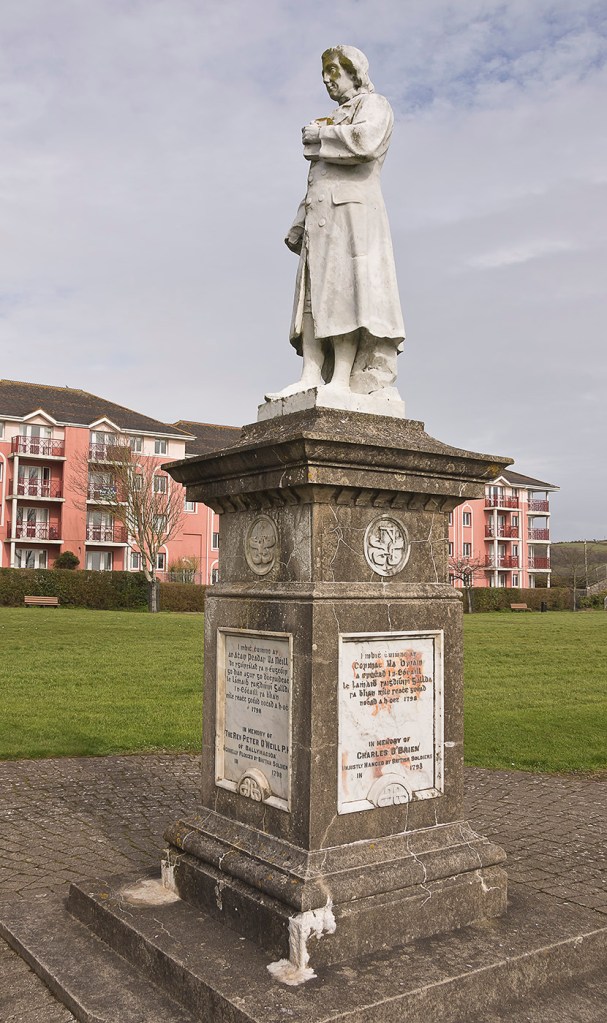
At the entrance to the green is a statue memorializing 4 men killed by British troops in the town in 1798. As i’ve mentioned previously, i’ve had a couple of conversations with people here about Confederate statues back home. (All initiated by locals. I’m doing my best to avoid politics on this trip). They have all made the “history” argument that removing memorials to the Confederacy violates “history.” The responding argument, of course is simple: where are the memorials to the British governors of Ireland who ordered these executions? They don’t exist, nor should they, because although they are clearly a part of history, their actions are not those we want to commemorate. The Confederacy is the same.
We walked about the town for a while, ate a fantastic lunch at McCarthy’s, in the Old Imperial Hotel, and otherwise enjoyed the relatively benign weather. Definitely high up on the list of places we’d consider living in.
It hasn’t been all gloom and doom around these parts the past few days, but mostly. Ireland so far is one of the least affected countries in Europe by Covid-19, but clearly the authorities are worried that won’t last. The two community transmitted cases in the Republic are both here in Cork. If that number doesn’t increase significantly over the next week, we’re probably in the clear. But we’re making our preparations in case it does.
On the other hand, the trip to Paris on 20 March – 22 March is almost certainly off. We’re just waiting for French authorities to elevate their restrictions to Level 3, which should happen in a few days, before canceling. Portugal in early April is still on, but again, that’s a full 3 weeks away before we leave, and nobody has any idea what the situation will be then.
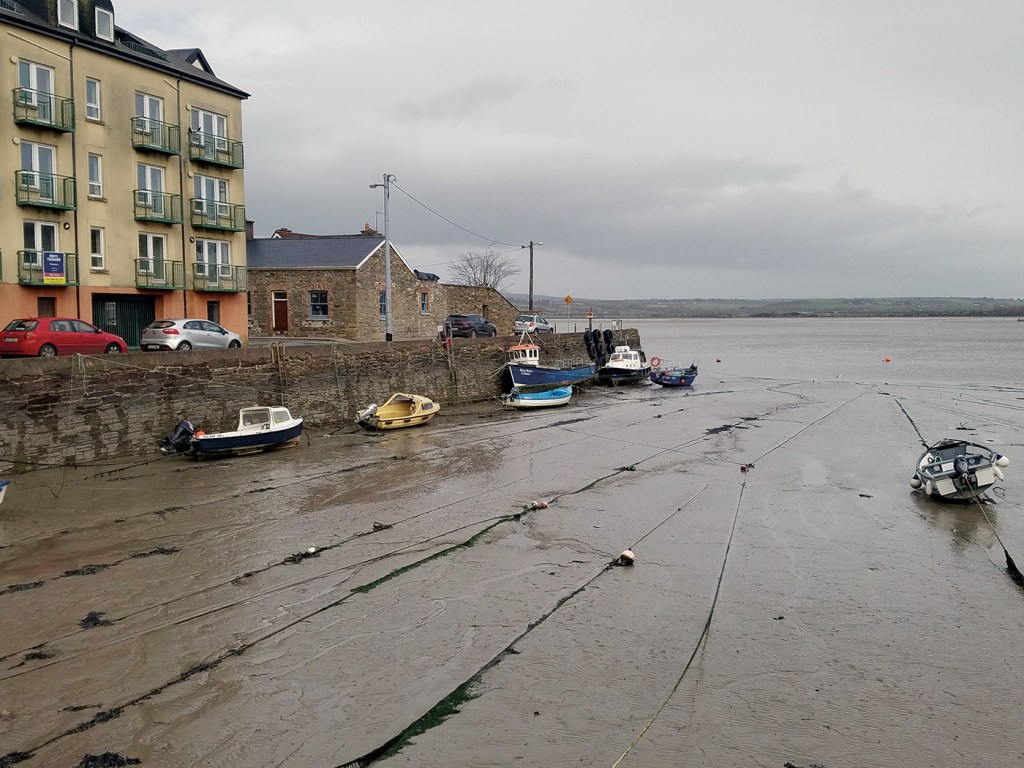
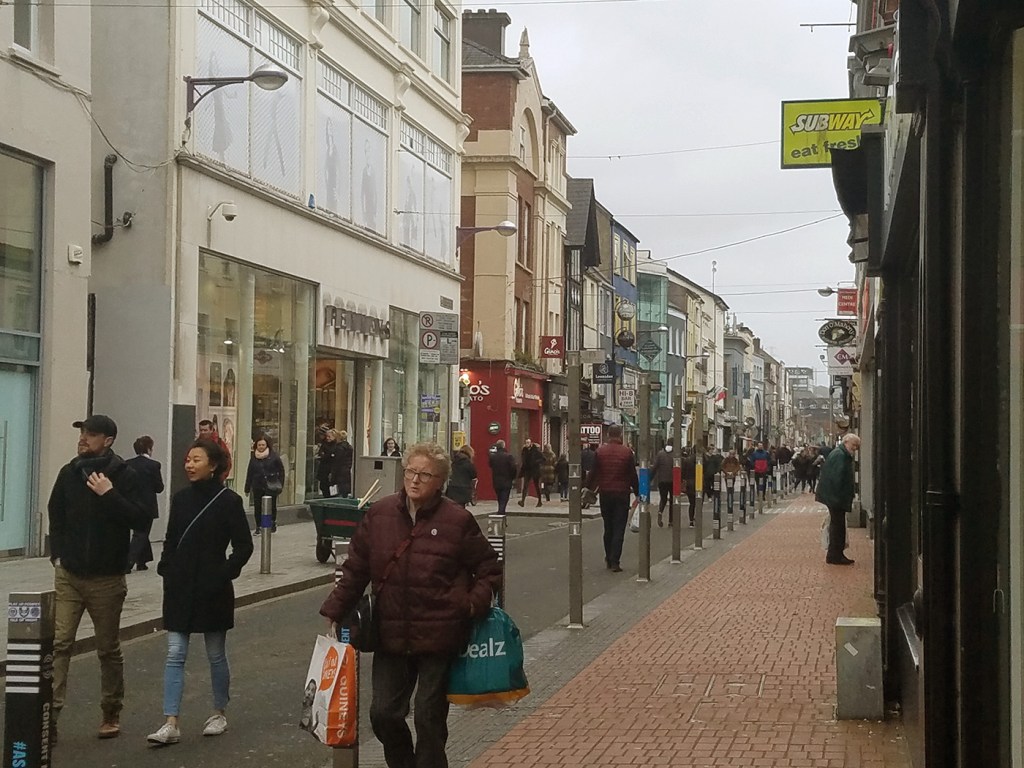
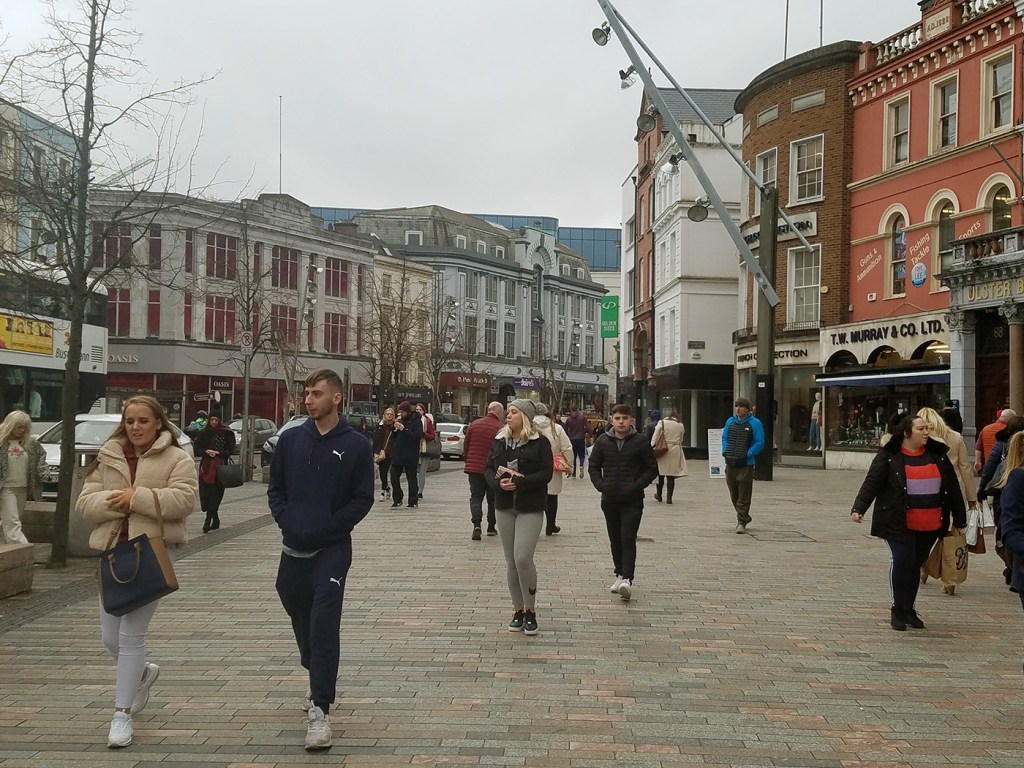
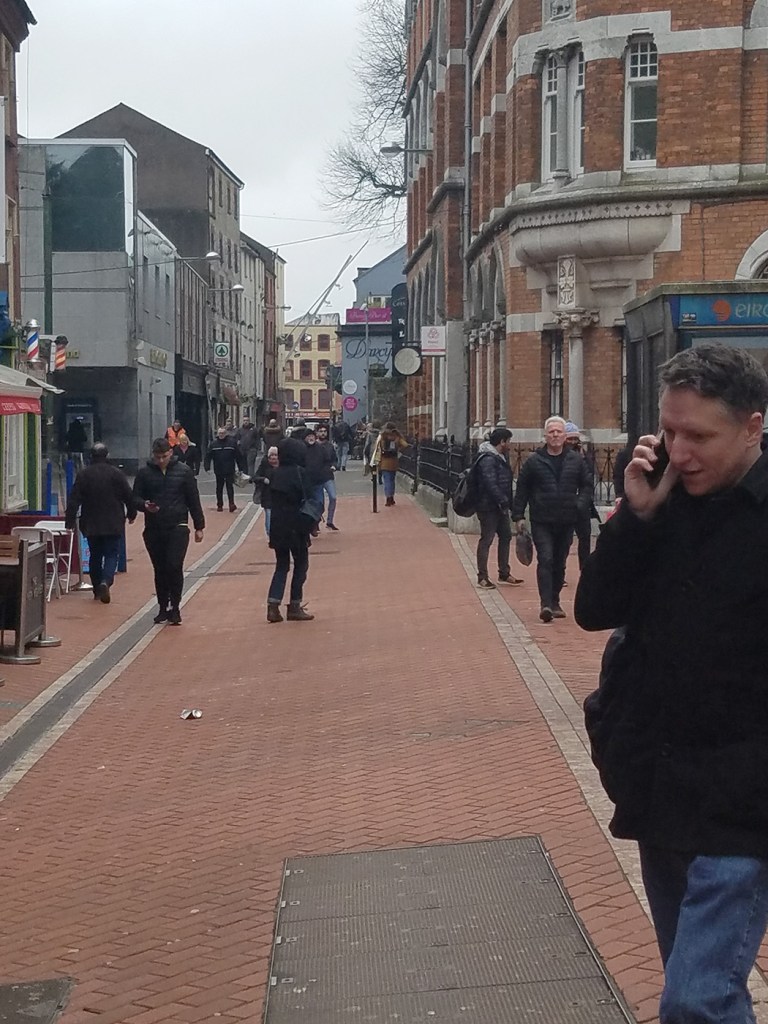
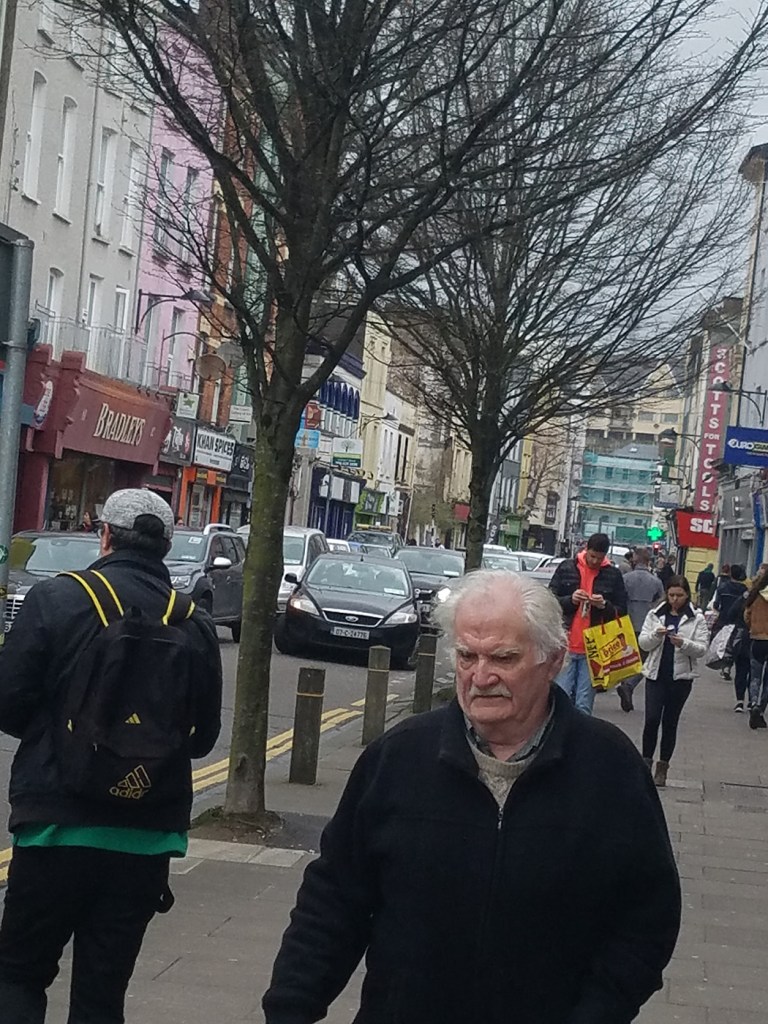
Meanwhile, we’re dodging raindrops, staying warm, and, when the sun actually comes out, enjoying the longer daylight hours. And washing our hands. A lot of washing our hands. So much washing of the hands. Here’s some random pictures of walking the streets of Cork over the past few days.
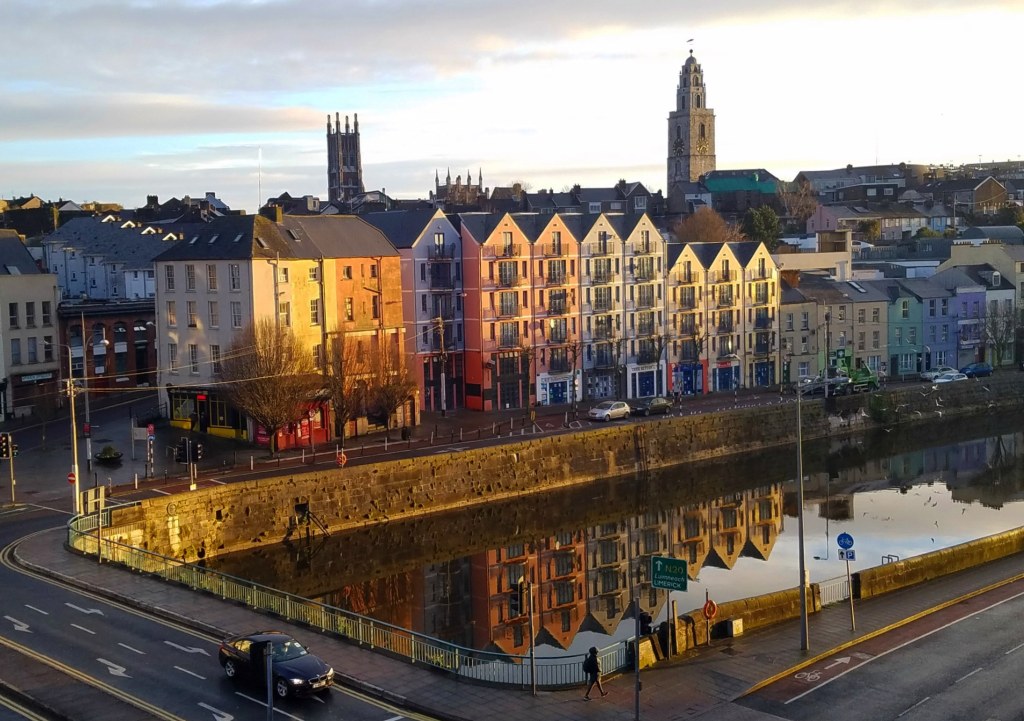
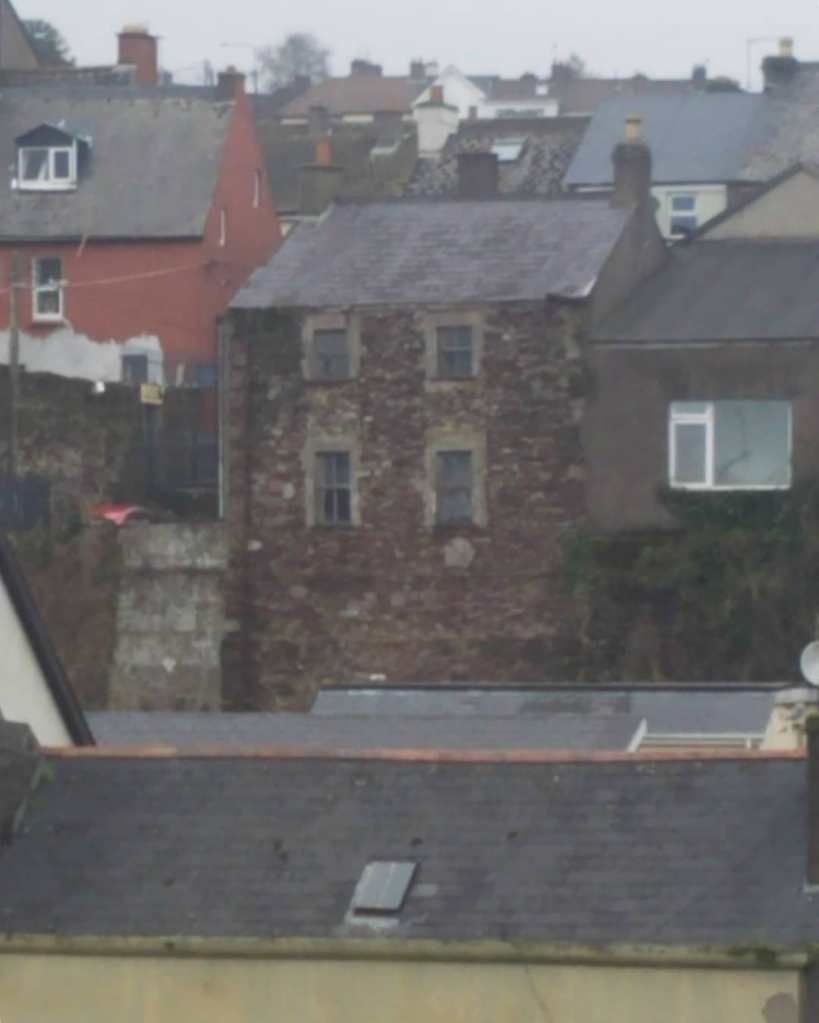
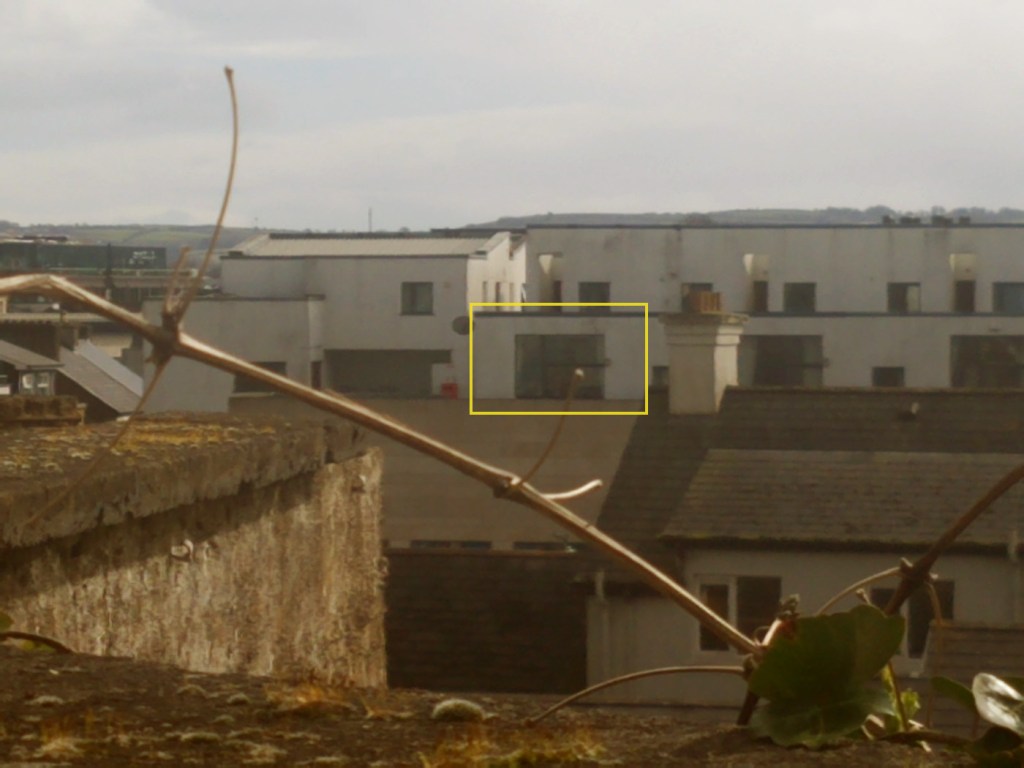
300+ year old rock house directly across the river from our apartment. It’s on the market, too, for €145K, cash only. If the stock markets had gone up 15% over the past 3 weeks, instead of down that amount, we might consider it.From the Rock House, looking back to our apartment, highlighted in yellow.
A few random street snaps from over the weekend.
Oliver Plunkett St.St. Patrick’s St.
Castle St. (left) and N. Main St. (right) walking back to our apartment
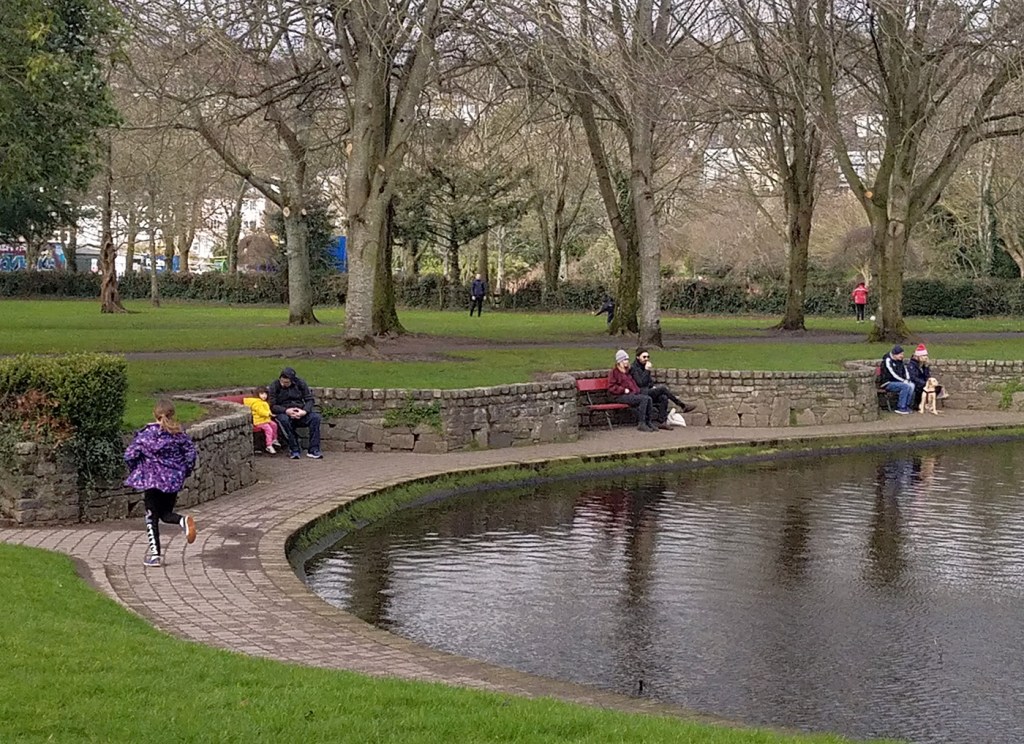
We dodged squalls walking back to west end of the island and beyond, along the river greenway west of the city on Sunday. It’s quiet there, when it’s not hailing. We ended up in the lobby of the fancy-pants Kingsley Hotel on the way out, and the way back, sheltering from the rain.
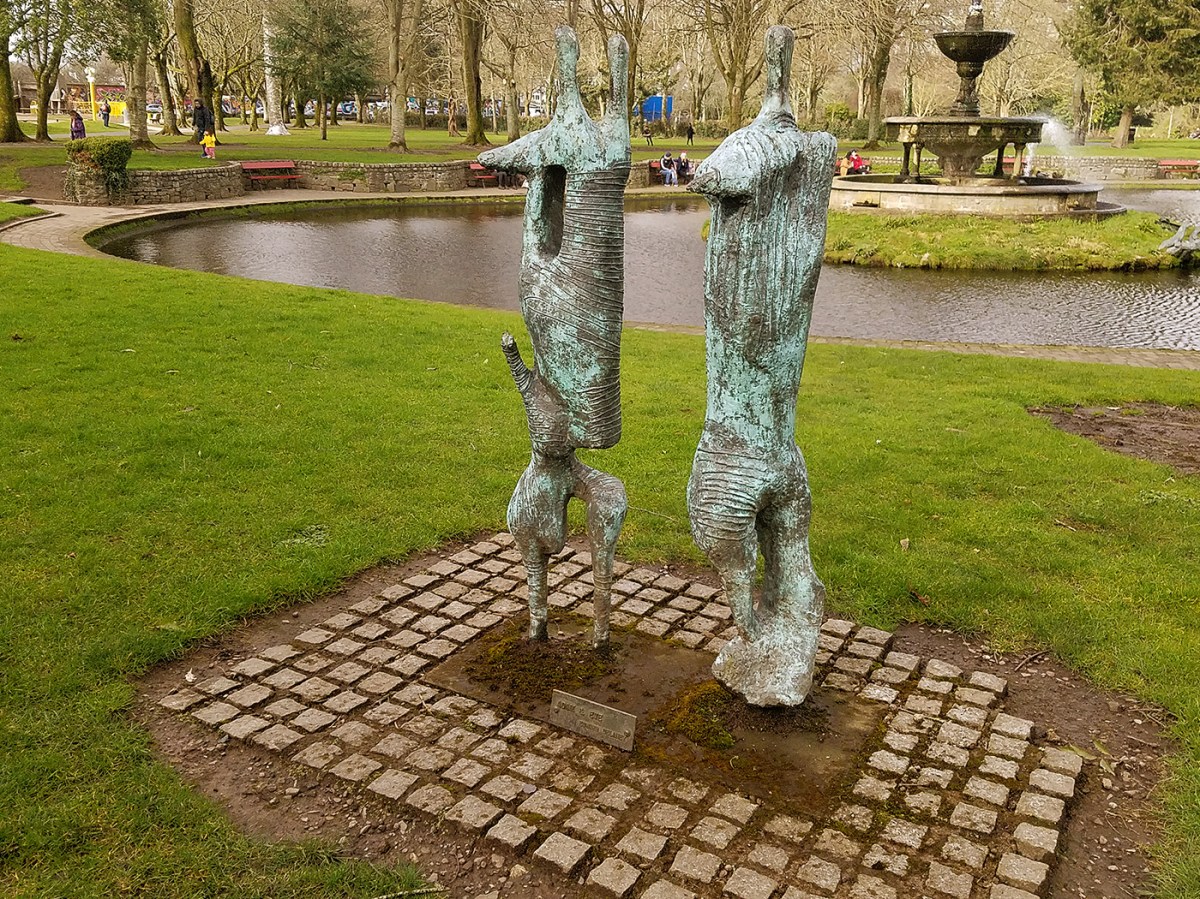
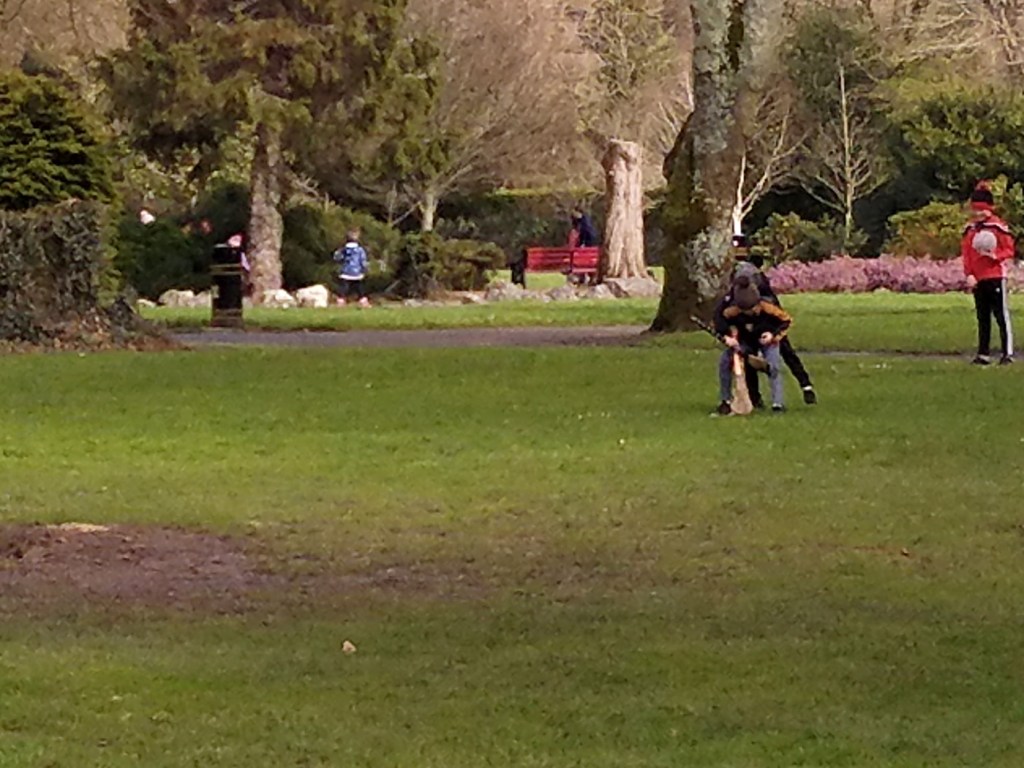
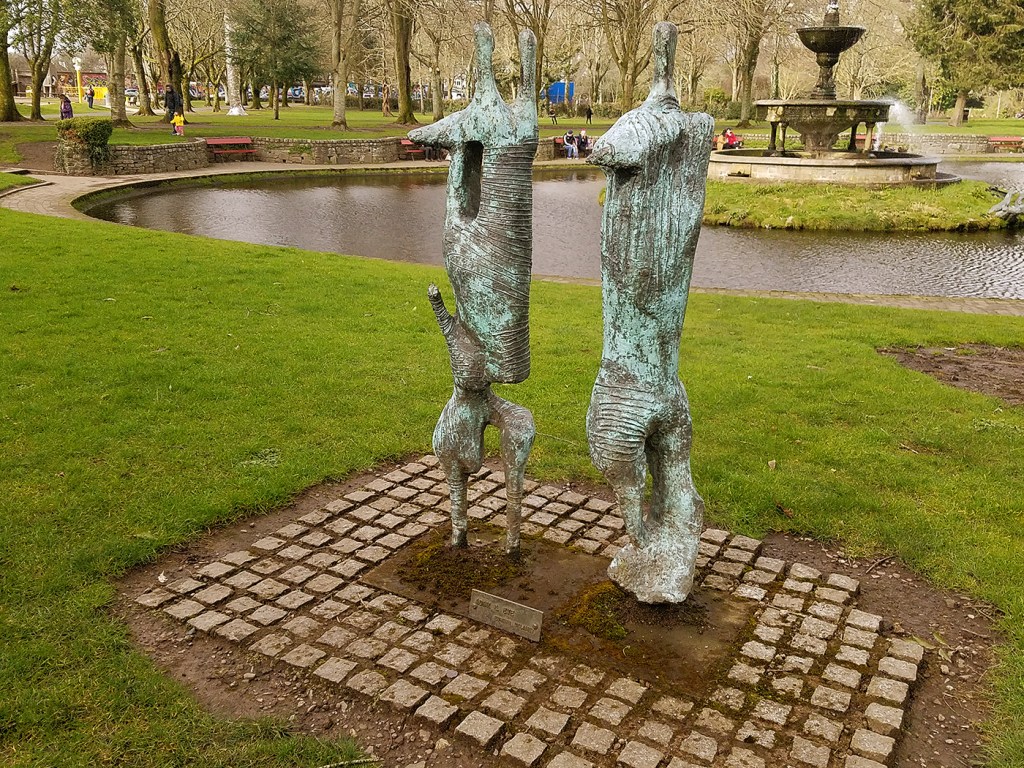
Siblings getting in their hurling practiceAdam and Eve, by Edward Delaney
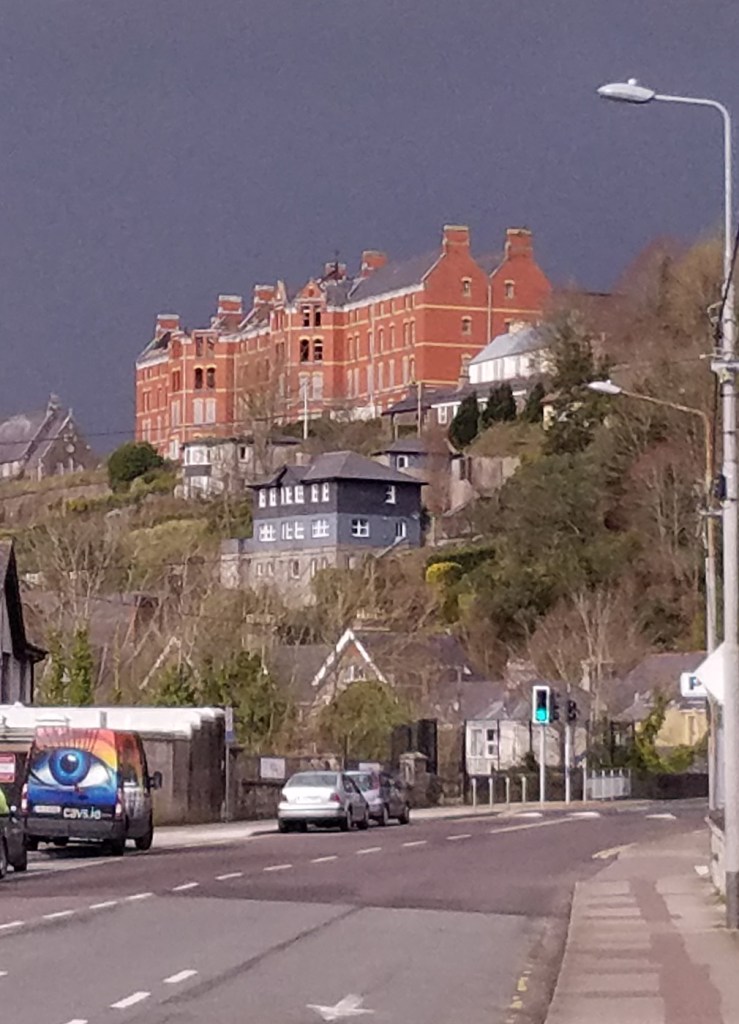
I wrote a little about this building very early in our stay, but i thought it looked dramatic against the storm coming in. Probably a mistake to spend so much time in the street trying to get a decent shot in those circumstances, though.
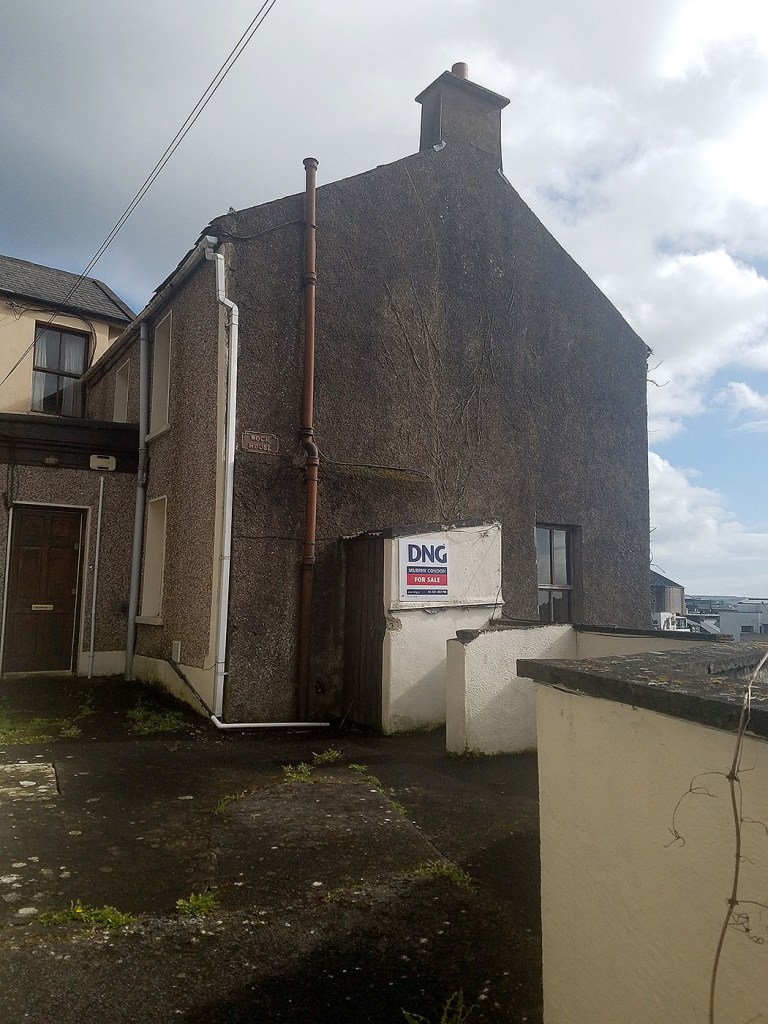
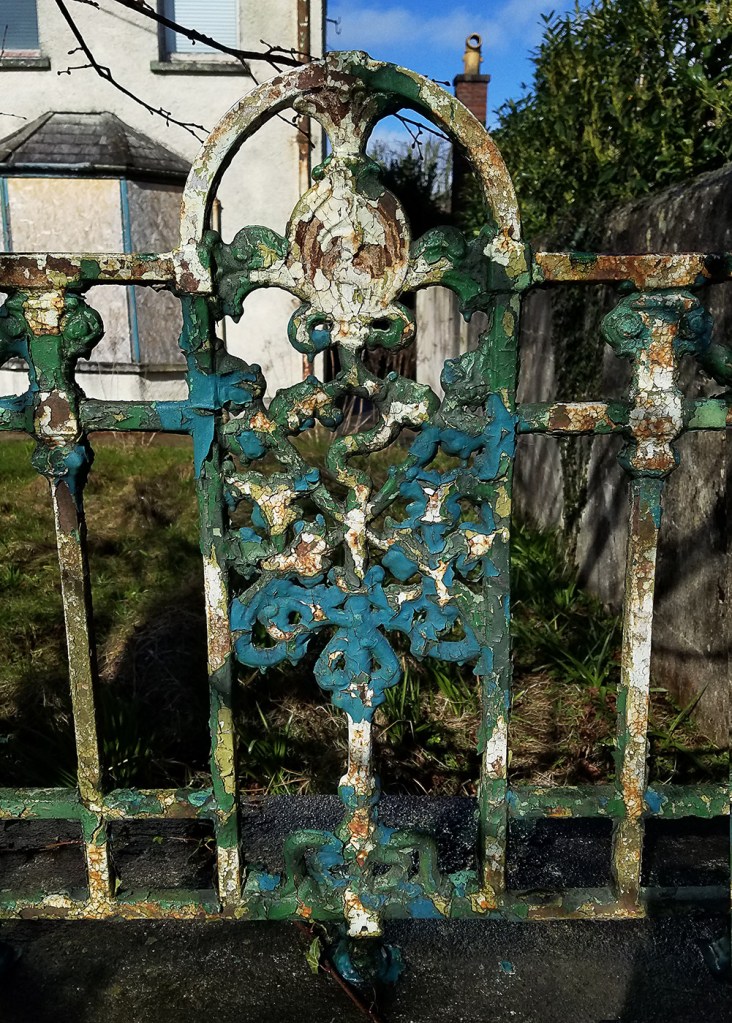
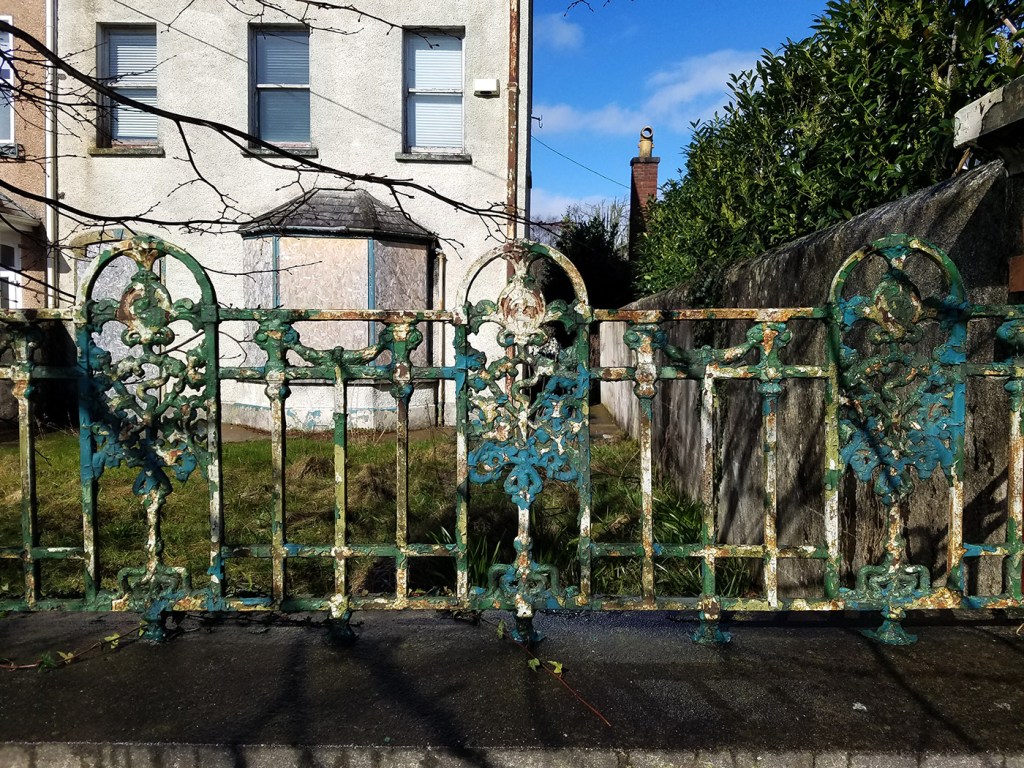
This abandoned building is not on the market yet, as far as I could tell. Love the little fence on top of the wall, though
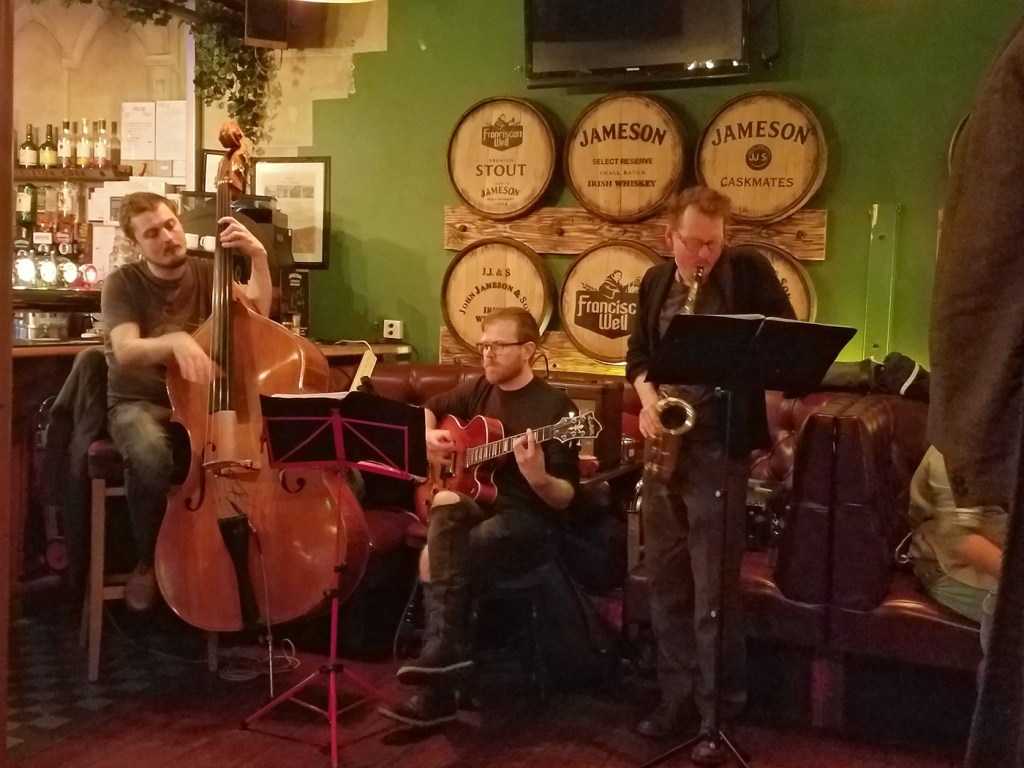
Capped off the night on Sunday catching the jazz trio over at the Franciscan Well. If you’ve seen the commercials for Jameson Caskmates whiskeys, this is the brewery they’re swapping barrels with.
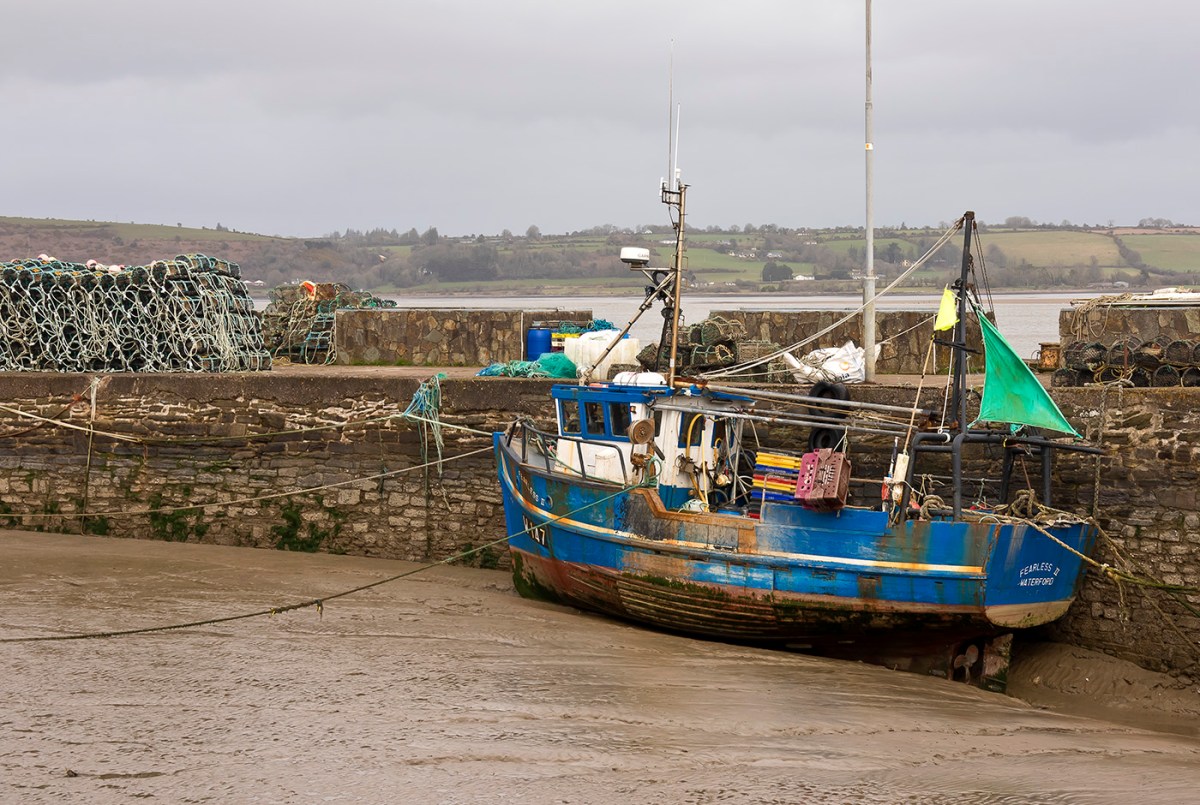
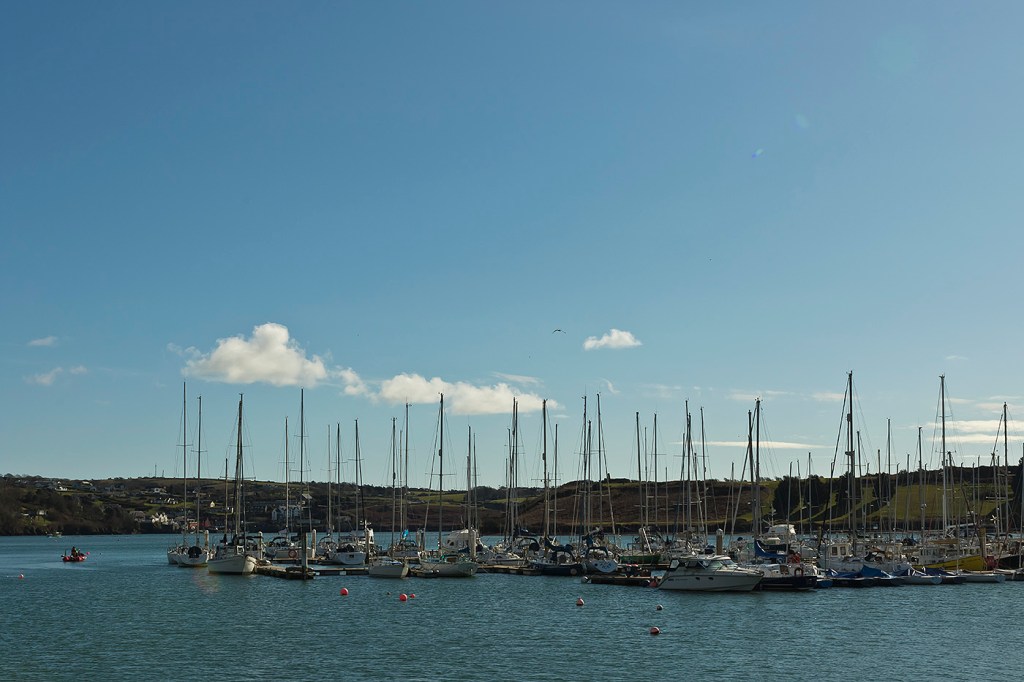
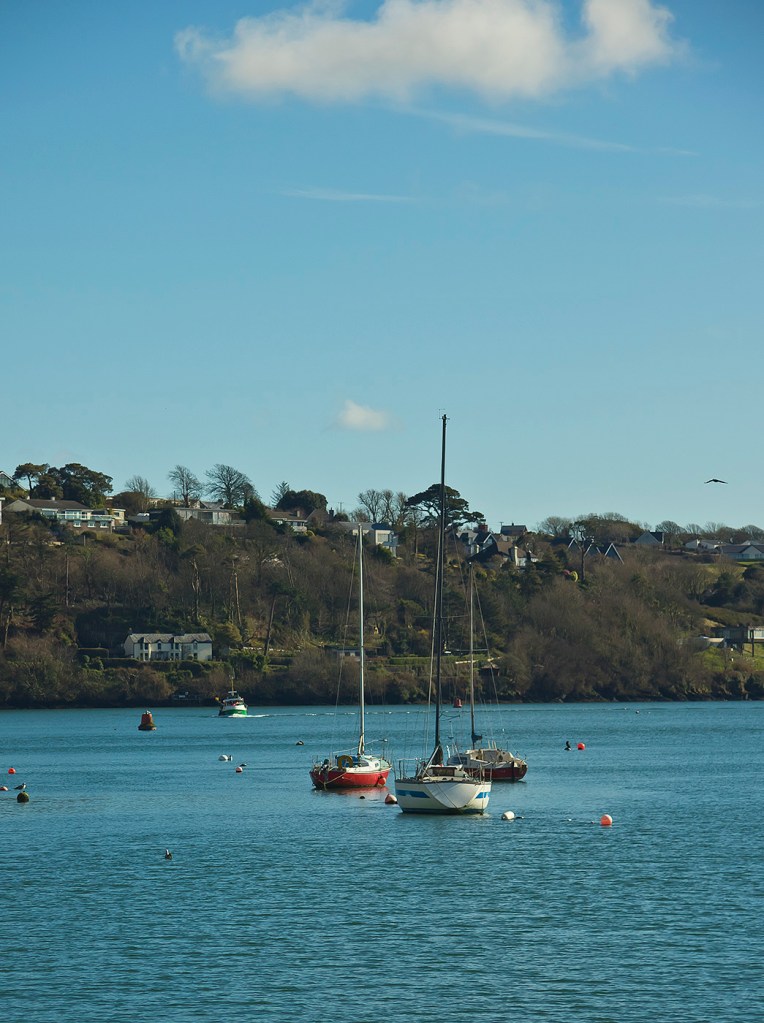
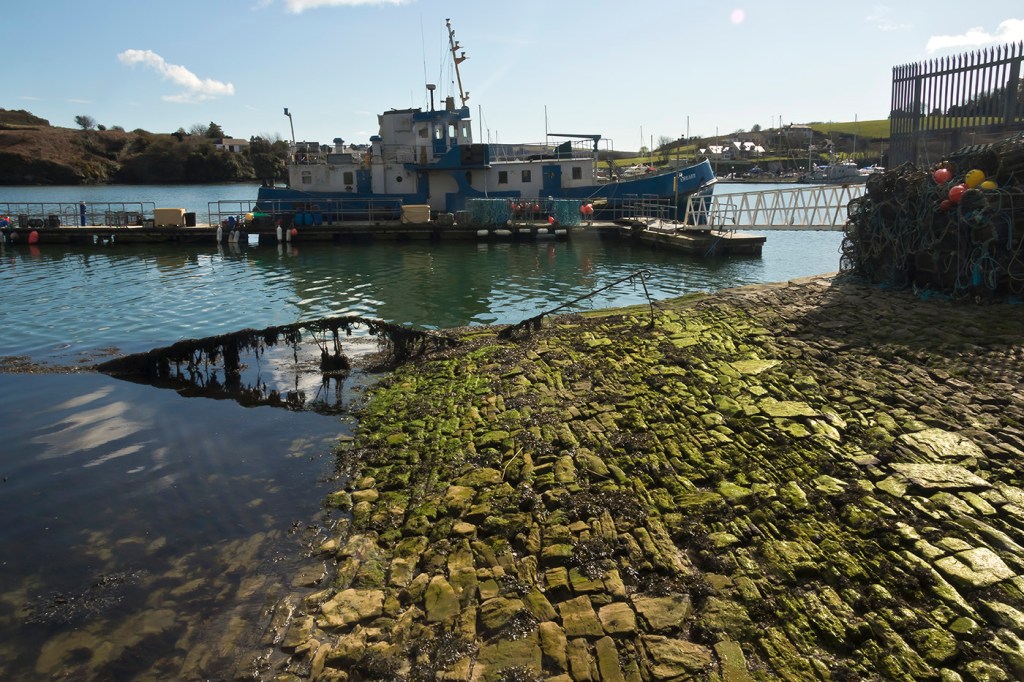
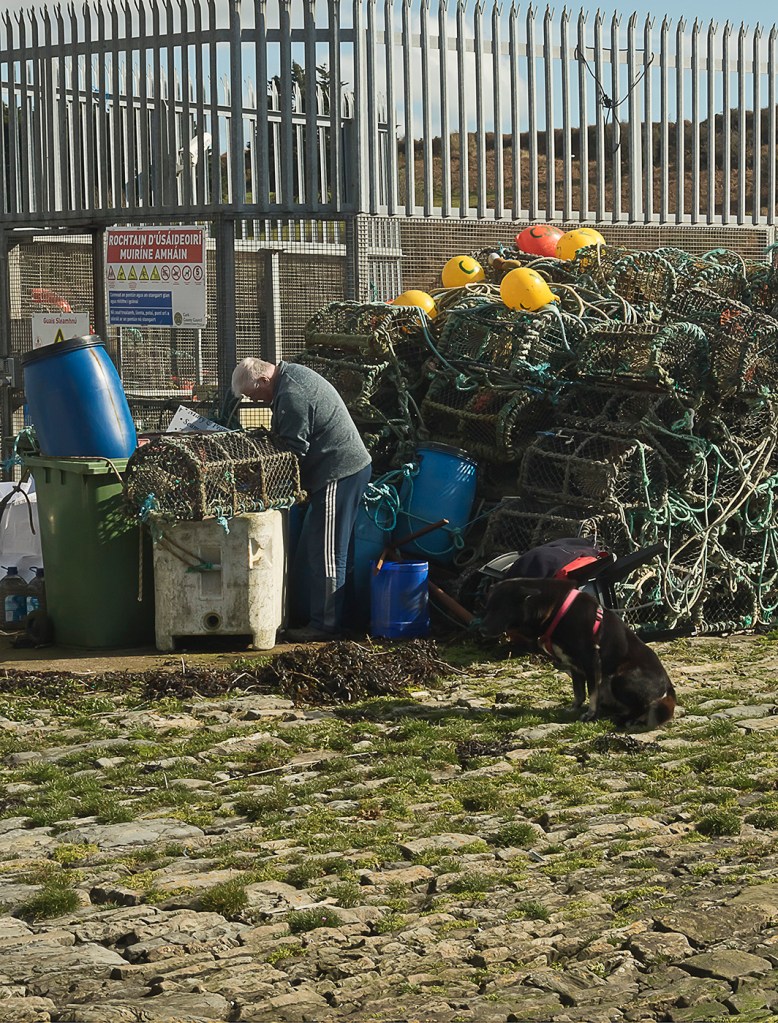
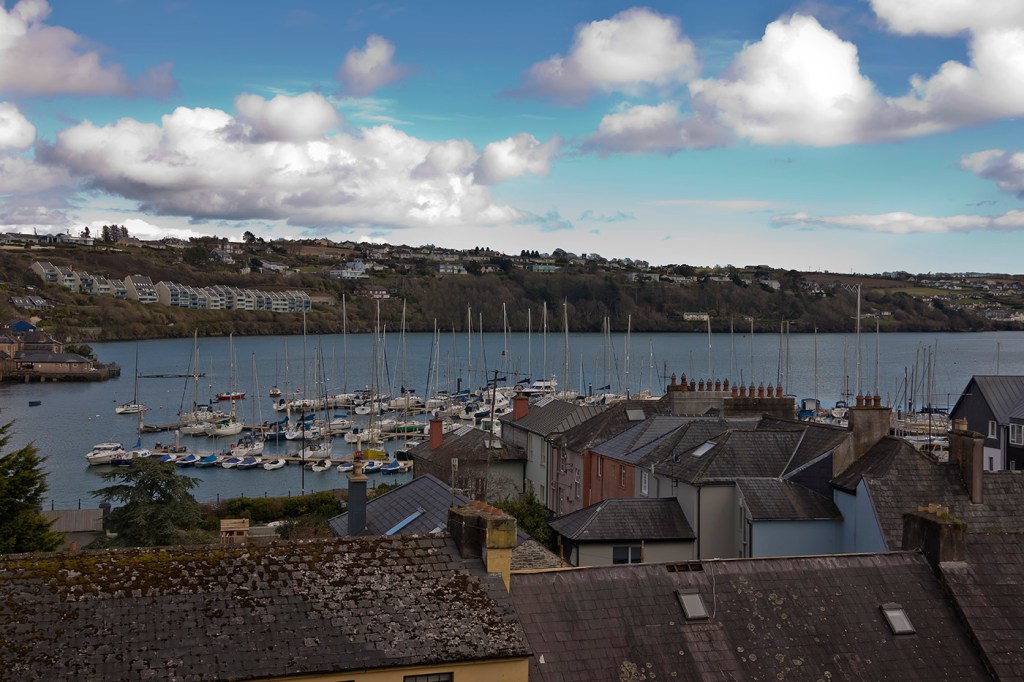
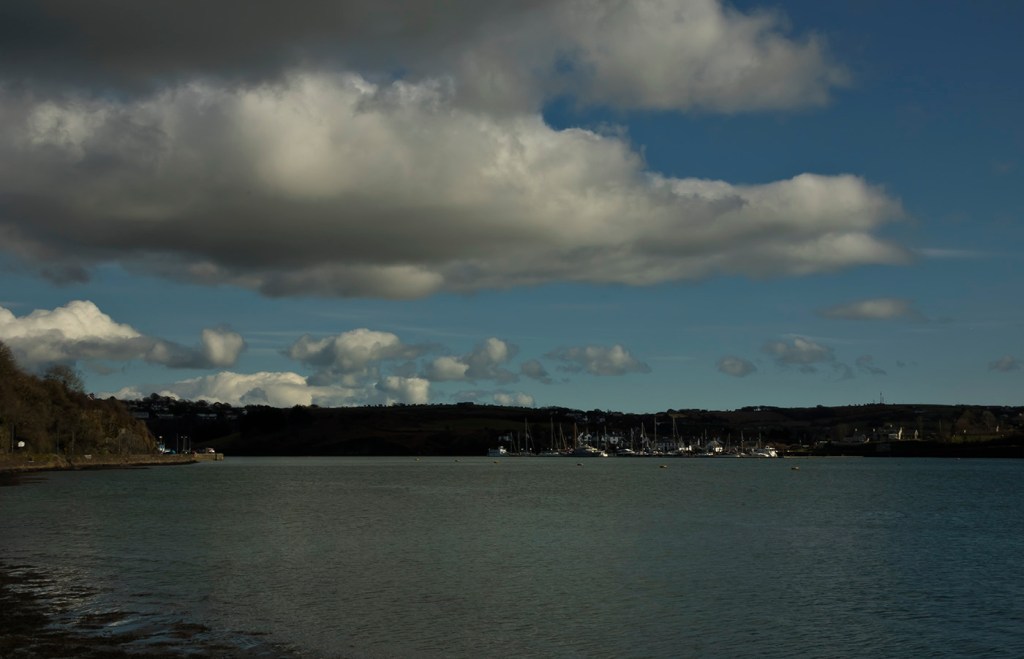
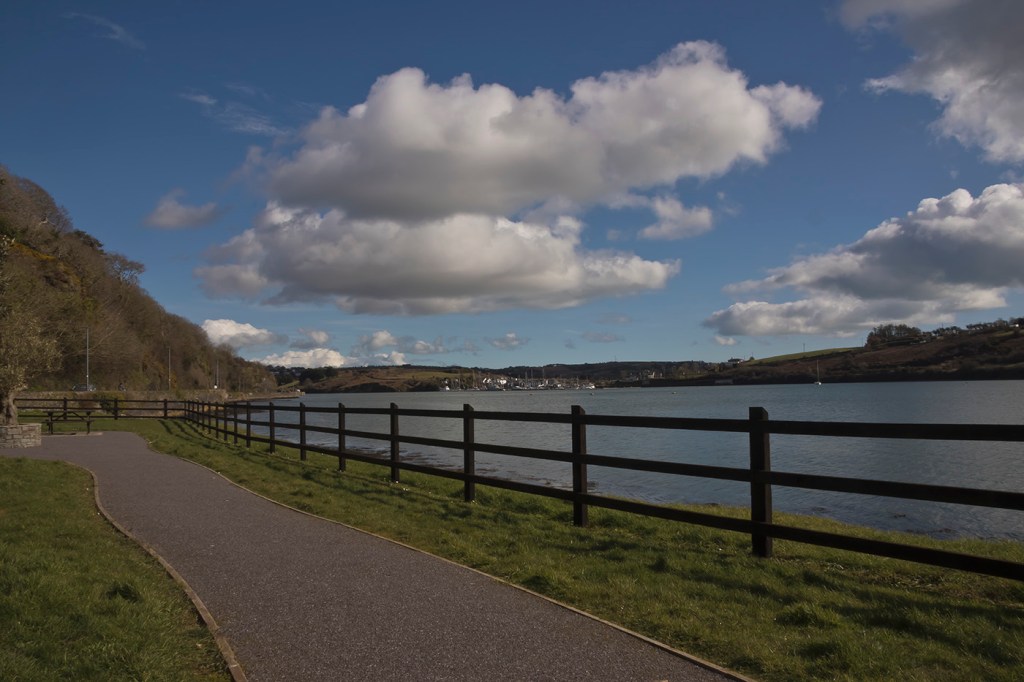
We took the bus down to Kinsale the other day. It’s a picturesque port town near the mouth of the River Bandon, accessible via a 45 minute bus ride from downtown Cork. It probably caters a little more to the tourist trade than either Cobh or Midleton, despite not having a major specific draw like the distillery or the Heritage Center. Even so, enough of the restaurants and coffee shops were open, to make a full day of it. And it turned out to be a pretty nice day for taking pictures, so I did a lot of that.
We started with coffee and pastries at The Poet’s Corner bookshop and cafe. And, seriously, their scones were the best I’ve had on this visit. And I’ve had more than my share the past 5 weeks.
I’m going to divide the pictures up into waterfront, and town, and mostly post them without comment.
Lobster boatKinsale harbor from The Ramparts
We had fantastic skies most of the day.
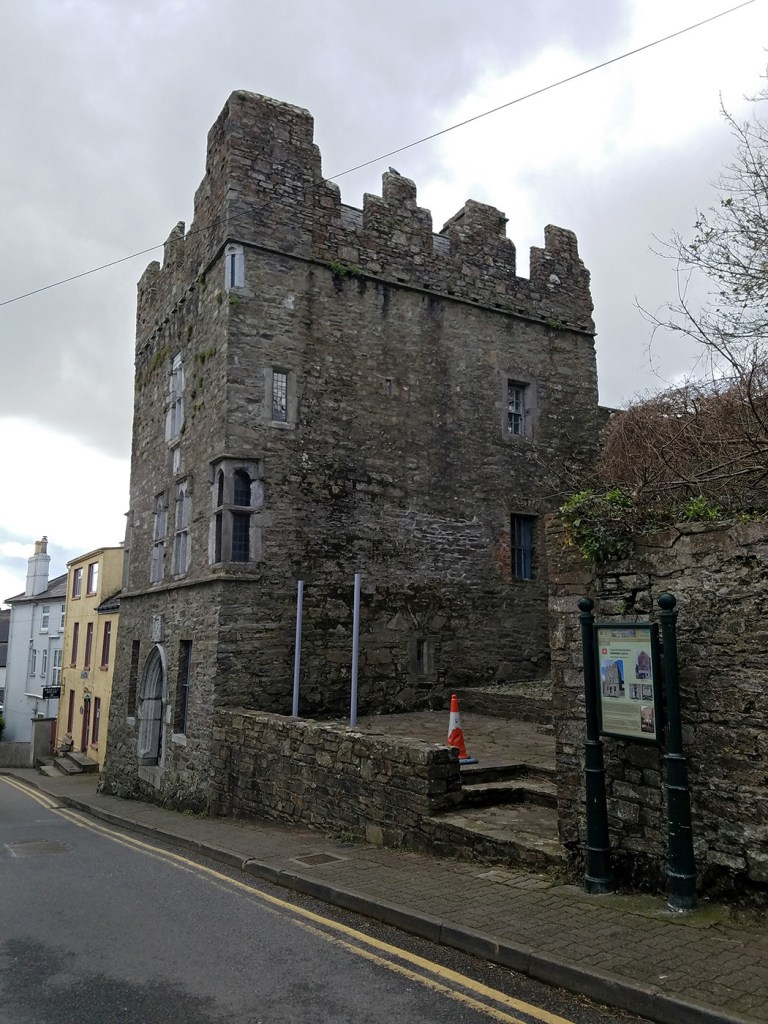
Like most Irish towns, Kinsale has old churches and castles, not to mention some old pubs. Not all of them were opened on our visit, though.
St. Multose, Church of IrelandSome people think that’s the best kindYour basic 330 year old pub, sadly, not open for business this early in the day
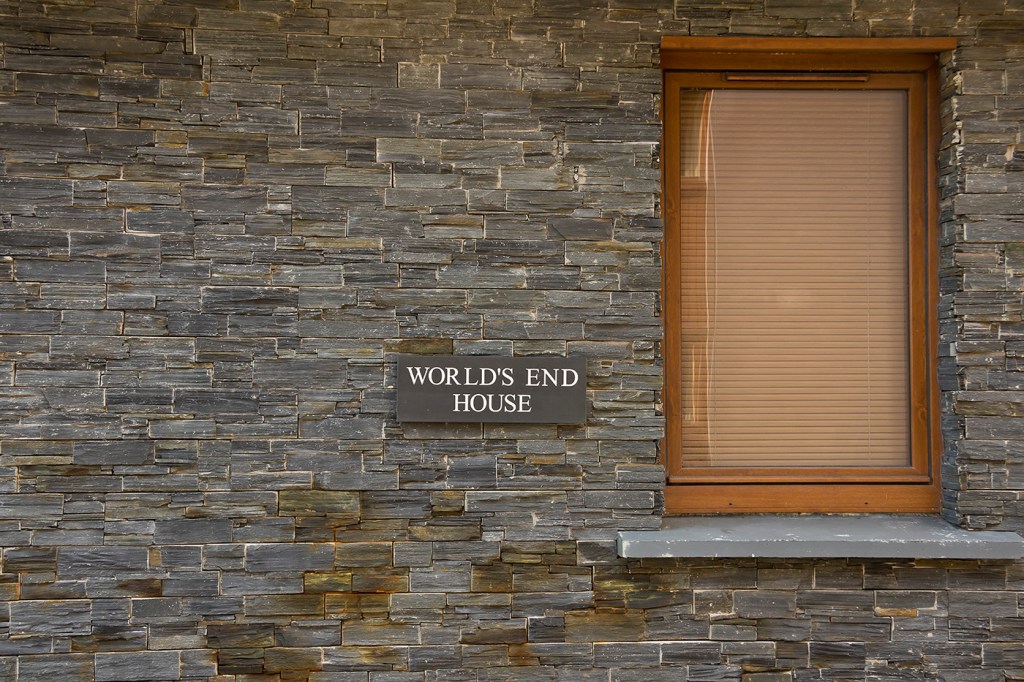
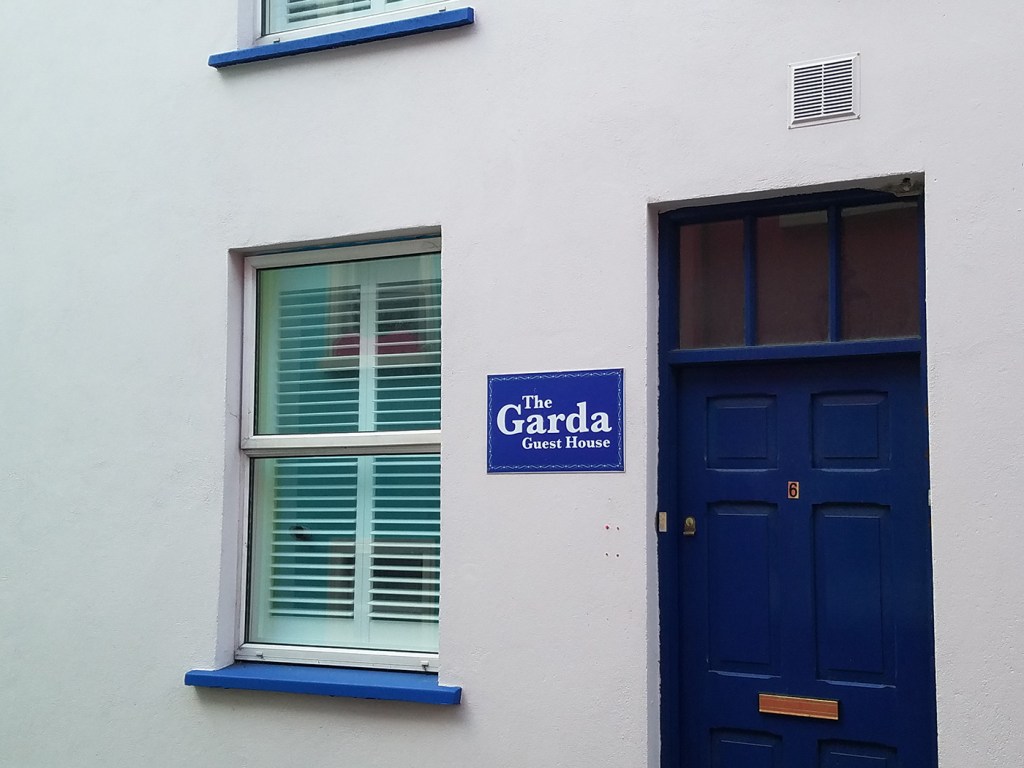
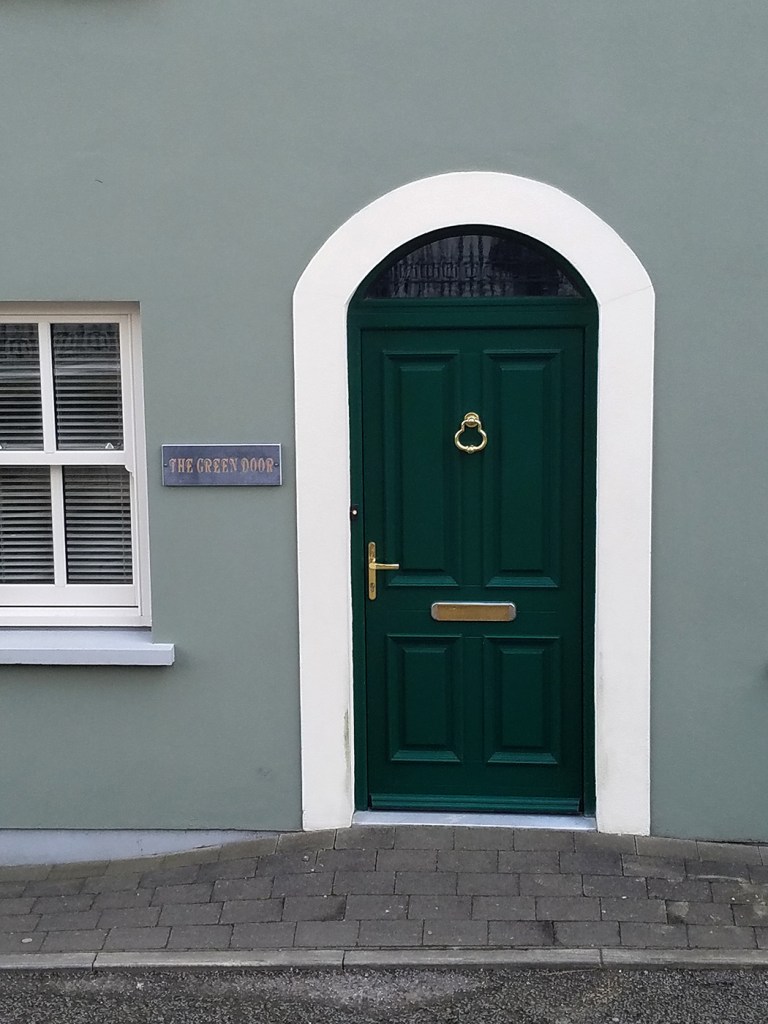
Houses and house names in Kinsale seemed to me to exhibit more of a sense of humor than some of the others I’ve seen.
I understand you need a special invitation to spend the night hereNobody knows what goes on behind this one
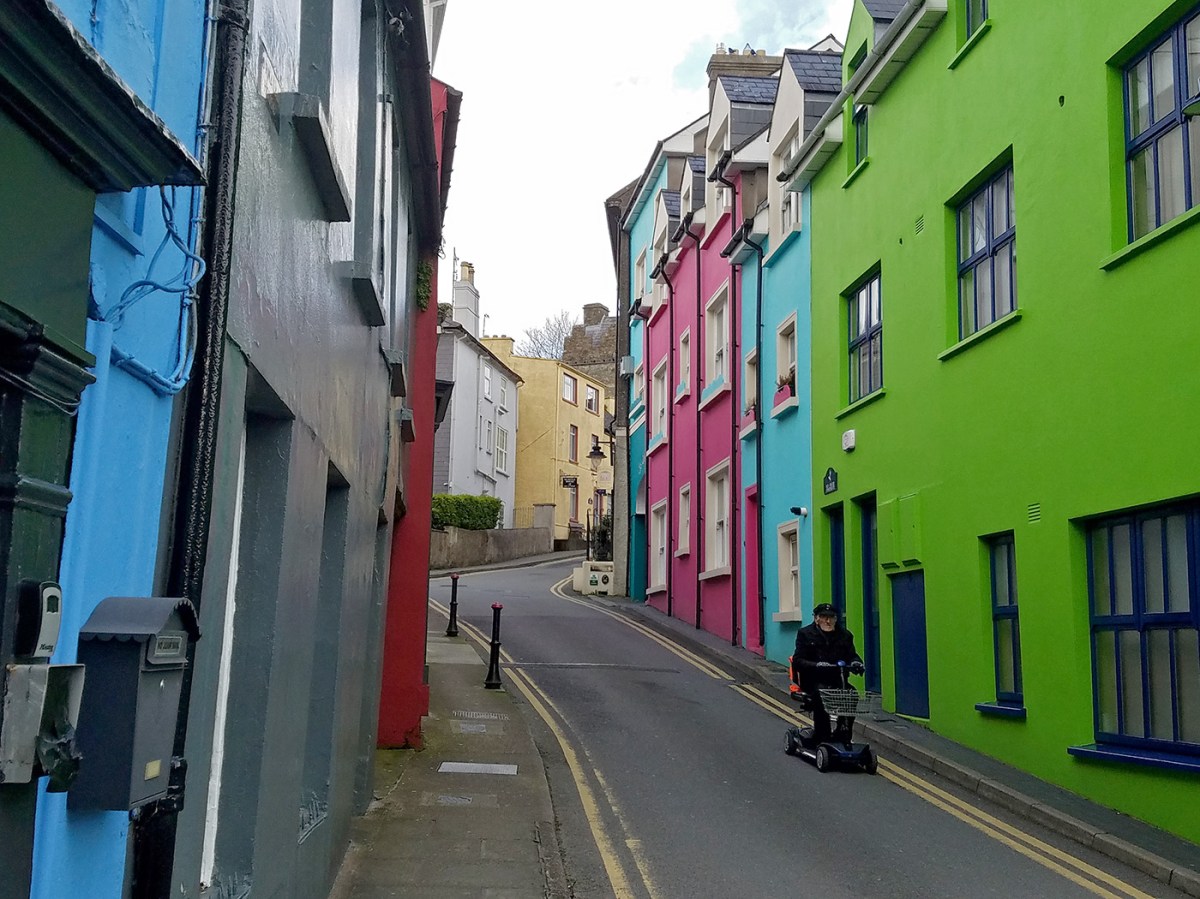
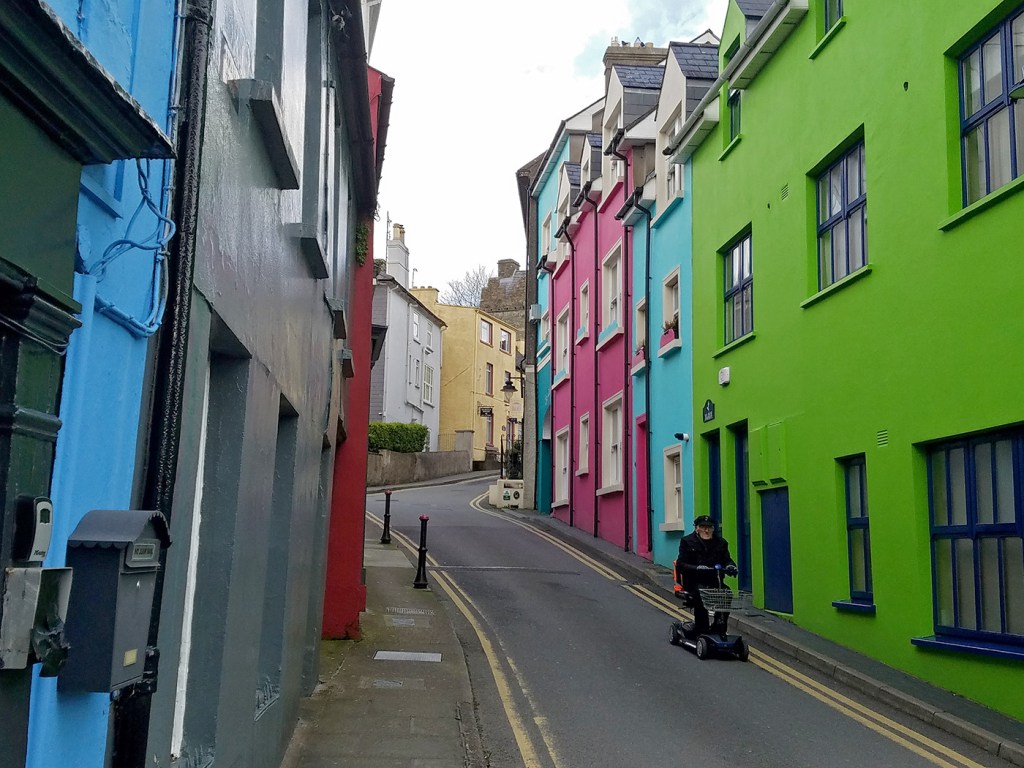
And just an amazing little street that we happened to turn up on our walk.
I’m hoping we’ll get another opportunity to go back and spend some more time in Kinsale before the month is out.
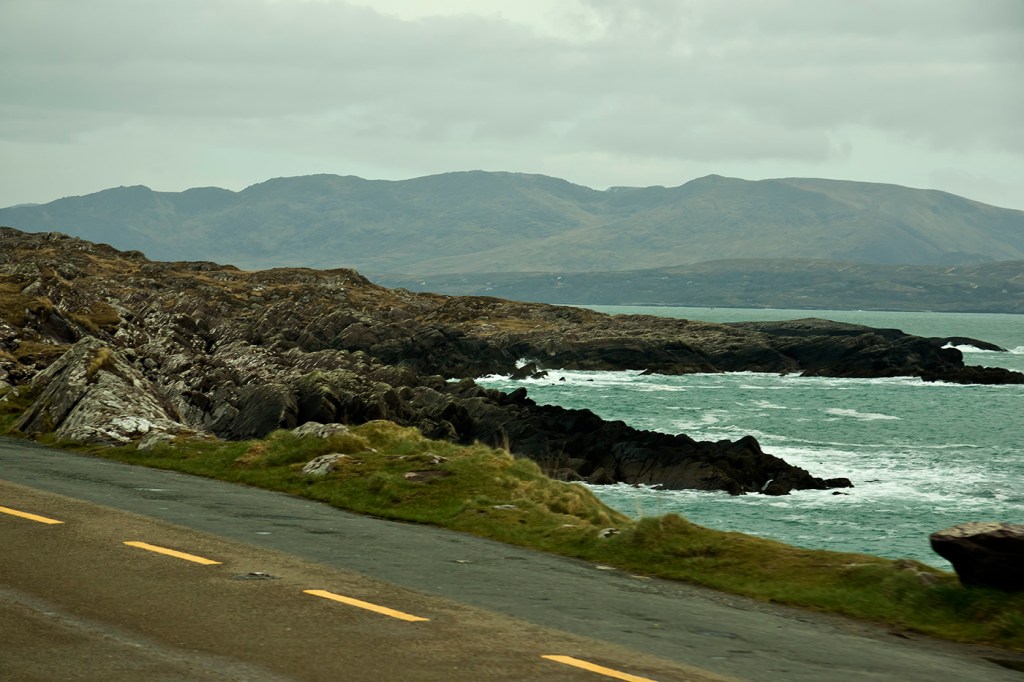
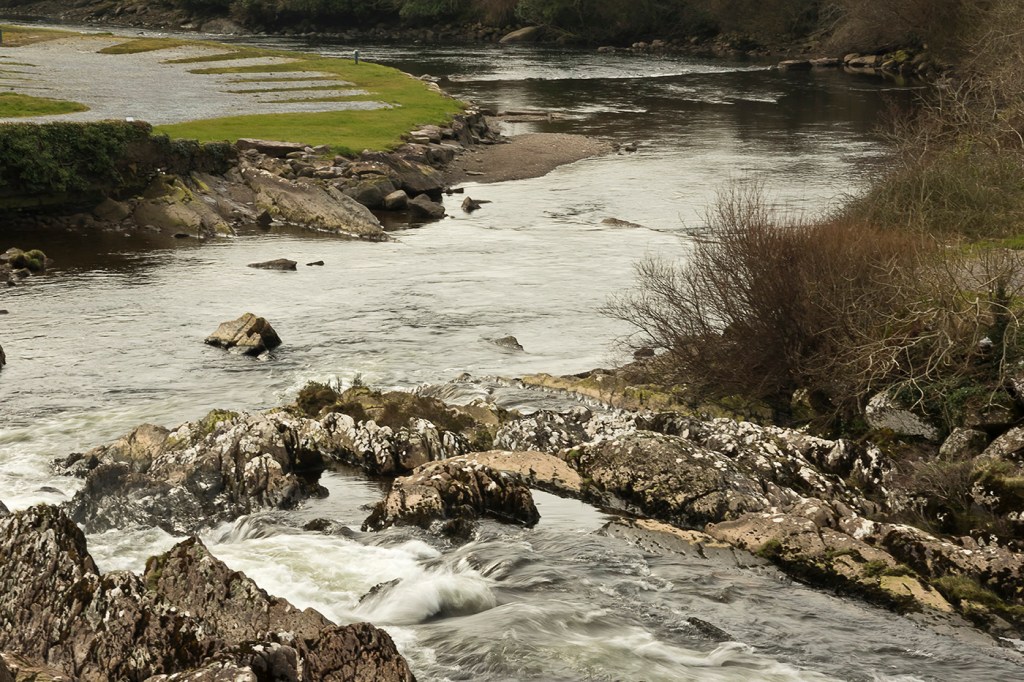
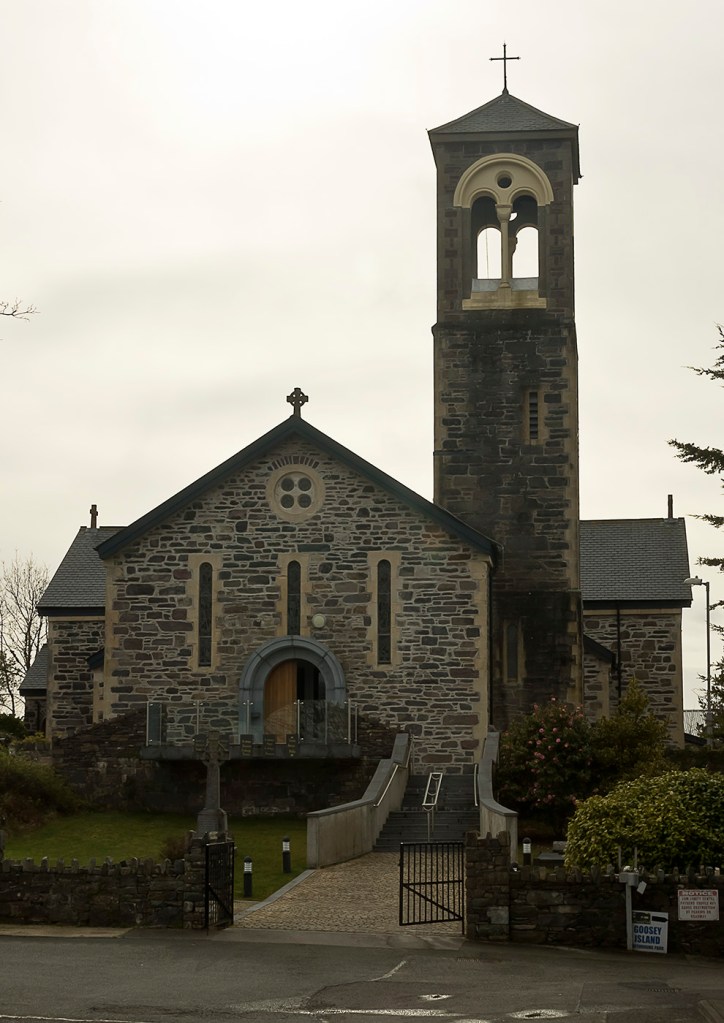
We’ve been busy again for the past week. Blarney, Crosshaven, the Ring of Kerry, and Kinsale on alternating days. Fewer than 4 weeks remain until we leave Cork, and make our way to Portugal and Spain. We’ll spend one of those weekends in Dublin, and another in Paris, external conditions allowing.
Although most of our time here is spent on quotidian affairs, we’re not averse to being tourists when the occasion warrants. Earlier this week we hopped a tour bus and went round the Ring of Kerry. The bus departs about 6 blocks from our apartment, and this guy saw us off.
Passed through a couple of small towns on the way from Cork to Killarney, where we picked up a couple of additional passengers. Of those, I thought Macroom might be worth a standalone visit in the next couple of weeks.
Killarney was picturesque in theme park kind of way. The scone i had there was disappointing, though. Bland and bready. (Don’t worry, the one I had later in the week at the Poet’s Corner in Kinsale made up for it.) But on the way, we passed the far-famed Cork and Kerry Mountains, where once upon a time a young highwayman robbed the English Captain Farrell, and all whack for the daddyo broke out.
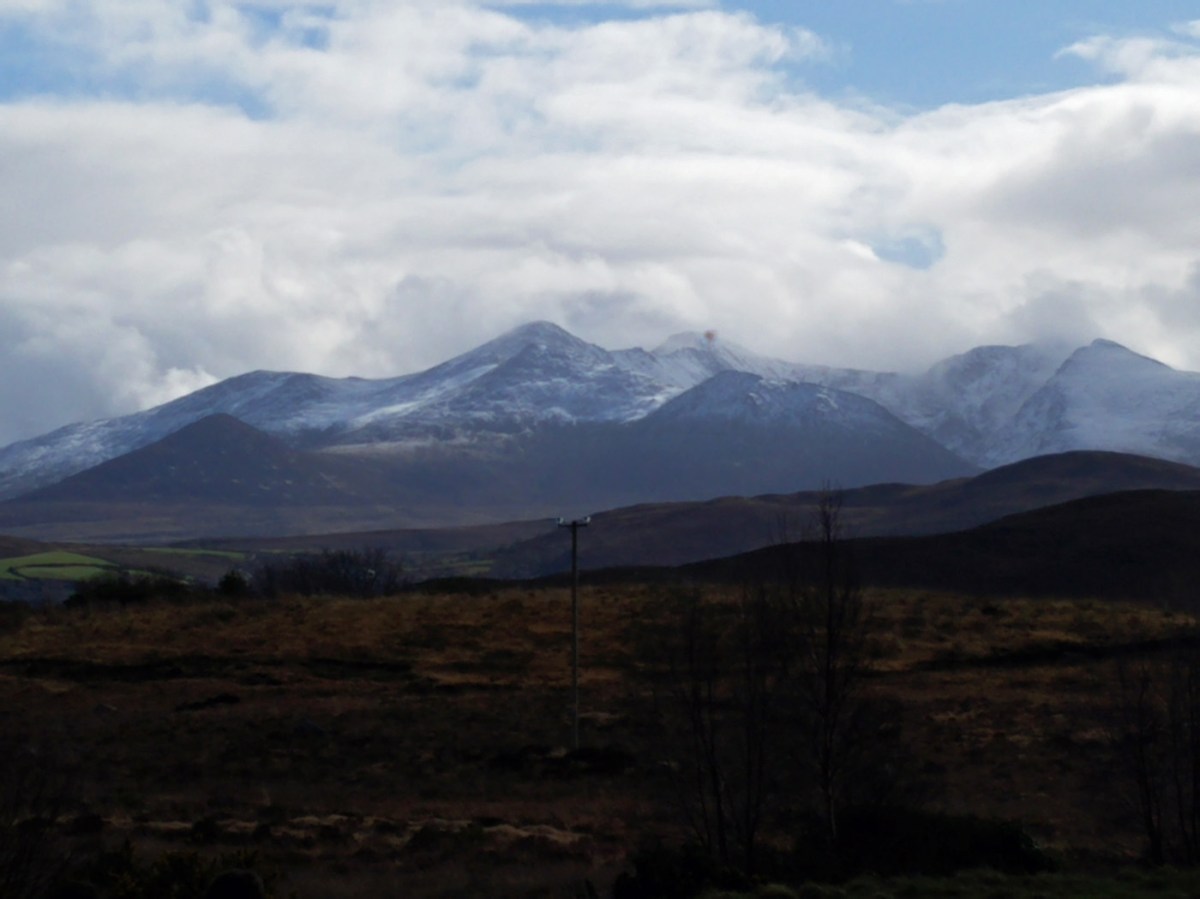
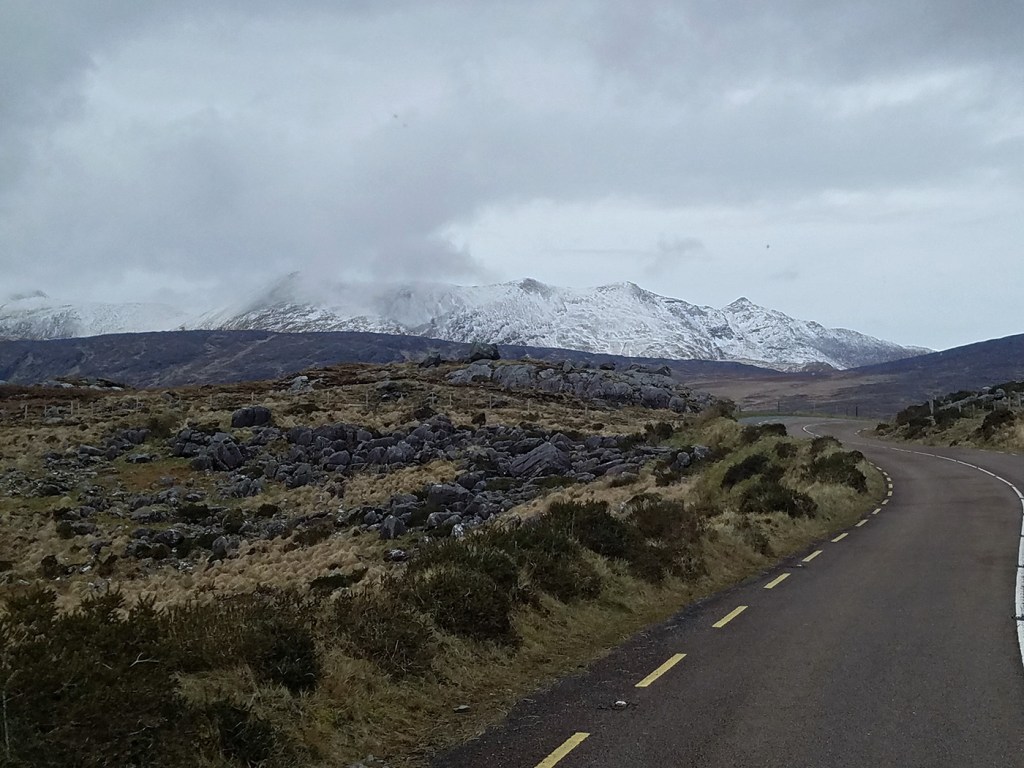
I like the sight of snow, off in the distance.
The advantage of touring the Ring in early March is that we were virtually the only tour bus on the road. I hear that during the summer months it can be bumper to bumper with them. So not only are the roads more pleasant to be on, but the stops are empty as well, which means more time to enjoy them.
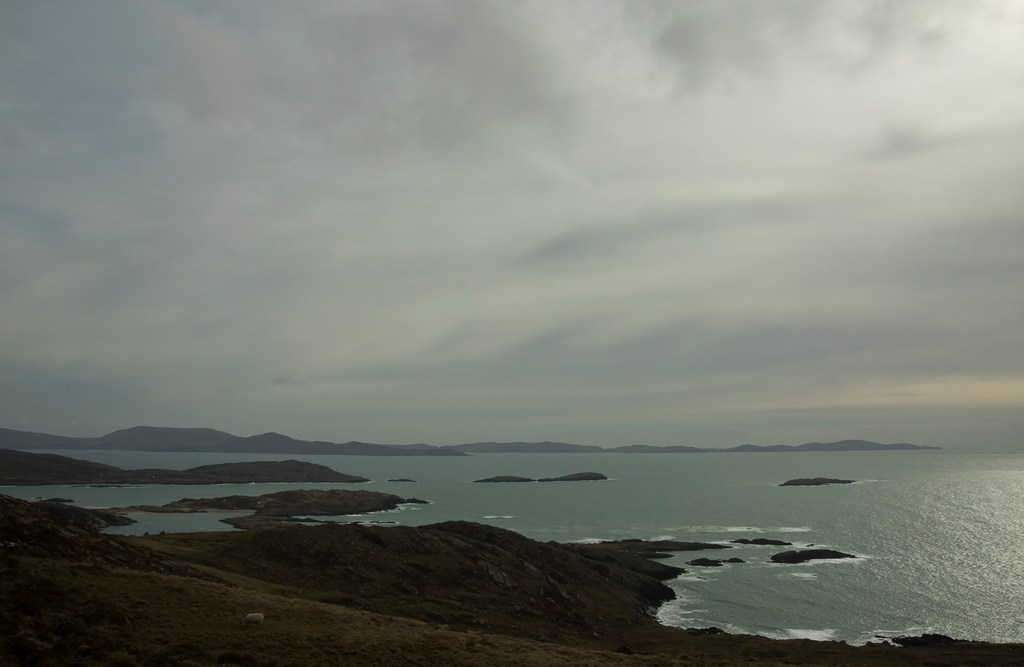
Glenbeigh is the first, strictly photo opportunity stop of the tour. I took advantage.
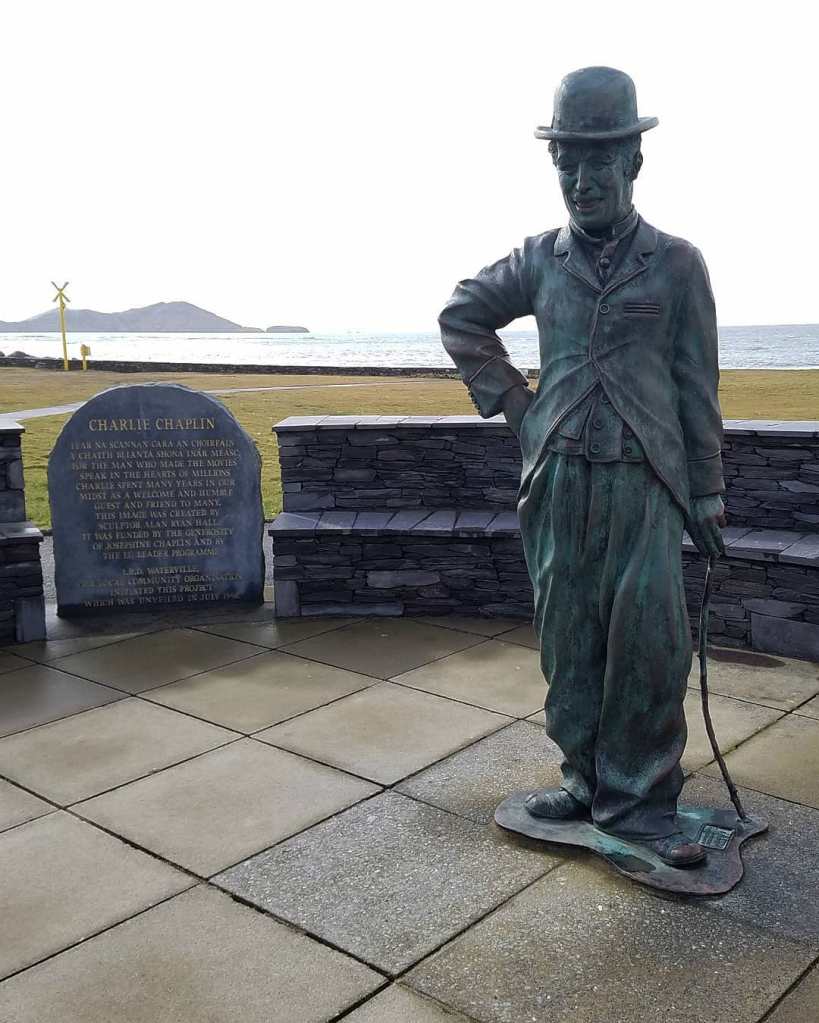
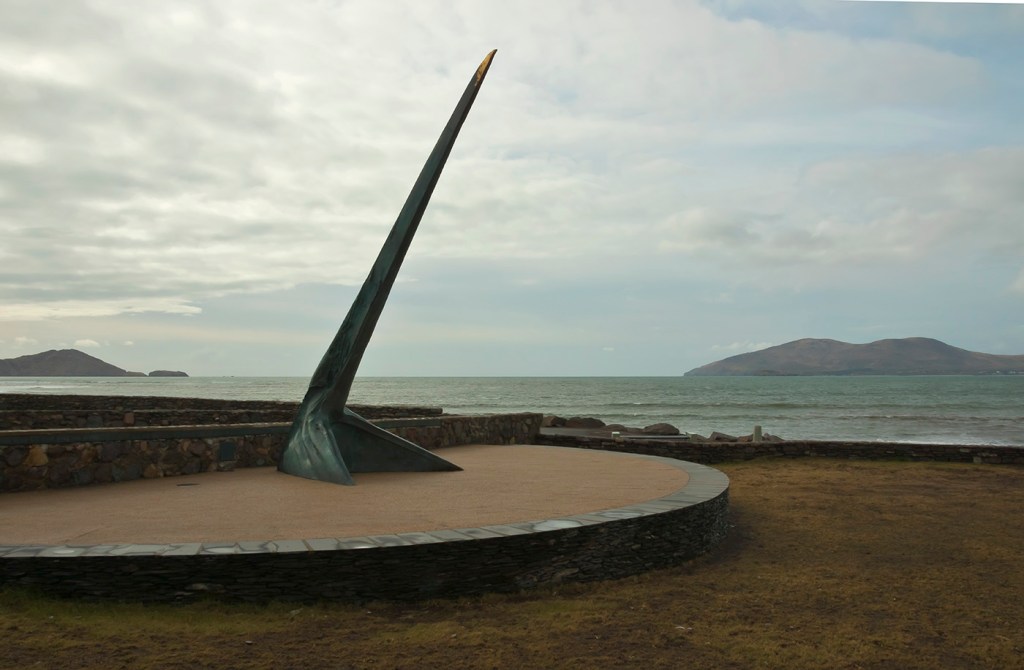
We also stopped for lunch in Waterville, where Charlie Chaplin had a house for much of his life. It’s now owned by one of the local golf clubs, and for a super premium price, you and your group can stay there for a couple of nights while you play some of the local courses. They also honor Chaplin with a film festival and look-alike contest. Our bus driver told us that towards the end of his life, Chaplin entered the contest, and placed 12th. I have my doubts.
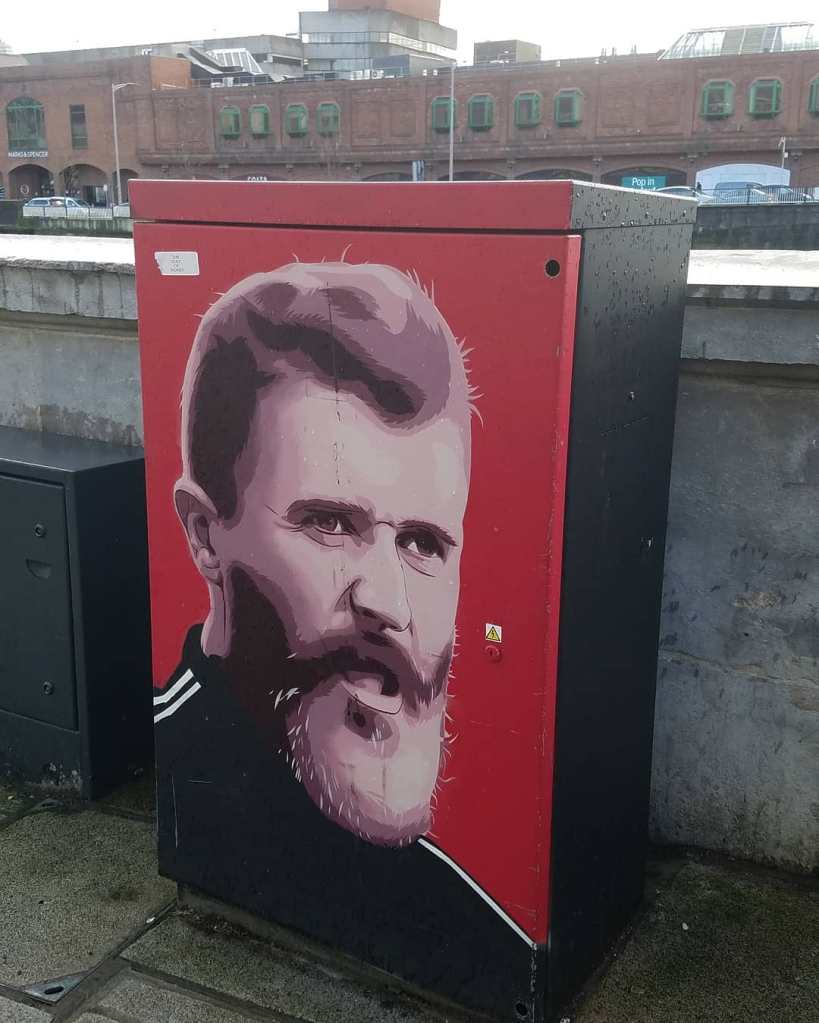
More art in Waterville
We also had a pretty nice lunch at The Lobster, which was one of the few restaurants open on a weekday this time of year. I’m finding the Irish know how to smoke a salmon.
After lunch, we had another photo opportunity in Castlecove. I took advantage again.
Our next stop was in the charmingly named village of Sneem, where I’m sure that J.R.R. Tolkien must have spent at least one night of his life. We bought some post cards, which gives me the chance to remind you that if you’d like a postcard from us on our travels, you can email me your postal address at corkspringblog at gmail dot com, and I’ll get one out to you.
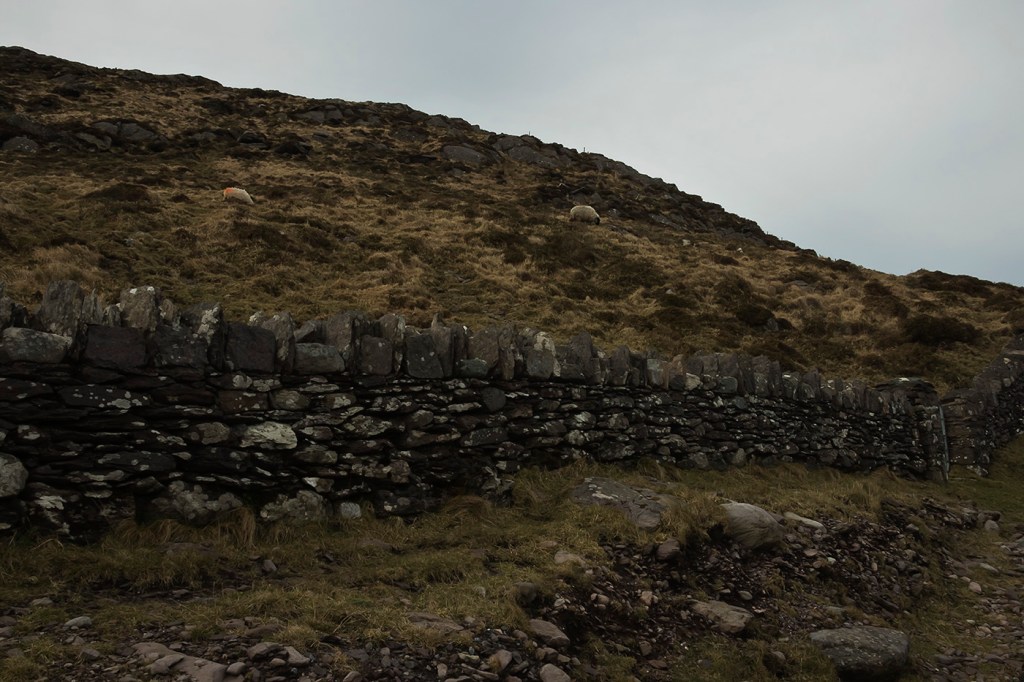
We were detoured on our return to Killarney by a road closure, so we didn’t get an opportunity to pass through Killarney National Park, nor to see the Torc Waterfall. We did get to stop for a bit at the road closure, and chat with some of the locals, who were curious about us since they don’t seem to get many visitors.
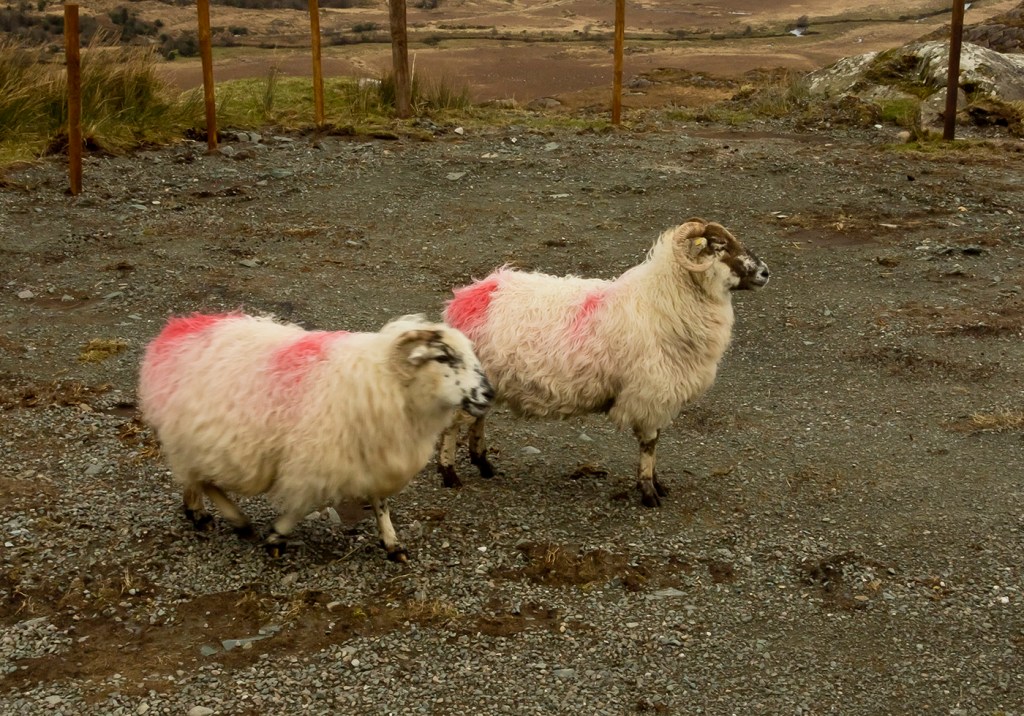
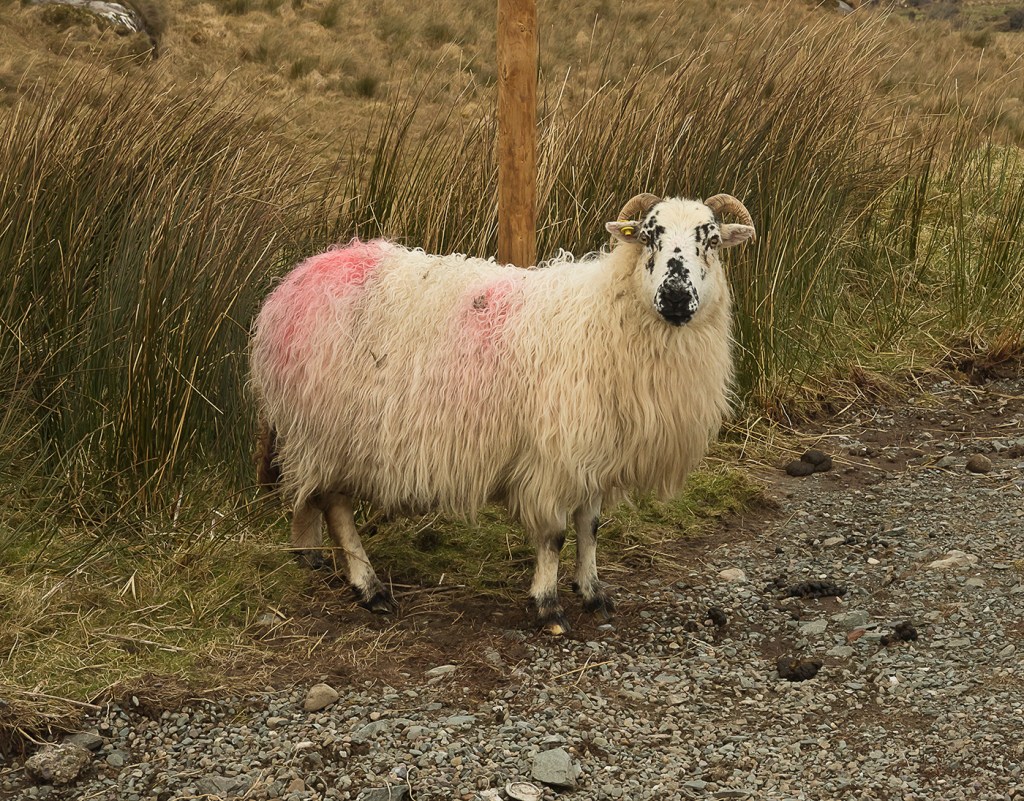
The markings, according to our unreliable narrator of a driver, are to indicate which herd the sheep belong to. I believed him on this one.
Barry has been better than I about keeping up with our travels. I have some catching up to do! Be sure to check out his posts as well. He takes better photos with a better camera!
Here are a few of our travels on the south side of Cork, and beyond.
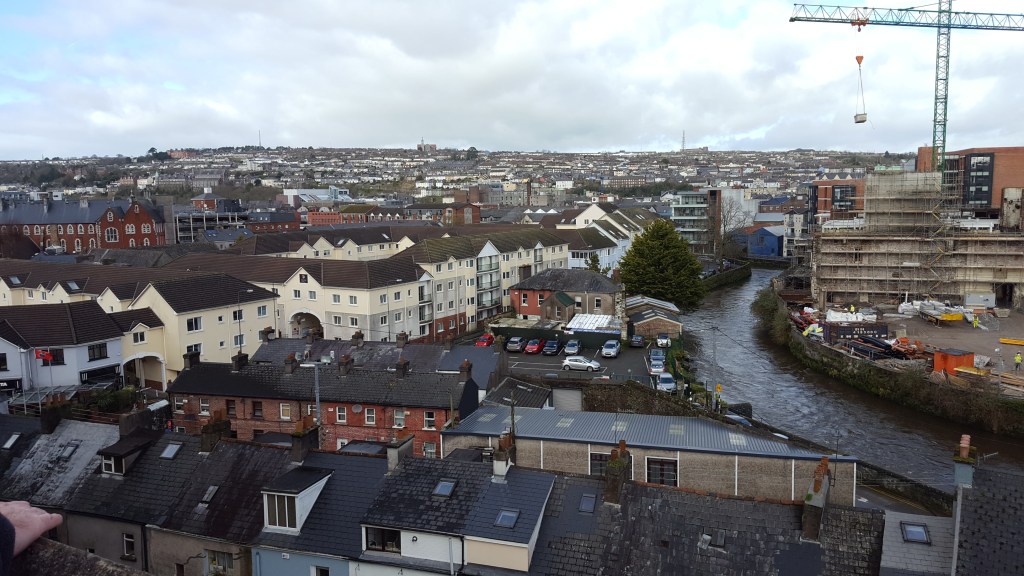
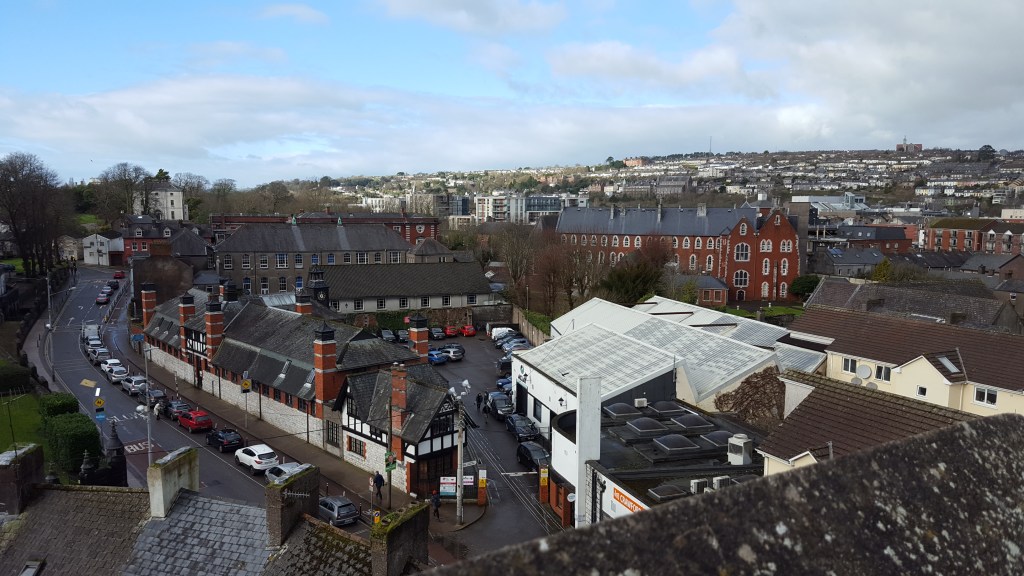
One of our first walks south of city centre we discovered the Elizabeth Fort, which Barry describes fully in his post. I used the opportunity to take a few shots of the surrounding neighborhood.
Looking west and north from Elizabeth Fort; River Lee
That large construction project with the crane is at the opposite end of Main Street from our apartment. It’s walled off from the street, so you can’t see much of what’s going on inside. On the wall, they list the architect, builders, etc., and I was interested to see that they also have an archaeologist on the project.
The site was in the news today, when a “treasure trove” of documents from the 1790‘s were found in an old safe. Apparently at the heart of the construction is an old Beamish brewery, that from the photos appears similar to the Tudor style building below. The documents are related to that and to properties all around the city.
Looking down from Elizabeth Fort at the immediate neighborhood; St. Fin Barre’s cathedral grounds is the greenery to the left.
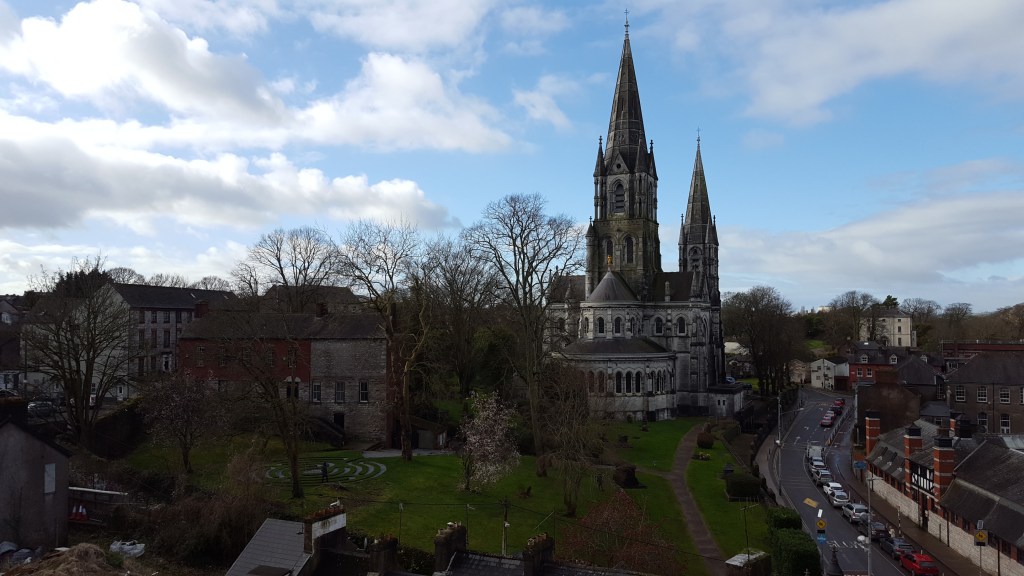
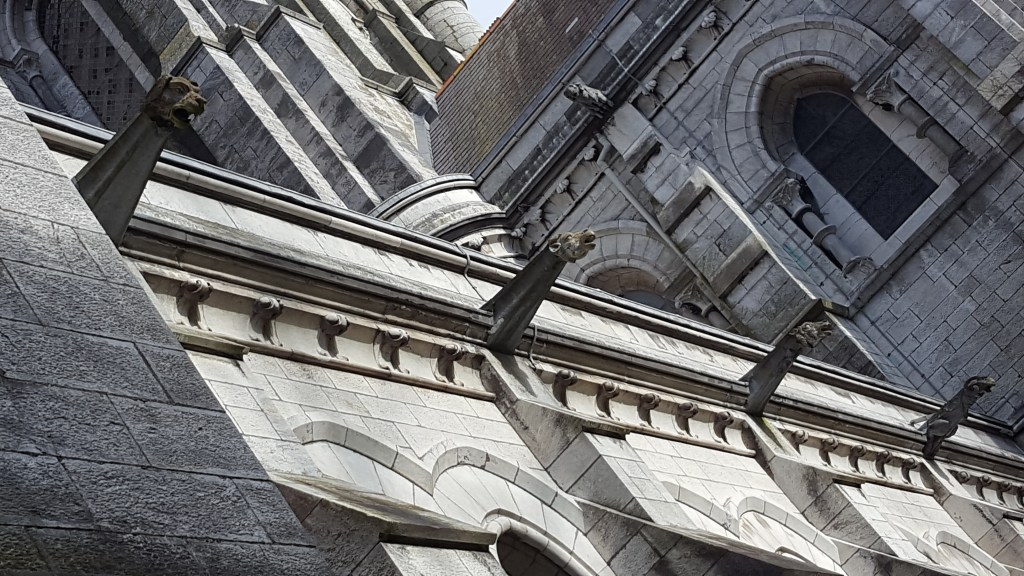
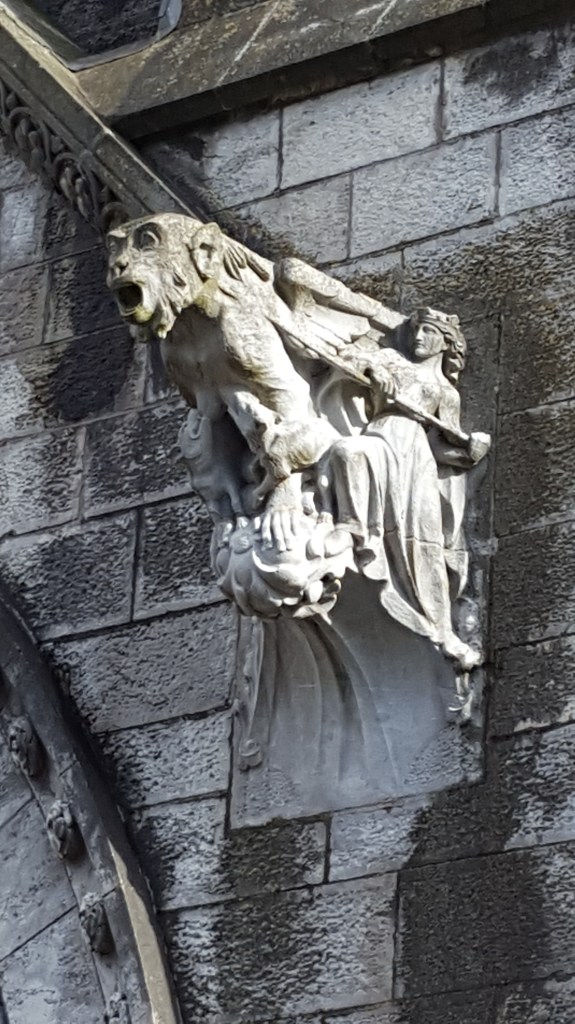
We also walked around St. Fin Barre’s cathedral a bit. There was a service going on so we did not go inside. The architecture was quite stunning — especially the gargoyles.
St. Fin Barre’s Cathedral
My favorite part of this trip, though, was discovering the labyrinth, which was lovely to walk. I may return.
So peaceful!
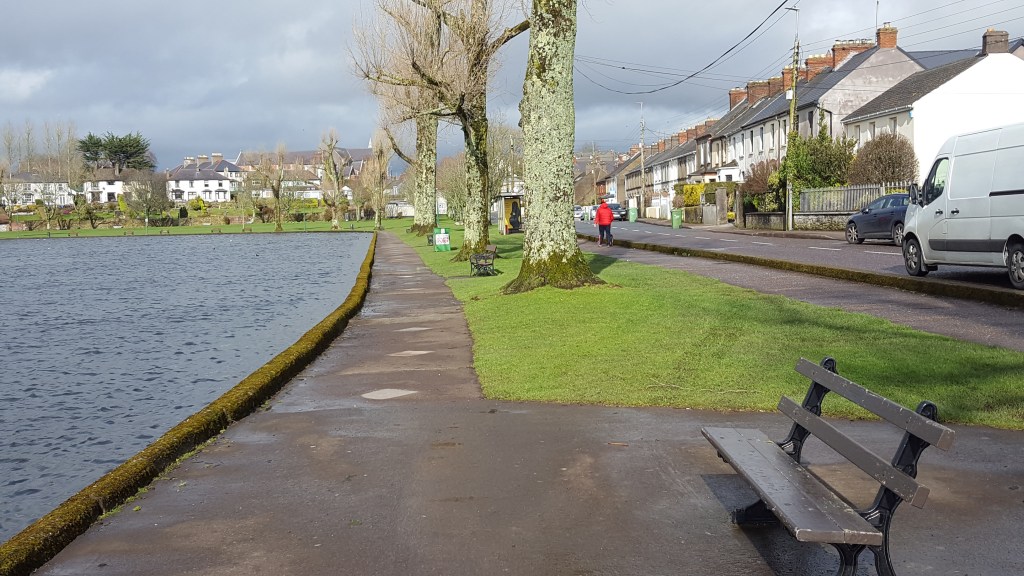
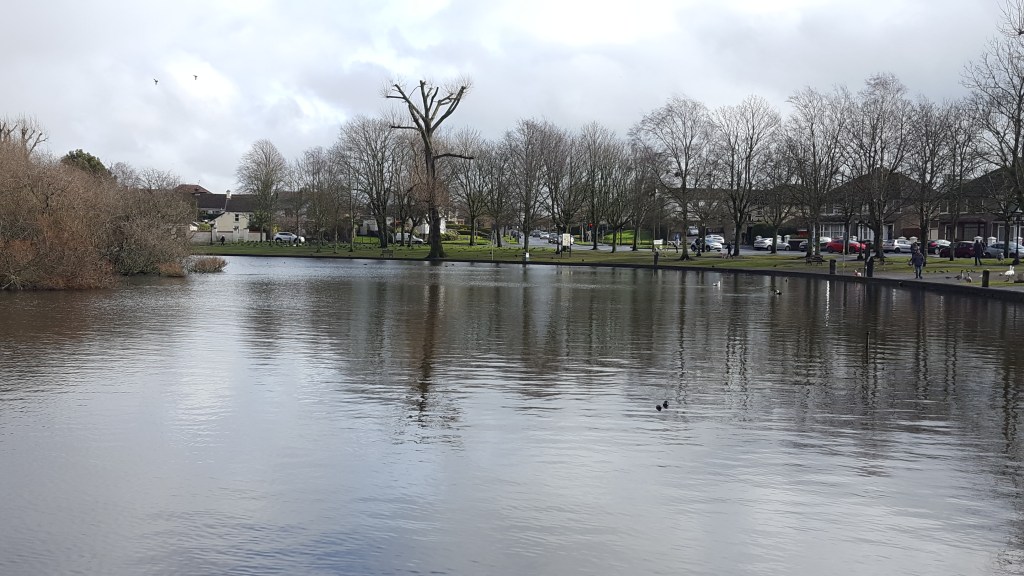
We found ourselves back in this part of town recently, and decided to venture a little further out to The Lough, a small urban lake.
A nice place to sit and enjoy the view, except that it rained earlier and the bench was wet. I’m guessing that’s a frequent issue. There were two walkways, one right next to the water, the other a little further out. Lots of waterfowl, although they seem to be mostly hiding in this picture.
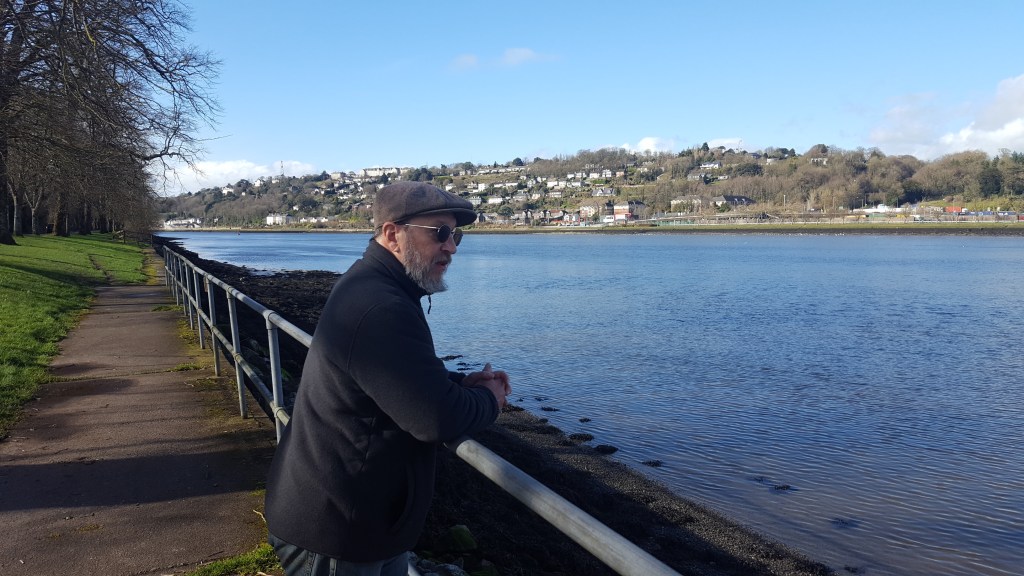
We took another impromptu walk recently to Blackrock Pier. We’d run an errand on that side of town, decided to have brunch there, and then just kept walking. We’d been out that way before, to Blackrock Castle, but this time, we walked along the river.
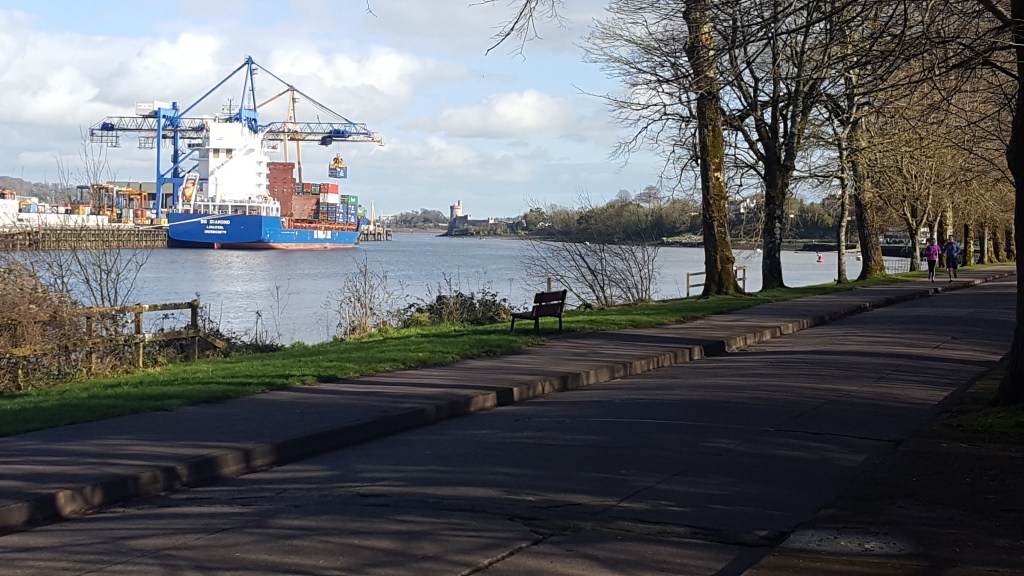
Before we reached the river, we walked through one of the more industrial neighborhoods than we’d seen to date. We were surprised that the sidewalk was so much wider and better paved than in most of the city, where a lot of the sidewalks are quite old. There were tons of joggers for a neighborhood that didn’t seem to generate a lot of pedestrian traffic. But that road connected to the greenway along the river, than in turn intersects with a greenway that goes a considerable way south of the city (which we hope to visit this month!) So the sidewalk was truly as much a greenway as a sidewalk.
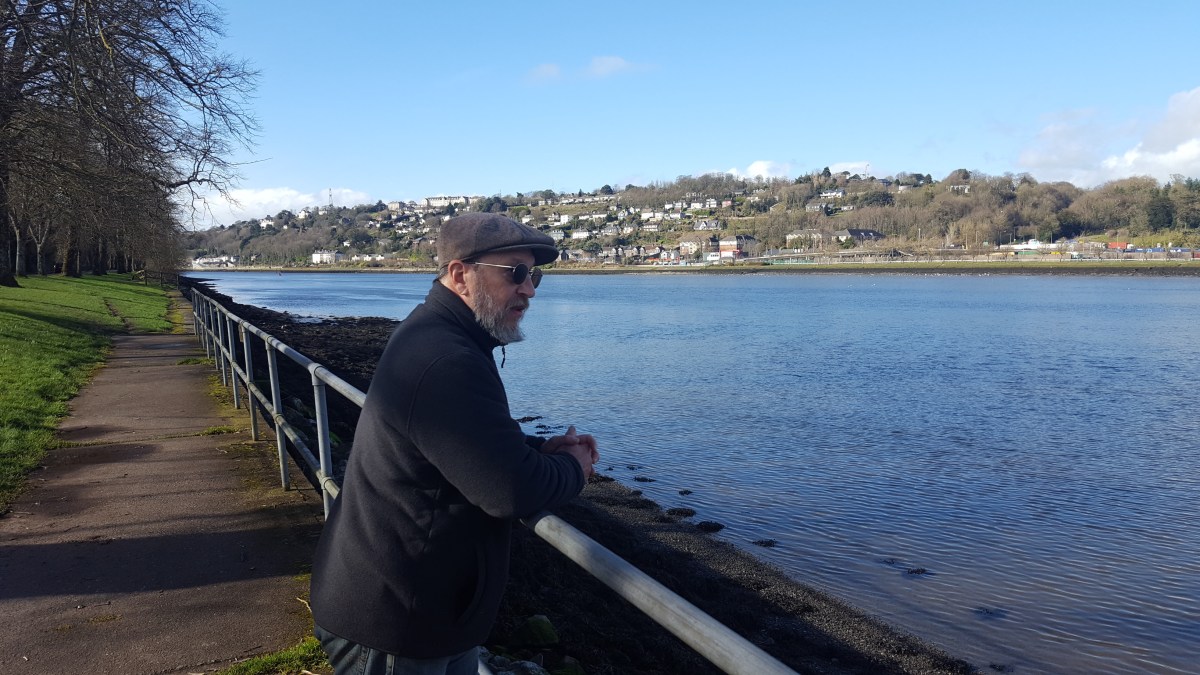
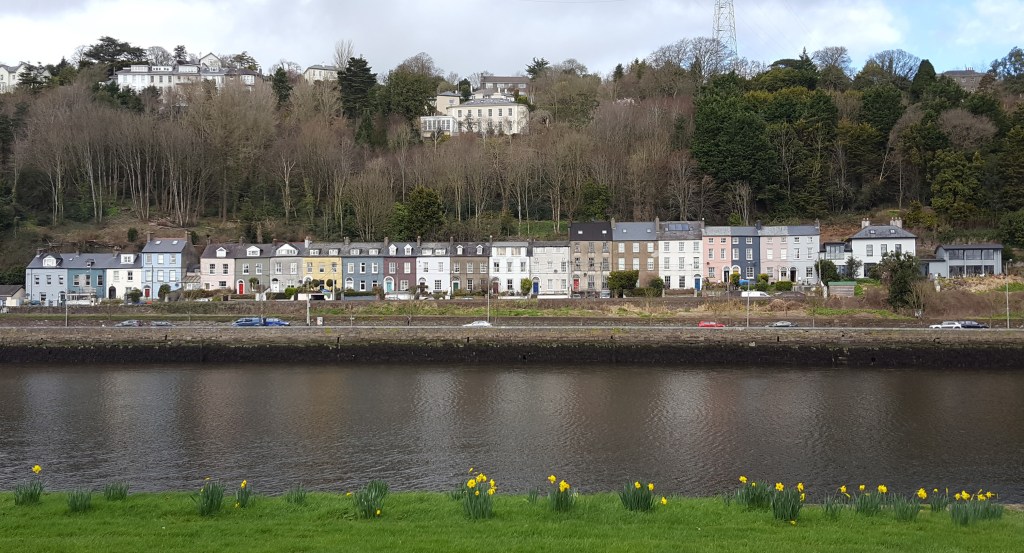
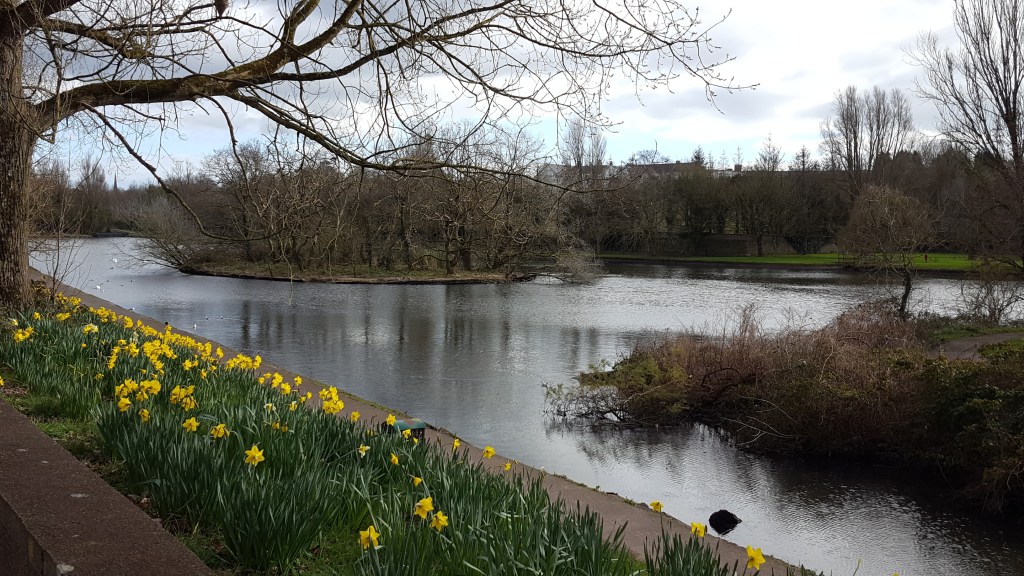
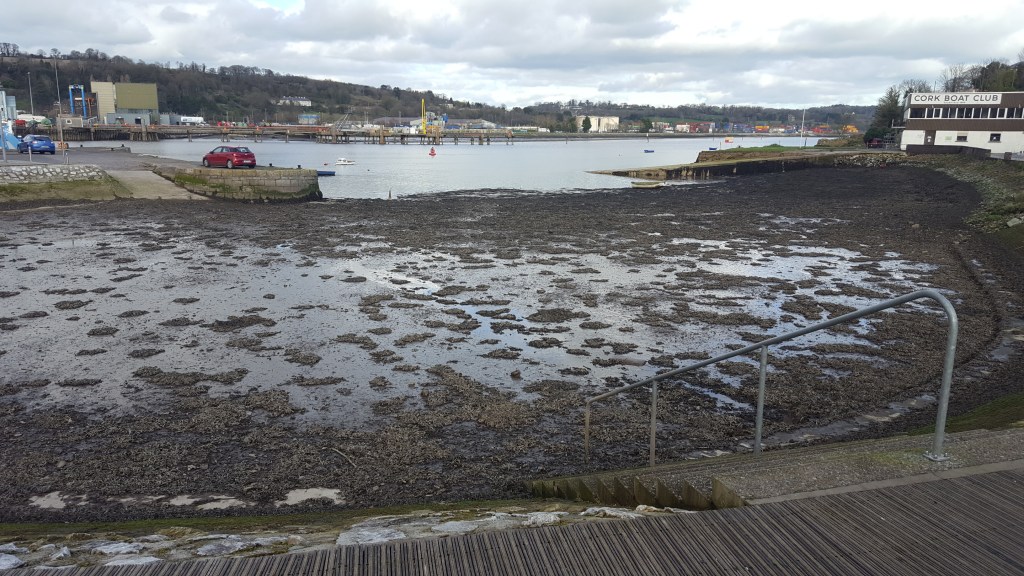
Barry, not jogging on the greenway.One view across to the north side of the river. I love this row of houses.The greenway also ran alongside a park surrounding this small lake. Daffodils have been in bloom everywhere we’ve been, all month long.Some port activity on the river. If you look to the right of the ship, you can see Blackrock Castle. We had a beer in an inn at the pier, and watched them unload the shipping containers, which was oddly mesmerizing.I’m not sure why they call this little village Blackrock Pier, since there is no docks or marina and very few boats. There was this little enclosed oval of water, surrounded by a walkway and benches, but judging by how it looks at low tide, I can’t imagine many boats docking here!
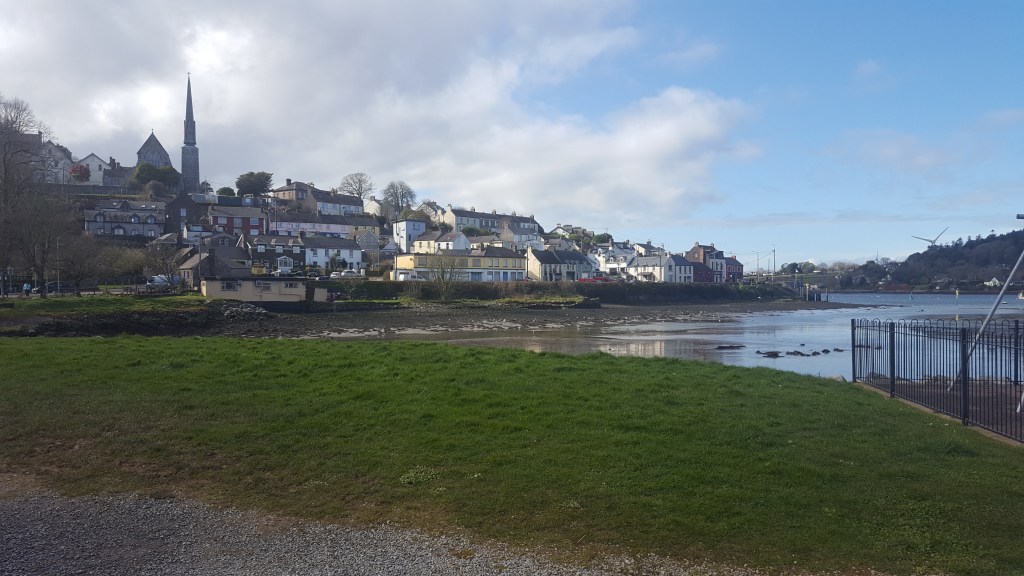
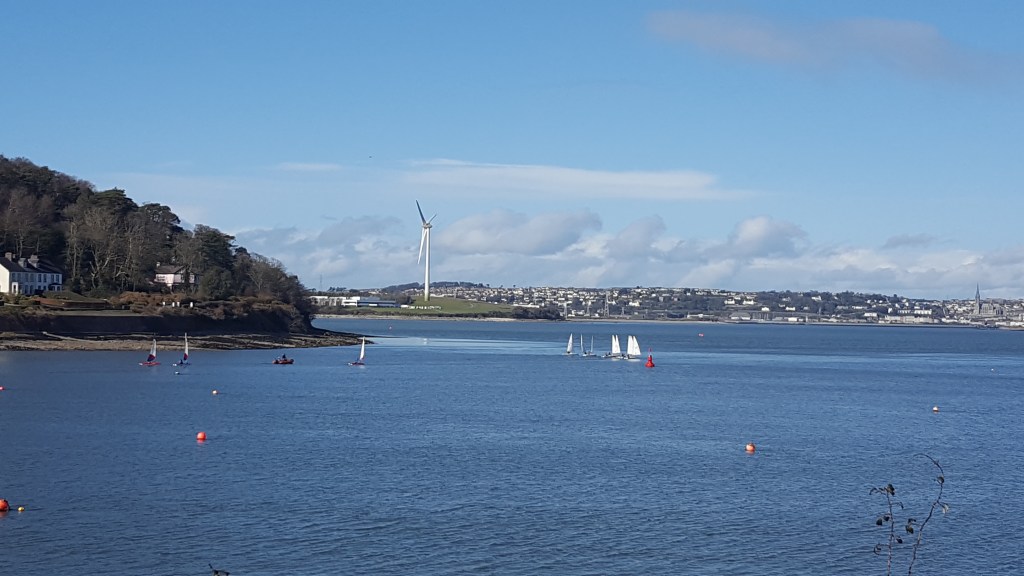
I wrote earlier about our walk out to the village/neighborhood of Douglas. It was one of our longer walks, but we managed it without hopping a bus either way. This week we decided to go even further south, though, to the harbor village of Crosshaven. Be sure to look at Barry’s photos from this trip, the one of the sailboats and the wind turbine is spectacular!
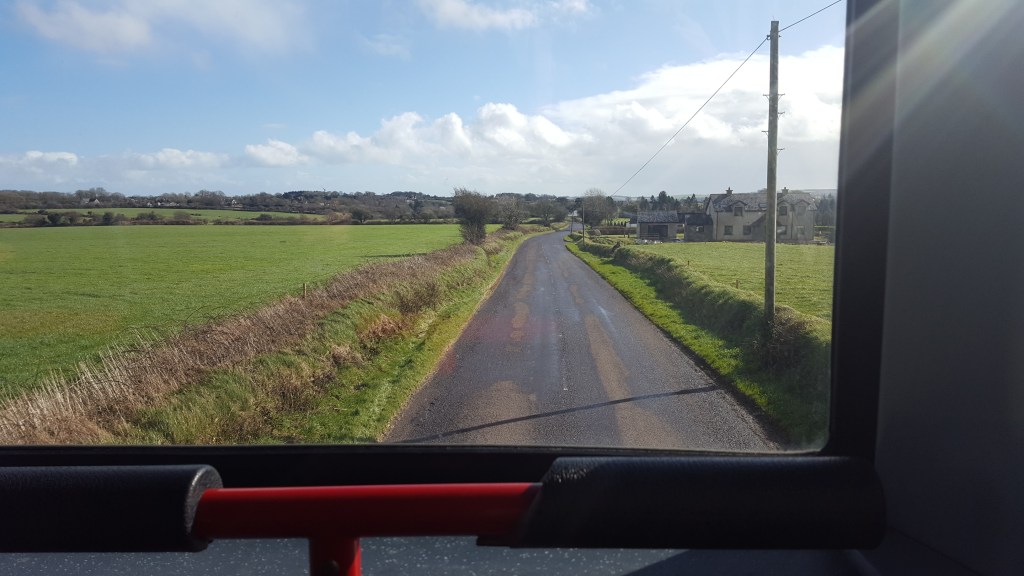
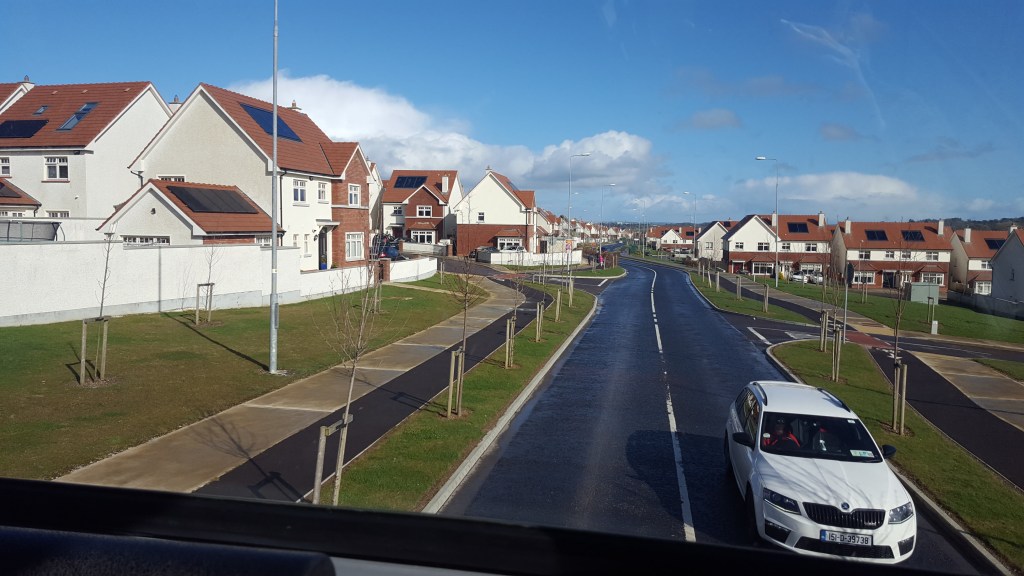
This was our first trip that was long enough that we had to take the bus both there and back. The bus ride was about 40-45 minutes long. We quickly discovered that the best seats for curious tourists are the front seats on the top of the double decker.
Some of the countryside south of Cork, between Douglas and Carragaline.Carragaline had a lovely old town with a river running through it, but it was also our first look at U.S.-style suburban sprawl.The village of Crosshaven.The Owenabue River empties into Cork Harbour at Crosshaven. You really need to look at Barry’s post to see his photo of this scene!
This was the first place we saw actual pleasure boats. I’ve been surprised that in the Lee River and Cork Harbour in other places, all the boats have been industrial, with nary a marina to be seen. This was the first place we saw sailboats, and there were lots of them! There appeared to be three different sailing classes going on, as pods of white, red/blue/white, and translucent/red boats went around in circles, or proceeded downwind into the harbor.
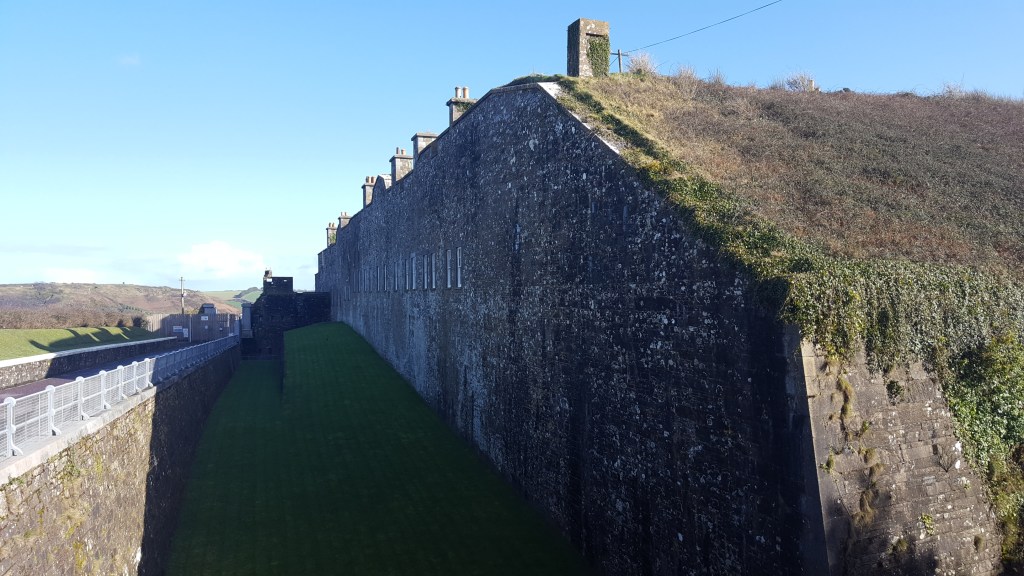
There wasn’t a greenway here, but there was a “scenic walk”, a one-lane residential road that went up the hill along the harbor to Camden Fort Meagher.
I am sure this edifice at Camden Fort Meagher has profound historical significance, but I really didn’t pay attention. It was much more pleasurable to watch the sailboats in the harbor.
There were other roads and paths that went further, or that cut across the peninsula to the ocean, but this wasn’t a day we were up for a big walk, so we went back into the village for lunch at a lovely pub.
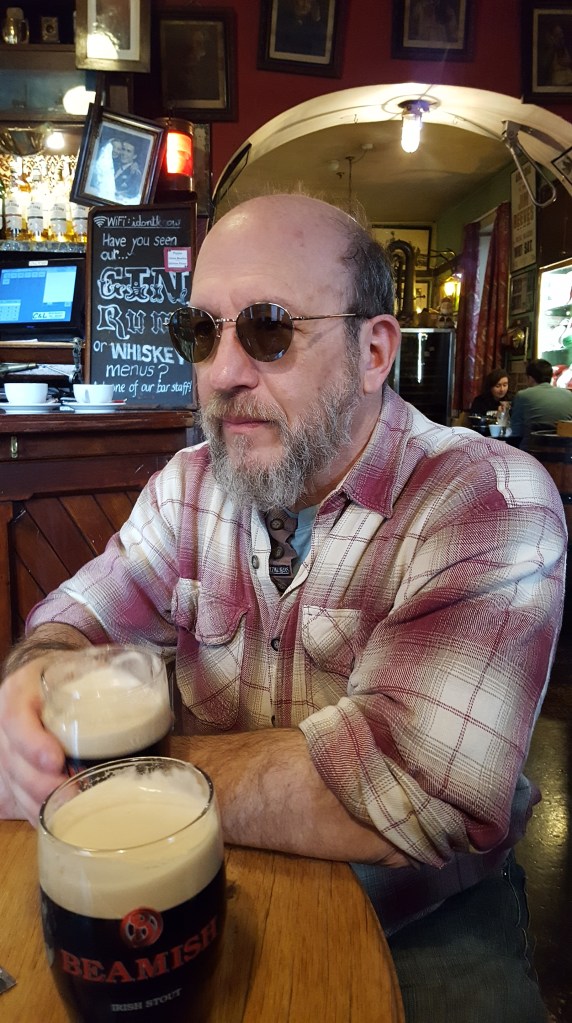
I am becoming spoiled by having Guinness, Murphy’s, and Beamish on tap absolutely everywhere we go. We’ve both discovered that Murphy’s is our favorite.I love my traveling companion!
We’ll be heading south again today on the 10:05 bus to Kinsale.

 Cork Spring